

Joining forces to make a difference
Working on the land takes a physical toll – and ongoing joint pain in your knees or hips can make everyday tasks that much harder. If you’re not sure what steps to take, you’re not alone.
That’s why the National Centre for Farmer Health has partnered with Beyond The Clinic to offer JointFit – a personalised joint health program designed to help you reduce pain, move better and avoid unnecessary surgery.
Ready to start your path to pain-free joint mobility? Whether you’re living with a joint condition or waiting for surgery, we have you covered. Most rehab plans just tell you to exercise more and hope for the best. JointFit keeps you connected – to your care team, to expert support and to your recovery goals.
The application combines expert physiotherapy care, smart technology and real-time health insights to help you protect your joints, recover faster, and stay strong for the long haul.
How does it work?
Getting started is easy – and completely free!
- Step 1: Take the assessment – Answer nine short questions to uncover your hip or knee profile.
- Step 2: Discover your Joint Health Profile – Get personalised results and advice based on your needs.
- Step 3: Get instant access to the JointFit app – You’ll receive an SMS with a link to begin your 6-week, expert-led program – at no cost to you.
- Step 4: Share your progress – Stay on top of your recovery and easily share updates with your GP or physio.
Why JointFit?
- Avoid surgery by strengthening joints and improving function.
- Get care from home – no travel, no waiting rooms.
- Access expert guidance from qualified physiotherapists.
For more information, please contact:
Beyond The Clinic
P: 1300 455 058 E: support@beyondtheclinic.io
2024-25 Year in Review
Strengthening farmer health, wellbeing and safety at the NCFH
Written by National Centre for Farmer Health Director Alison Kennedy
As I reflect on the past 12 months at the National Centre for Farmer Health (NCFH), I am filled with pride, gratitude, and renewed commitment to improving the health, wellbeing and safety of farming communities across Australia.
This year has been one of connection, innovation, and impact.
Farmer health goes to Canberra
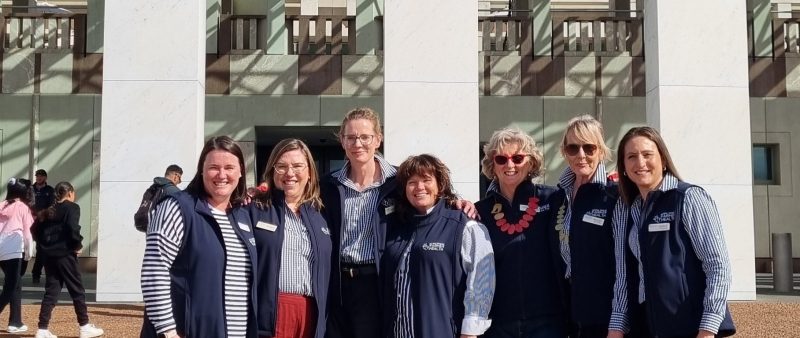
The 2024-25 year kicked off with an amazing visit to Canberra. Our team hosted an event at Parliament House, bringing together politicians, senior public servants and industry representatives to raise awareness and understanding of the importance of farmer health, wellbeing and safety.
This was followed by a Farmer Health Symposium with more than 60 attendees from across Australia – including farmers, researchers, service providers and policy makers – who came together to connect, share knowledge and build the foundations for long-term collaboration.
Not long after, our new ‘community friendly’ location in Hamilton was officially opened with great fanfare and celebration, complete with a live broadcast by the ABC Country Hour.
Scaling what works
This year we have focused on testing, refining and scaling up initiatives with the aim of reaching more farmers than ever. This includes our farmer health checks which now have new digital features to help farmers take action (including follow-up text message reminders) without compromising the face-to-face interaction with our skilled farmer health nurses. Our health checks have reached farmers from across five states in 2024-25.
We’ve also been testing a new model of mental health support this year via our Back on Track program – recruiting, training and supporting peer coaches to deliver a 10-session behavioural activation program to members of the farming community experiencing depression. We are grateful to the farming communities who have trusted us to walk alongside them in this work.
Safe Spaces model continues to build
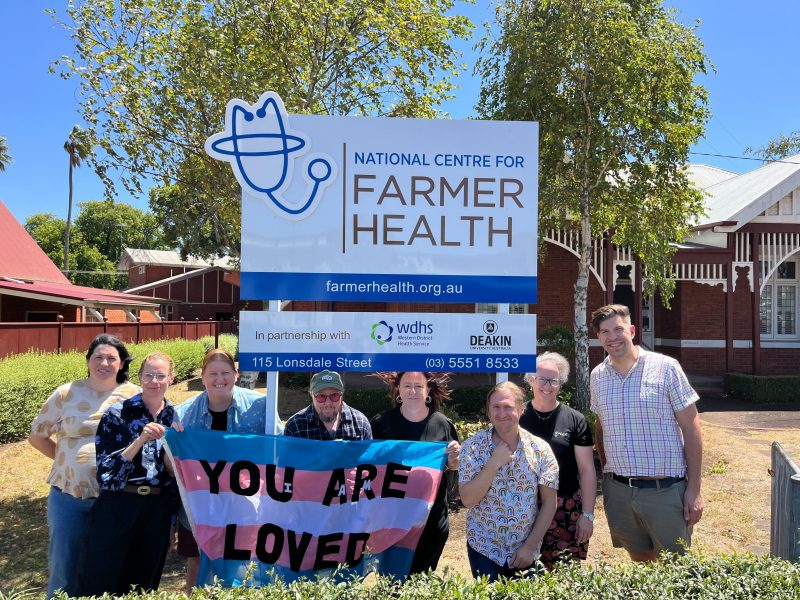
In 2025 we continued the development and deep community engagement around the Safe Spaces Model of Primary Healthcare, a five-year Medical Research Future Fund (MRFF) project aiming to transform how primary care services respond to and welcome queer rural youth.
The energy, creativity, and leadership of young people, their allies and those who support them have been inspiring, and their voices continue to shape change from the ground up.
Training, outreach and advocacy
Our education programs are reaching far and wide. They include:
- Calm the Farm workshops for farm owners/managers
- Mental health capacity building webinars for trusted advisers
- Postgraduate Agricultural Health and Medicine training for rural health professionals
- Shifting Gears teaching resources in secondary schools across five states, targeting the next farming generation.
Throughout the year, the NCFH team has also ensured that farmer voices are front and centre in national discussions around mental health, drought resilience and workforce sustainability by delivering many keynote presentations, media interviews and policy briefings.
Research that reflects reality
The NCFH research team has published and presented on a wide range of issues:
- On-farm electrical hazards
- Heat stress
- Farm safety culture
- Regenerative agriculture
- Mental health
- Climate modelling informing risk of zoonotic disease
- Innovative models of care for supporting farmer health and wellbeing.
This year, our research has increasingly focused on co-design, implementation science and systems change –ensuring that what we learn is directly translatable to community benefit.
We have also played an advisory role in shaping national and state-level rural health policy, advocating for evidence-based, community-driven and farmer-informed approaches to rural health, wellbeing and safety.
A growing and energised team
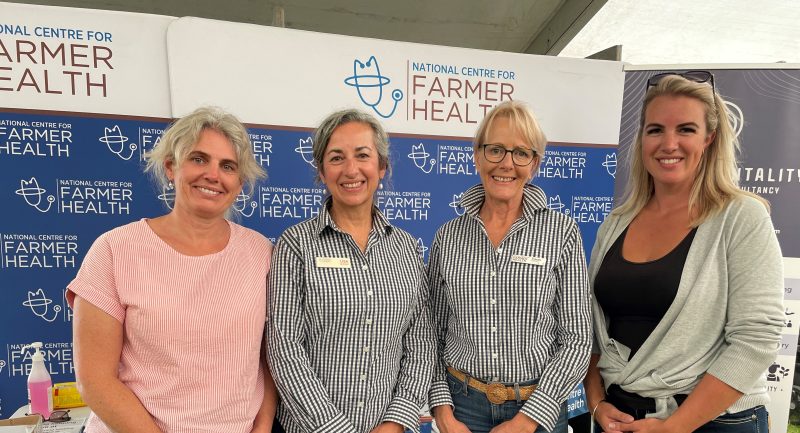
The last 12 months have seen the expansion of our team with passionate new staff members across research, peer work, project and admin support, and clinical services – bringing new skills and expertise, farming experience and fresh energy to the NCFH.
We’ve also welcomed three new junior members to our team this year (congratulations to our NCFH Mums Matilda, Jo and Tahlia).
Looking ahead
While we celebrate what has been achieved, we know the challenges facing rural communities remain complex and deeply interconnected. Climate pressures, economic uncertainty, social isolation and service shortages all continue to affect farmer wellbeing. But, with the support of our collaborators and the trust of farming communities, we are confident in our path forward.
Over the next 12 months, we will deepen our focus on systems-level change, grow our health service and training programs, and continue advocating for health equity in the bush – ensuring all of our farmers, farm workers, farming families and agriculture-dependent communities have the opportunity and resources to improve their health, wellbeing and safety.
Our partnerships – with rural organisations, farming families, universities, government and health services –continue to grow in strength and impact. Thank you to everyone who has walked alongside us this past year.
We look forward to the road ahead, with hope, humility, and a deep respect for the people who feed and care for our nation. If you would like to walk alongside us in this new financial year, please reach out to chat about how we can work together.
For more information, please contact:
Alison Kennedy – Director, National Centre for Farmer Health
P: 03 5551 8533 | M: 0407 549 970 | E: alison.kennedy@wdhs.net
Farmer Health eNews July 2025
Find out the latest from the National Centre for Farmer Health
- Grants program for Victorian farming community events – don’t miss out!
- Webinar: Teaching farm safety in schools with Shifting Gears
- Scaling up AgriSafe: New research grant supports farmer health!
Do you want to receive our eNews?
$5K grants to support mental health events in Vic farming communities
Community groups across Victoria can now apply for up to $5,000 in funding to organise events that support farmer mental health, wellbeing and social connection in regional areas.
The funding is part of the Look Over the Farm Gate Community Grants Program which is being delivered by the National Centre for Farmer Health (NCFH) on behalf of the Victorian Government’s 2025 Drought Support package. The NCFH will administer the grants, and provide support to applicants to put on their community event.
While grants are available to community groups across Victoria, NCFH Director Alison Kennedy said Look Over the Farm Gate will prioritise drought-impacted areas.
“We’re looking forward to kicking off Look Over the Farm Gate, to help Victorian communities organise effective events that promote social connection and mental health awareness for farmers, their families and workers who are doing it tough at the moment,” Alison said.
“We have learnt from experience that when it comes to supporting mental health and wellbeing, community leaders understand the dynamics and unique needs of their region better than anyone. They are often keen to start important conversations around farmer mental health, help their community members be proactive in protecting their wellbeing and build resilience, and direct people to seek help if required.”
Eligible community organisations and groups in Victoria can include agriculture industry groups, service clubs, sporting clubs, neighbourhood houses, local health services and other not-for-profit groups.
Community events can be targeted to farmers, agricultural workers and farming families, as well as the broader agricultural communities and trusted agricultural advisers who support them. Events can be diverse, ranging from a community BBQ or a farmer health check to a guest speaker session.
“It’s easy to apply for a Look Over the Farm Gate Community Grant – all you have to do is fill out an online form on the NCFH website. You can also seek our team’s support in thinking about your event,” Alison explained.
“In addition to funding, successful applicants for Look Over the Farm Gate Community Grants will also receive an event resource pack with mental health resources tailored to farming communities, to help organisers deliver their event in a psychologically and emotionally safe way.”
For more information on the Look Over the Farm Gate Community Grants Program or to apply for funding, visit farmerhealth.org.au/look-over-the-farm-gate. Look Over the Farm Gate is funded by Agriculture Victoria under the Victorian Government’s 2025 Drought Support Package.
* END OF RELEASE*
For more information, please contact:
Alison Kennedy – Director, National Centre for Farmer Health
P: 03 5551 8533 | M: 0407 549 970 | E: alison.kennedy@wdhs.net
Farmer Health eNews June 2025
Find out the latest from the National Centre for Farmer Health
- NCFH receives vital lifeline with government funding
- Online hub for support made easy
- Connecting with farmers at FarmFest field days
Do you want to receive our eNews?
National Centre for Farmer Health receives vital lifeline with government funding
The National Centre for Farmer Health (NCFH) has welcomed the Victorian Government’s commitment of $900,000 to support the health, wellbeing and safety of farmers across Australia.
NCFH Director Alison Kennedy said the announcement was a relief.
“The announcement of $900,000 funding for the NCFH underscores the Victorian Government’s commitment to supporting farmers who are currently doing it tough managing multiple – and often cumulative – stressors on the farm, from extreme weather events to volatile markets,” Alison said.
“The continuation of funding for 2025-26 will help us to keep doing what we do best – identifying and preventing chronic disease and safety risk factors in the agriculture and farming community with a range of practical tools and programs.”
Founded in 2008 as a partnership between Western District Health Service and Deakin University, the NCFH works with primary producers and agriculture industry members, researchers, health services and all levels of government to develop and deliver services that support the health, safety and wellbeing of farmers – at no cost to them.
The NCFH employs over 20 staff, many of whom are farmers as well as professionals from health, agriculture, behavioural and social sciences. They develop and deliver a range of evidence-based and impactful programs and resources in collaboration with farmers, experts and industry including:
- Health & Lifestyle Assessments where farmers can get a free farmer-focused health check-up with a registered nurse
- Farmer-focused mental health information and resources, such as the Support Hub and Managing Stress on the Farm booklet
- Unique education opportunities, such as the Shifting Gears farm safety education program providing easily accessible resources for school teachers
- Training workshops for service providers to help them support farmers navigating tough times
- Support for communities to plan and run effective mental health promotion events
- Essential research to inform and evaluate farmer health, wellbeing and safety initiatives and inform ongoing work at the NCFH.
“At the NCFH we see first-hand the impact we’re having in providing this support. We often have farmers telling us about life-saving changes they made as a result of something picked up in a 20-minute health assessment or something they learned during a mental health workshop,” Alison said.
“We appreciate the government’s recognition of the critical role we play in continuing to deliver and reach more farmers with our important services, but stress the need for sustained funding to maximise reach and long term impact on farmer health, wellbeing and safety.”
For more information or to find out how to support the National Centre for Farmer Health, visit farmerhealth.org.au/partnerships-supporters.
* END OF RELEASE*
For more information, please contact:
Alison Kennedy – Director, National Centre for Farmer Health
P: 03 5551 8533 | M: 0407 549 970 | E: alison.kennedy@wdhs.net
Funding critical to secure future of National Centre for Farmer Health
Ongoing funding uncertainties could prevent the National Centre for Farmer Health (NCFH) from delivering essential farmer-focused programs and resources that support their mental health, wellbeing and safety.
Founded in 2008 as a partnership between Western District Health Service and Deakin University, the NCFH works with primary producers and agriculture industry members, researchers, health services and all levels of government to develop and deliver programs that support the health, safety and wellbeing of farmers at no cost to them.
NCFH Director and mental health researcher Alison Kennedy said a diverse range of funding streams form a vital lifeline for the NCFH to identify and prevent chronic disease and safety risk factors in the agriculture and farming community in a timely and effective way.
“Ongoing support from government and our corporate, philanthropic and industry partners is invaluable and means we can continue developing and delivering practical information, tools, training and services to farmers for free,” Alison said.
“Any changes to our core funding will have an immediate impact on our ability to deliver initiatives directly to farming communities and may mean we need to cut back on these services or stop them completely. We need ongoing support to keep farmers farming, as they are the backbone of agriculture’s $82 billion contribution to the Australian economy.
“While our head office is based in Hamilton, south-west Victoria, the NCFH operates nationally and has put Victoria and Australia on the map as a centre for excellence in agricultural health, wellbeing and safety research, education, service delivery and training.”
NCFH’s team includes professionals from health, agriculture, education/extension, behavioural and social sciences that work with farmers to develop and deliver a range of informed and impactful programs and resources including:
- Health & Lifestyle Assessments where farmers can get a free health check-up with an agrihealth-trained medical professional
- Farmer-focused mental health resources, such as the Managing Stress on the Farm booklet
- Unique education and training opportunities, such as the Shifting Gears farm safety education resources
- Essential research to support rural farmer health, wellbeing and safety and inform ongoing work at the NCFH.
Alison said there are several ways for organisations and individuals to support the NCFH through financial contributions and in-kind support. This includes collaborative projects, event and program partnerships, scholarship opportunities and donations.
“We are proud to work alongside a diverse range of leading organisations committed to supporting farming communities and driving positive change in farmer health, wellbeing and safety,” Alison said.
“We are actively seeking the support of partners, supporters and donors to continue our important work and make a lasting difference to farmers’ lives.”
For more information or to find out how to support the National Centre for Farmer Health, visit farmerhealth.org.au/partnerships-supporters.
* END OF RELEASE*
For more information, please contact:
Alison Kennedy – Director, National Centre for Farmer Health
P: 03 5551 8533 | M: 0407 549 970 | E: alison.kennedy@wdhs.net
Farmer Health eNews May 2025
Find out the latest from the National Centre for Farmer Health
- Support the work of the NCFH: We need your help to keep making a difference to farmers’ lives
- Grow your skills, support your community: Scholarships now open
- The Mind Maintenance Toolkit is back!
Do you want to receive our eNews?
National Centre for Farmer Health awarded MRFF grant to scale up AgriSafe across three states
The National Centre for Farmer Health is proud to announce it has been awarded a prestigious five-year research grant from the Australian Government’s Medical Research Future Fund (MRFF). This nationally competitive grant will support the redevelopment and expansion of the AgriSafe™ program – a vital health, wellbeing and safety initiative tailored to the needs of people working in agriculture – and the clinical research needed to ensure it remains evidence-based, effective and future-ready.
This significant investment acknowledges the experience and expertise of the National Centre for Farmer Health and will enable AgriSafe to be scaled across Victoria, New South Wales and Queensland, bringing targeted health support to more Australian farmers. The project will work with local partners, farmers and health professionals to focus on strengthening the program’s research base, ensuring it remains responsive to the evolving health needs of rural and regional communities.
The project will be delivered in partnership with Western District Health Service, the Alliance of Rural and Regional Community Health (ARRCH), the NSW Agency for Clinical Innovation, Darling Downs Health Service, West Moreton Health Service, Deakin University and Central Queensland University.
“This is an exciting opportunity to bring community, clinical practice, and research together, and an important step forward for AgriSafe,” said Associate Professor Alison Kennedy, Director at the National Centre for Farmer Health.
“This funding will allow us to expand this program – but it’s not a replacement for the ongoing funding from the Victorian Government that remains critical to sustain the day-to-day delivery of essential health services in our Victorian communities.”
Professor Susan Brumby, Senior Researcher at the National Centre for Farmer Health and Clinical Lead on the newly funded project, emphasised the clinical and translational significance of the MRFF-funded project.
“This MRFF investment recognises the clinical and public health significance of agricultural health research,” she said. “It enables us to undertake a robust research program that will refine the AgriSafe approach, generate new evidence, and support scalable, community-responsive health interventions across rural Australia.”
Research activities will include co-design with farmers, clinical data collection, and ongoing impact evaluation across diverse agricultural settings, while delivery partners will bring the revitalised program to new regions, ensuring it is accessible, sustainable and community-driven.
Partner organisations have also welcomed the joint focus on delivery and evidence.
Andrea Caia, Acting Chief Executive of Primary Care Connect and representative of the Alliance of Rural and Regional Community Health, said:
“This project is a great example of what’s possible when rural organisations work together. AgriSafe has already proven its value, and we’re proud to be part of the next stage – making sure it reaches more communities and reflects the realities of life on the land.”
Darling Downs Representative, Richard Renshaw, said:
“AgriSafe is a new program for our region, and we’re excited to bring it to farming communities across the Darling Downs. This partnership gives us the chance to offer a targeted, proactive approach to farmer wellbeing that reflects the specific challenges faced by our local agricultural workforce.”
Shellie Burgess, Rural Health Network Manager at the NSW Agency for Clinical Innovation, said:
“The Rural Health Network welcomes the opportunity to support the scalability assessment of AgriSafe in New South Wales as part of this collaborative research. Supporting the health and wellbeing of our rural communities is a priority, and AgriSafe offers a valuable, evidence-based tool to help address the unique pressures faced by people working on the land.”
This MRFF-funded initiative represents a significant step forward in rural and agricultural health, ensuring that AgriSafe continues to make a difference where it’s needed most – on farms, in health services, and across regional Australia.
* END OF RELEASE*
For more information, please contact:
Alison Kennedy – Director, National Centre for Farmer Health
P: 03 5551 8533 | M: 0407 549 970 | E: alison.kennedy@wdhs.net
Farmer Health eNews April 2025
Find out the latest from the National Centre for Farmer Health
- Support the work of the NCFH and make a difference to farmers’ lives
- Q Fever cases on the rise: What you need to know
- Interested in joining the NCFH Board? Applications now open!
Do you want to receive our eNews?
New handbook tackles the tough topics when planning events in farming communities
The National Centre for Farmer Health (NCFH) has developed a practical handbook to help individuals and groups deliver successful community events with a mental health focus.
Tackling the Tough Topics: A step-by-step guide to plan mental health and wellbeing events in farming communities outlines best practice guidelines and provides support to organise impactful events that foster mental health and wellbeing while avoiding potential harm to vulnerable individuals.
The NCFH identified a need for these guidelines in 2023 after supporting 60 flood recovery events in Victorian farming communities in partnership with Western Victoria Primary Health Network (WVPHN). Tackling the Tough Topics was developed through a co-design process with rural mental health specialists, community development and disaster recovery staff in four rural shires.
“We know there is strong motivation and good intention to improve mental health from within farming communities. We also know that working together to connect and collectively address challenges is something that farming communities often do very well,” NCFH Director Alison Kennedy said.
“Tackling the Tough Topics aims to build awareness, knowledge and capability to ensure that when farming communities come together with the purpose of supporting and improving mental health, they are empowered to do so in a way that is well-planned, safe and effective.”
A free webinar will be held on Thursday 6 March where Tackling the Tough Topics authors Sally Cunningham and Sarah Crosthwaite will discuss how to use the guidelines effectively, share tips and answer questions.
“Community group leaders in rural areas are great at planning events tailored to local needs or responding to particular circumstances. They understand the dynamics and needs of their farming community but are often unsure how to tackle topics around mental health and wellbeing,” NCFH Project Officer Sally Cunningham said.
“Talking about mental health and wellbeing when people are gathered together at a community event helps reduce stigma and encourages people to be proactive in managing and protecting their wellbeing. It also helps people to recognise when to seek assistance from within existing family, friend or farming networks, and to be informed about where to get support from mental health professionals if needed.”
What’s inside Tackling the Tough Topics
- A clear structure based on 14 key questions to guide event planning
- Practical templates to ensure the event runs smoothly and achieves its objectives
- Case studies from rural events and top tips that provide valuable insights
- Guidance on selecting and preparing guest speakers, ensuring they are well-briefed about the farming community’s unique needs and challenges.
To access the guidelines, visit farmerhealth.org.au/tackling-the-tough-topics-a-step-by-step-guide-to-plan-mental-health-and-wellbeing-events-in-farming-communities.
The NCFH is also keen to hear from those who have used the guidelines for an event and invite users to share their feedback via the same webpage.
To register for the Tackling the Tough Topics webinar on Thursday 6 March, visit farmerhealth.org.au/event/tackling-the-tough-topics-webinar.
This project was supported by Western Victoria Primary Health Network Wellbeing and Resilience Funding under the Australian Government’s Primary Health Networks Program.
* END OF RELEASE*
For more information, please contact:
Sally Cunningham – Project/Extension Officer, National Centre for Farmer Health
P: 03 5551 8533 | M: 0437 810 244 | E: sally.cunningham@wdhs.net
Farmer Health eNews March 2025
Find out the latest from the National Centre for Farmer Health
- Free webinar: Exploring the Tackling the Tough Topics guidelines
- Looking for mental health support? Here’s what to consider
- We want to hear from you!
- Upcoming events you won’t want to miss