

Back on Track team to host post-trial community consultations across Victorian farming regions
The Back on Track team is inviting farming community members, local leaders, service providers, and stakeholders with an interest in rural mental health and wellbeing to attend a series of post-trial community consultations in the North East, Gippsland and South West of Victoria this March.
Back on Track is an innovative peer-guided mental health initiative designed to support farming communities experiencing low mood and depression. The program was co-designed with farmers and delivered by trained local coaches who understand farm life and the challenges faced by agricultural communities.
In 2024–25, a feasibility trial of Back on Track was conducted across three Victorian dairy regions to explore how a locally delivered peer-led support model could work in practice, including recruitment and training of coaches, participant engagement, and alignment with the behavioural activation model at the heart of the program.
Now that the trial has concluded and findings are being analysed, the Back on Track team will be visiting each region to share project insights, gather community feedback and discuss next steps. Sessions are open to anyone interested in the mental health and wellbeing of farming communities, including farmers, community leaders, service providers, agricultural industry representatives, and mental health stakeholders.
Selected Back on Track Coaches who delivered the program during the trial will attend several consultations to share reflections on their experience working with participants in their communities.
Consultation schedule:
North East (Tallangatta)
• Tuesday 3 March | 11:00am–1:00pm | Tallangatta Integrated Community Centre
• Tuesday 3 March | 6:00pm–8:00pm | Victoria Hotel, Tallangatta
Gippsland (Maffra)
• Wednesday 4 March | 6:00pm–8:00pm | Maffra Community Sports Club
• Thursday 5 March | 10:00am–12:00pm | Maffra Hall
South West (Camperdown)
• Wednesday 11 March | 11:00am–1:00pm | Killara Centre, Camperdown
• Wednesday 11 March | 6:00pm–8:00pm | Hampden Hotel, Camperdown
Sessions are free to attend and catering provided. Attendees are encouraged to register in advance.
RSVP by 28 February at the button below.
The Back on Track project was funded by the Gardiner Foundation and led by the National Centre for Farmer Health with research support from universities and health service partners.
Media contact:
Anna Greene
Project Manager – Back on Track
Phone: 03 5551 8533
Email: BoT@wdhs.net
We’re Hiring! Community Engagement & Extension Officer
National Centre for Farmer Health | Western District Health Service I Job No: WDHS2082 I Location: Hamilton
Help shape healthier farming communities
The National Centre for Farmer Health (NCFH) is seeking an enthusiastic and community-focused Community Engagement & Extension Officer to join our team in Hamilton.
This exciting role provides an opportunity to build meaningful relationships with farming communities, industry groups, service providers and stakeholders while promoting programs, education and initiatives that support farmer health, wellbeing and safety.
As a key liaison between NCFH and the community, you will facilitate engagement activities, coordinate events and workshops, strengthen partnerships and help translate research and knowledge into practical outcomes that make a real difference in rural communities.
This is a Fixed Term role until 31st December 2027
Applications close: 25th of September 2026
Thriving on the Land – September 2026 update
What you need to know in farmer health, wellbeing and safety from the National Centre for Farmer Health
- A Year in Review: Collaboration strengthens farmer health, wellbeing and safety
- MemFlex Rural Memory participants needed
- Look Over the Farm Gate receives additional funding
- See you at the 18th National Rural Health Conference
- Did you tune into the Bush Summit?
- Upcoming events
- Partner in the spotlight: Gardiner Foundation
View the September 2026 e-newsletter
Do you want to receive our monthly e-news? Click here to subscribe!
Director’s blog: Reflecting on a year of impact
2025-26 Year in Review
Written by National Centre for Farmer Health Director Alison Kennedy
As I look back on the past year, I am filled with pride and gratitude for what we have achieved together at the National Centre for Farmer Health (NCFH). This Year in Review captures more than just numbers and milestones. It tells the story of our commitment to improving the health, wellbeing and safety of Australian farmers, farming families and rural communities.
The challenges facing agriculture continue to evolve. Farmers are navigating changing climates, workforce pressures, economic uncertainty and increasing demands on their physical and mental wellbeing. In response, NCFH has remained focused on delivering evidence-based programs, building partnerships, supporting frontline health professionals and ensuring farmers have access to the services and resources they need.
This year has been marked by innovation, collaboration and meaningful engagement. Through our research, education, health initiatives and community outreach, we have continued to strengthen the connection between agriculture and health. None of this would be possible without the dedication of our staff, researchers, partners, supporters and the farming communities who place their trust in us.
The stories and achievements highlighted throughout this video demonstrate the impact that can be achieved when organisations, industries and communities work together toward a common goal. While we celebrate these successes, we also recognise that there is more work to do. Our commitment to supporting healthier farming communities remains stronger than ever.
I invite you to explore this Year in Review and learn more about the people, partnerships and programs that have helped shape another successful year for NCFH. Thank you for being part of our journey and for supporting our vision of thriving, healthy farming communities across Australia.
For more information, please contact:
Alison Kennedy – Director, National Centre for Farmer Health
P: 03 5551 8533 | M: 0407 549 970 | E: alison.kennedy@wdhs.net
Thriving on the Land – August 2026 update
What you need to know in farmer health, wellbeing and safety from the National Centre for Farmer Health
- Shifting Gears: The results are in from the last two years!
- Now recruiting for NCFH Board members
- Not just a little prick: ABC radio interview on needlestick injuries
- Farmsafe Australia’s Safer Farms 2026 report released
- MOST: Free mental health support for young people
- Upcoming events
- Tony and Angela Kealy: Healthy farmers make stronger families and safer farms
View the August 2026 e-newsletter
Do you want to receive our monthly e-news? Click here to subscribe!
Supporting the people behind the produce
NCFH Partner Impact in Action: Udder Delights
For more than 25 years, Udder Delights has remained committed to producing high-quality artisan cheese while maintaining strong, direct relationships with the dairy farmers who supply their milk. What began as a small family business has grown into a recognised name in Australia’s speciality cheese industry, without losing sight of its roots.
Recognising the importance of supporting the people behind their products, Udder Delights partnered with the National Centre for Farmer Health (NCFH) to contribute to farmer wellbeing in a meaningful and visible way.
Pictured: Udder Delights General Manager Daniel Bryant.

“In a challenging financial climate impacted by uncertainty with fuel supply and other pressures, the programs that the NCFH runs are more important than ever.”
Through a dedicated Udder Delights x NCFH cheese range, including Double Cream and Triple Cream Brie, 20 cents from every wheel sold is donated to the NCFH. This model ensures that consumers play a direct role in supporting farmer health with every purchase.
“Consumers can see that by choosing one of our branded cheeses, they are directly supporting what the NCFH stands for,” Udder Delights General Manager Daniel Bryant says.
“Putting a tangible figure on our partnership with the NCFH is important for consumers to understand that this isn’t simply ‘marketing talk’, but there is a direct financial contribution to a charity that aligns with our values.”
The partnership reflects Udder Delights’ broader commitment to its farming network.
“We values our partnerships with our farmers incredibly highly, and we have long-standing relationships with them,” Daniel explains. “With initiatives like our NCFH partnership, as well as our ‘Single Herd’ concept, we put a public-facing focus on these relationships.”
Celebrating our farmers
Over the past two years, Udder Delights has contributed more than $20,000 to support NCFH programs, including Health and Lifestyle Assessments delivered to farmers across regional communities. As David explains, supporting farmer wellbeing is a natural extension of the organisation’s role within the dairy industry.
“The dairy industry is so varied… but regardless of scale, there is a universal feeling of appreciation for the work that farmers do to supply the raw materials for us to process.”
The partnership between Udder Delights and the National Centre for Farmer Health demonstrates how purpose-led collaboration can translate everyday consumer choices into meaningful, on-the-ground impact, supporting healthier farmers, stronger farming businesses, and more resilient rural communities.
More information
See more Partner Impact in Action case studies
Investing in dairy community wellbeing
NCFH Partner Impact in Action: Gardiner Foundation
For more than 25 years, the Gardiner Foundation has focused on strengthening the Victorian dairy industry by investing in initiatives that support farmers, their businesses and their communities.
Today, the Gardiner Foundation brings together dairy farmers, researchers, industry bodies and dairy communities seeking to address shared challenges. It plays a key role as a strategic investor, backing programs that deliver long-term benefit across the sector.
Pictured: Gardiner Foundation CEO Allan Cameron.

“Over the years, we have seen first-hand what happens when farmers access the right health and wellbeing support at a critical time.”
Recognising the increasing pressures facing dairy farmers, including financial uncertainty, seasonal variability and social isolation, the Gardiner Foundation has partnered with the National Centre for Farmer Health (NCFH) since the early 2000s to support practical, evidence-based wellbeing initiatives.
For the Gardiner Foundation, supporting farmer wellbeing is seen as critical to the future of the dairy industry.
“We cannot have a thriving dairy industry without healthy, resilient farm families. Farmers are the backbone of our rural communities and our supply chains, and the pressures they carry are often invisible. Wellbeing is not a soft issue – it is a productivity issue, a succession issue and a community survival issue,” CEO Allan Cameron says.
The partnership strongly aligns with Gardiner Foundation’s long-term focus on sustainable, community-led change.
“The NCFH’s work is grounded in the real experience of farm life, the seasonal rhythms, the financial volatility, the geographic isolation and the cultural norms that can make farmers reluctant to seek help. What resonates most with us is the NCFH’s commitment to meeting farmers where they are, and its dedication to building lasting capability within farming communities rather than delivering short-term fixes.”
Getting Victorian dairy farmers Back on Track
Through its $492,000 investment in Back on Track, the Gardiner Foundation is helping to strengthen early intervention and peer support, enabling farmers to access support before challenges reach a crisis point.
“We chose to fund the project because we could see that the NCFH was seeking to create an evidence-based, peer-supported intervention for farmers that could genuinely change lives. It is about addressing mental health in a way that is accessible to farmers – practical, non-clinical and delivered through trusted and familiar people,” Allan explains.
“Dairy farming is one of the most demanding vocations there is, and the challenges you face – financial, climatic, personal – are real and significant. But you are not alone. There are people that understand those challenges and are there to help. Programs like Back on Track are being developed because the industry recognises that your health and wellbeing matter, not just to you and your family, but to the whole community in which you live.
“We hope the results of the feasibility trial will unlock further investment, enabling more farmers to access peer support and creating stronger, more connected communities across our dairy regions.”
Looking ahead, the Gardiner Foundation sees opportunity to embed wellbeing as a core part of dairy industry practice.
“The evidence from projects like Back on Track needs to be gathered, shared and applied across the broader dairy industry. We are keen to work with the NCFH to understand what is working well, where the gaps remain and how projects like Back on Track might be modelled, adapted and scaled for different communities.
“Ultimately, we want to see a Victorian dairy sector where mental health and wellbeing support is as routine and accessible as agronomic or financial advice, and collaborations like this one are how we get there.”
The partnership between Gardiner Foundation and the NCFH highlights how long-term investment and collaboration can strengthen communities and support the health and resilience of the dairy sector.
“Farmer wellbeing programs take time to build trust, reach the people who need them most, and demonstrate lasting impact. NCFH has the credibility, the expertise and the reach to deliver outcomes.”
More information
See more Partner Impact in Action case studies
Growing connected, healthy rural communities
NCFH Partner Impact in Action: Fat Farmers
Founded in 2012 as a grassroots initiative between three farmers going to the gym, today, Fat Farmers has grown into an organisation with a national reach and a clear mission to inspire rural communities to improve their health and wellbeing through physical activity.
In an industry where the focus is often on caring for livestock and crops, the organisation is helping shift the narrative toward prioritising personal health.
Pictured: Fat Farmers CEO Richard Sheppy
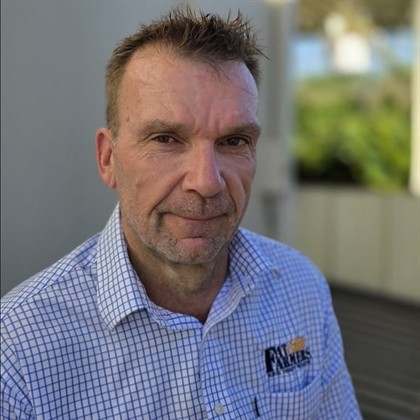
“Our motivation comes from the positive impact stories that we hear from our group attendees and their families. We know we are making a difference to the lives of people across rural Australia.”
For Fat Farmers CEO Richard Sheppy, changing attitudes toward health in rural communities is essential.
“Self-care is crucial… organisations such as Fat Farmers, Active Farmers and the National Centre for Farmer Health can play a part in helping shift the narrative,” he said.
Recognising the challenges facing farmers, including isolation, limited access to health care and increasing uncertainty, Fat Farmers has partnered with the National Centre for Farmer Health (NCFH) to extend its impact.
“We are ‘connectors’ and not ‘clinicians’, so the decision to partner with the NCFH to deliver farmer Health and Lifestyle Assessments has been an easy one,” Richard explains.
Through this partnership, the NCFH’s evidence-based programs are delivered via Fat Farmers’ mobile Health Hub at field days and community events, bringing practical health services directly to farmers.
“A collaborative mindset is key… partnering with the NCFH allows us to build our community reach while supporting programs backed by research.”
Working together to maximise impact
At the heart of the partnership is a shared vision to create healthier farming communities. Fat Farmers provides a safe and familiar space for engagement, helping amplify the reach and impact of NCFH programs.
“When people see Fat Farmers at events, they know they can come and connect in a safe space, this helps extend the reach of NCFH programs.”
Looking ahead, Richard sees collaboration as key to achieving greater impact across rural Australia.
“We should be able to demonstrate that when organisations like ours work together, we can deliver impact and value that others seek to replicate.”
For farmers and industry supporters, the message is clear: “We are a grassroots organisation with our feet firmly in the bush, we understand the complexities farmers face because we are farmers.”
The partnership between Fat Farmers and the NCFH highlights how collaboration, trust and shared purpose can strengthen communities and support the long-term health and wellbeing of rural Australia.
More information
See more Partner Impact in Action case studies
Embedding hearing health in agriculture
NCFH Partner Impact in Action: Deafness Forum Australia
Deafness Forum Australia’s partnership with the National Centre for Farmer Health (NCFH) is grounded in a shared commitment to improving the health, wellbeing and safety of farming communities.
Recognising the NCFH’s trusted presence within agriculture, the collaboration provides a powerful platform to embed hearing health where it is needed most.
Pictured: Deafness Forum Australia CEO Rhonda Locke.

“Rather than creating something separate, we saw an opportunity to integrate hearing health into a platform that already reaches the people who need it most.”
At the heart of the partnership between Deafness Forum Australia and the NCFH is a focus on prevention, education and real-world impact. By embedding hearing health into programs such as Shifting Gears, which engages young people entering agriculture, the initiative ensures that health messages are not only delivered, but applied in practical, everyday settings.
The Hearing Safety in Agriculture module complements the existing Shifting Gears teaching resources, which includes a video, three additional activities and suggested discussions for teachers to have important conversations with their students.
“This partnership allows us to move from advocacy into action,” Deafness Forum Australia CEO Rhonda Locke says. “We’re not just raising awareness, we’re contributing to long-term behaviour change.”
Hearing safety remains an often-overlooked issue in agriculture, where it is frequently accepted as part of the job. Deafness Forum Australia is working to challenge this perception by ensuring education is relevant, practical and grounded in the realities of farming life.
A key focus is early intervention. By reaching students through agricultural education and training, the partnership aims to normalise hearing protection from the beginning of a farming career, rather than trying to correct habits later.
As Rhonda notes, “Hearing loss in agriculture is often seen as part of the job, but it doesn’t have to be. Small, consistent actions taken early can make a significant difference over time. Protecting your hearing is part of protecting your livelihood, your independence and your connection to others.”
Partnerships that understand the communities they serve
Looking ahead, there is an opportunity to further integrate hearing health into broader farm safety conversations, reinforcing its importance alongside other critical health and wellbeing priorities.
Together, Deafness Forum Australia and NCFH demonstrate how strategic collaboration can translate shared purpose into practical outcomes, embedding hearing health into farming life and supporting safer, more resilient rural communities.
“The NCFH brings together research, education and lived experience in a way that creates real impact. Partnerships like this show what is possible when expertise is shared and solutions are built collaboratively.”
More information
See more Partner Impact in Action case studies
Strengthening farmer health, wellbeing and safety
NCFH Partner Impact in Action: Advantage Feeders
Advantage Feeders has long been committed to supporting Australian livestock and sheep farmers through innovation, research, and practical solutions.
When it came to supporting farmer wellbeing, Advantage Feeders chose the National Centre for Farmer Health as a partner.
Pictured: Advantage Feeders Founder and CEO Gerard Roney.
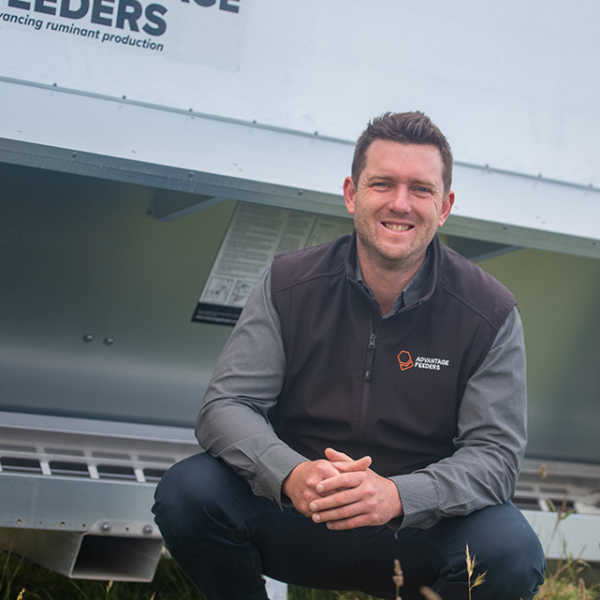
“The National Centre for Farmer Health is the organisation most aligned with us in supporting the people that support us – farmers.”
Through the partnership to date, Advantage Feeders has contributed over $35,000 in support, including $11,699 in donated proceeds. These funds help the National Centre for Farmer Health (NCFH) deliver health checks, research, and programs that make a real difference to farmers and their communities.
“Commodity farming comes with many challenges. Our support helps the NCFH provide practical, proactive wellbeing programs to keep farmers healthy and resilient,” Gerard said.
Gerard emphasises the importance of supporting farmer wellbeing, observing that in commodity farming there are few areas of control. Fluctuations in the weather, input costs and commodity prices can also have a significant impact.
“These challenges can make the lows farmers experience particularly difficult, underscoring the value of programs like the NCFH in providing practical, evidence-based support.”
Advantage: Farmer health
Advantage Feeders’ commitment demonstrates how their partnership enables NCFH’s priorities come to life in practice, supporting stronger, healthier farming communities.
“You deal with down-to-earth people with integrity and passion about their mission – it’s simple to contribute and be part of something meaningful.”
Looking ahead, Gerard sees that if the NCFH expands its programs, their partnership could help more farmers access vital support and services.
“If the NCFH expands, our support could help farmers in more regions, including those further from their physical base.”
For farmers and industry supporters, Advantage Feeders’ message is clear:
“All farmers face challenges, but mechanisms of support exist. The NCFH provides practical, evidence-based programs to help farmers respond and stay healthy, and our partnership is one way we contribute to that impact.”
The partnership between Advantage Feeders and the NCFH underscores how focused support and aligned purpose can strengthen farming communities, enhance wellbeing, and contribute to a healthier more resilient agricultural sector.
More information
See more Partner Impact in Action case studies
Healthy farmers make stronger families and safer farms
NCFH Partner Impact in Action: Tony and Angela Kealy
“The results showed we weren’t in great health overall… that was a turning point.”
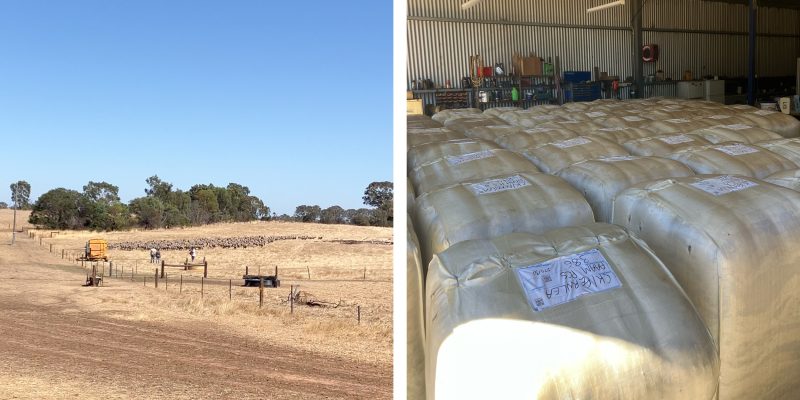
For Western Victorian sheep farmers, Tony and Angela Kealy, one of the most important investments they’ve made in their farming career hasn’t just been in land or livestock, it’s been in their own health.
The Kealy’s discovered that healthy farmers make stronger families and safer farms. By prioritising wellbeing through a National Centre for Farmer Health program, they not only transformed their own habits but inspired their children to do the same.
This is their story.
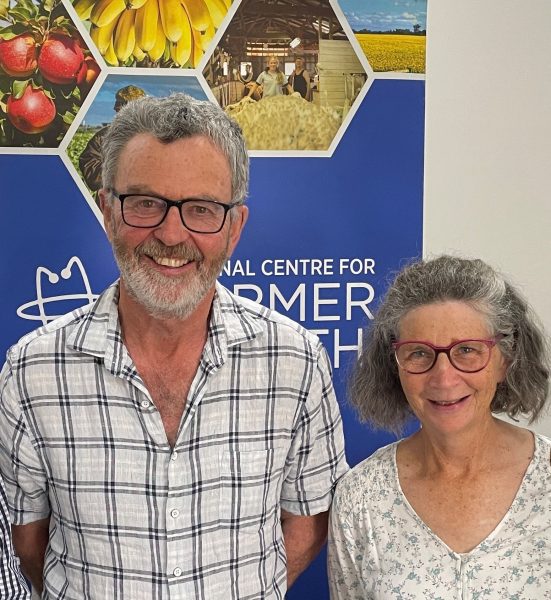
Angela and Tony Kealy’s farm is more than just land and livestock. It’s a way of a life, family legacy, and now, a shared future across generations.
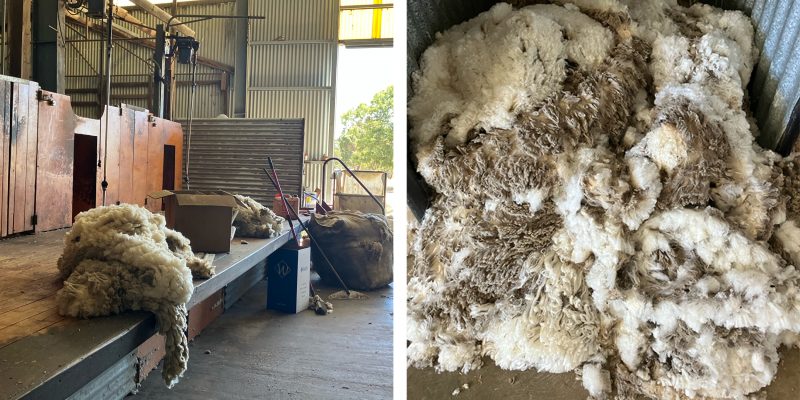
Farming over 6,000 acres just shy of the South Australian border in western Victoria, the couple have built a thriving merino sheep enterprise since 1986. Today, three of their four children are part of the farming business, with the fourth still living locally. While the farm has grown with the next generation, the couple have made deliberate choices to prioritise their health along the way.
A turning point for farmer health
Like many farmers, Tony reflects that in earlier years, health simply wasn’t a priority.
“Most males consider themselves bulletproof at 30 or 40… we don’t need to go to the doctor.”
That mindset began to change around 20 years ago, when farm consultant John Marriott encouraged Tony and Angela to attend a Sustainable Farm Families health program through the NCFH.
After some persistence, they attended a two-day health check in Hamilton, an experience that would reshape their approach to wellbeing.
“We had all the tests done, bloods, weight, measurements and the results showed we weren’t in great health overall.”
Rather than a one-off check, the program required participants to set goals and return 12 months later to track progress. That accountability proved critical.
“It just keeps you on track. It’s too easy to go back to old habits, but if you know you’re being checked, you keep working towards something.”
Practical changes that last
The program didn’t just highlight health risks, it provided practical, achievable ways to improve. From learning how to read food labels to reducing processed foods and sugars, the Kealy’s began making small but meaningful changes at home.
“Just being aware of what’s in packaged food, the salt, the sugar, that was a big shift. We started eating more fresh food.”
Tony also set a simple, measurable goal after one health check: “My waist was close to the obesity range. So, I aimed to reduce it by one centimetre a month, and I did.”
But perhaps the most impactful change was also the simplest.
“We started walking every morning, and we still do.”
What began as a health goal quickly became something more.
“It’s not just the walk. It’s the 40–45 minutes we spend talking. You don’t get that time at the end of the day when you’re tired.”
Health, safety and the farm environment
The Kealy’s experience with the NCFH extended beyond personal wellbeing. It prompted them to look more closely at safety across their entire operation.
“It’s not just about our own health; it’s about the safety of our staff as well.”
From identifying hazards around sheds and machinery to engaging WorkSafe assessments, the family became more proactive about reducing risks, something they say is critical in an industry where serious injuries can often go unnoticed.
“You read about fatalities, but you don’t always hear about the near misses. There’s a lot we can do to prevent them.”
Why farmer-focused health matters
One of the biggest barriers to health care in rural communities is often access and time. Angela explains that traditional health care pathways can feel too complicated for busy farmers.
“With a doctor, it can take multiple appointments over weeks. At the NCFH, everything happens in one day, you get your tests, your results, and your plan.”
Equally important is the environment.
“You know everyone there is a farmer. It feels comfortable; people understand your life.”
This sense of understanding and connection has helped the Kealy’s stay engaged over the long term.
“It helps that they contact you. Otherwise, life gets busy and you just keep putting things off.”
A generational ripple effect
Perhaps the most powerful impact of the Kealys’ involvement with the NCFH is what it has meant for the next generation.
Their children have grown up seeing health treated as a priority, from regular check-ups to daily walks and healthier food choices.
“They’ve seen us make it a priority, and now they’re doing the same with their own families.”
That includes encouraging physical activity, preparing healthier meals, and making time for wellbeing alongside the demands of farming life.
Adapting to a changing industry
Modern farming, the Kealy’s note, is very different from previous generations.
“Farming today is much more sedentary. We’re not doing the physical work our parents and grandparents did.”
With more mechanisation and time spent in vehicles, maintaining physical health now requires deliberate effort. That’s where proactive health programs play a critical role.
“It’s much easier to address issues early than wait until something serious happens.”
Looking ahead
Today, Angela and Tony see their role evolving. With their children now managing the farm, they’re focused on supporting the next generation and enjoying time with their grandchildren.
“The dream is to keep supporting them for as long as we can.”
They also recognise that maintaining their own health is key to making that possible.
“It’s a small investment of time each year compared to dealing with a serious illness later.”
For the Kealy family, the impact of engaging with the NCFH has extended far beyond individual check-ups.
It has shaped habits, improved communication, strengthened safety, and influenced the health and wellbeing of an entire family across generations.
More information
See more Partner Impact in Action case studies
Bringing farmer health checks direct to farming communities at Sheepvention Rural Expo
Farmers attending Sheepvention Rural Expo from 2-3 August in Hamilton will have access to free, practical health assessments, as the National Centre for Farmer Health (NCFH) and Fat Farmers continue their partnership to strengthen health outcomes for farmers, ag workers and their families by bringing health checks direct to premier agricultural events.
The collaboration builds on successful field day programs across South Australia and Victoria, bringing together face-to-face farmer health assessments and the Fat Farmers’ purpose-built mobile health hub clinic, which provides a clean, private clinical space designed specifically for delivering health services.
The initiative is centred on making preventative health care more accessible for farmers, many of whom find it difficult to prioritise routine health checks during demanding seasons on-farm. The free on-site assessments provide an important opportunity to identify early health risks before they develop into more serious conditions.
NCFH health professionals are trained in the specific risks faced by farmers and agricultural workers, including chemical handling, noise exposure, fatigue, physical strain, and long working hours. This ensures that occupational hazards can be identified and conversations tailored to the realities of farming life.
At Sheepvention, farmer health clinicians will be supported by SISU health technology, enabling efficient, accurate and consistent health measurements, including blood pressure and heart rate measurements, cholesterol and blood glucose screening, height, weight and body composition assessment.
Together, these tools support a comprehensive and efficient health snapshot, helping farmers better understand key indicators of their health in a short, practical appointment.
Attendance at Sheepvention Rural Expo is supported through sponsorship from the Hamilton Pastoral & Agricultural Society and Iluka Resources.
NCFH and Fat Farmers acknowledge the importance of partnership and sponsorship support in strengthening access to preventative health programs in rural and regional communities, particularly in settings where farmers already gather.
NCFH Agri Clinician Jessica Fletcher encourages those attending Sheepvention to take a moment during the event to check in on their health.
“Sheepvention is a great opportunity for farmers to connect with others from their community, take in the highlights and displays from exhibitors, and take 20 minutes out of a busy schedule to check in on their health. These assessments are quick, practical and designed around farming life, and they can make a real difference in picking up early health risks,” Jess said.
To access a free health check, simply look out for the blue NCFH flags and the Fat Farmers Health Hub truck, walk in and sign up on the day.
For more information about farmer health support and upcoming events, visit farmerhealth.org.au.
* END OF RELEASE*
For more information, please contact:
National Centre for Farmer Health
P: 03 5551 8533
Our new e-news: Thriving on the Land – July 2026 update
What you need to know in farmer health, wellbeing and safety from the National Centre for Farmer Health
- NCFH out and about at recent events
- Don’t ignore the symptoms: Your health matters
- H5 bird flu (Avian influenza) reminder
- SafeWorkNSW new webpage on worker safety
- Participants needed: Chronic pain research for farming communities
- 1800MEDICARE: Free 24/7 health advice across Australia
- Upcoming events
- Partnering for impact: Deafness Forum Australia
View the July 2026 e-newsletter
Do you want to receive our monthly e-news? Click here to subscribe!