

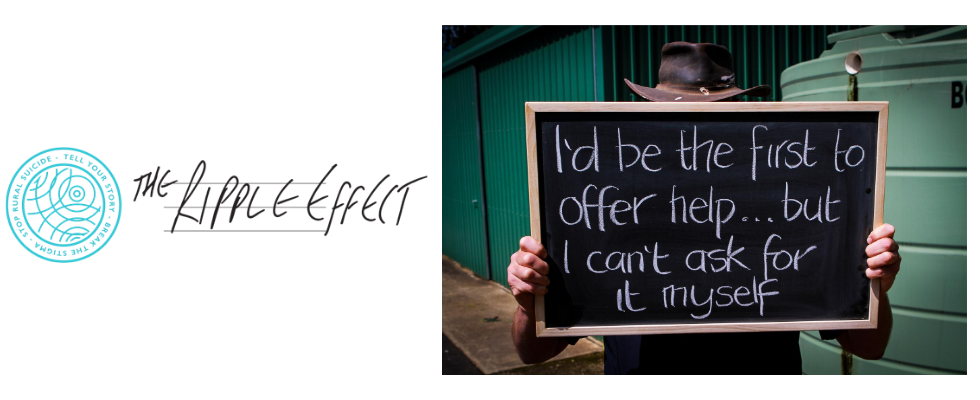
What was the Ripple Effect?
The Ripple Effect was an online intervention designed to investigate what works to reduce stigma among males from the farming community, aged 30-64 years, with a lived experience of suicide (bereaved by suicide, attempted suicide, cared for someone who attempted suicide, have had thoughts of suicide, or been touched by suicide in some other way). Although targeted to rural males, participation in the Ripple Effect is available for everyone in the rural community who identifies as being affected by suicide.
The Ripple Effect provided:
- Opportunity for anonymously sharing experiences in a peer-supported environment.
- Opportunity to increase knowledge and literacy about the lived experience of suicide (challenging suicide myths and framing experience in a contextual way, facilitating help-seeking where required).
- Encouragement of a positive cycle where disrupting the negative feedback of self-stigma and perceived-stigma will also reduce stigma in others.
The Ripple Effect was funded by Beyond Blue (with donations from the Movember Foundation) and has received ongoing community donations and support. The Ripple Effect was a partnership led by the National Centre for Farmer Health (NCFH), with involvement from Deakin University, Victorian Farmers’ Federation, AgChatOZ, Sandpit, Western District Health Service and Mental Illness Fellowship North Queensland.
Why the Ripple Effect was so important?
Our work has identified the existence of stigma around poor mental health and suicide in farming communities. Watch this short video to better understand the problem and see how the Ripple Effect aimed to tackle the challenge.
What were the key learnings from the Ripple Effect project ?
- Members of Australia’s rural farming communities were very interested in participating in projects to improve mental health and suicide prevention
- Participants in the Ripple Effect already had high levels of knowledge about the risks and protective factors for suicide (suicide literacy)
- Reductions in stigma were hard to measure for participants in the Ripple Effect project, although we saw behavioural indicators of stigma reduction (for example: supporting others, communicating feelings, keeping physically active, seeking professional support, keeping socially connected and reducing alcohol)
- Participants wanted to support others and recognised the value of self-care
- Participants talked about the positive effects of seeking support
- Participants learnt positive lessons–even when this came as a result of experiencing difficult situations
- Participants could see personal changes they needed to make, even if they haven’t yet put them into practice
- Participants wanted other people to learn and benefit from their challenging experiences.
Important Information
For further information about the Ripple Effect project, including media enquiries, please contact: