

New Director for the National Centre for Farmer Health
The National Centre for Farmer Health, based in Hamilton, Victoria, has announced the appointment of Dr. Alison Kennedy as its new Director. Dr. Kennedy will take up the role immediately after serving as Acting Director since July last year.
Dr. Kennedy commenced employment with the NCFH in 2010, has experience in a number of roles with the Centre, and was recently appointed as Associate Professor with Deakin University’s School of Medicine.
“It’s been an incredible privilege and learning experience to have grown as a researcher and farmer health leader while immersed in the growing National Centre for Farmer Health over the last 12 years.” Dr. Kennedy said.
“While not a traditional academic pathway, my work at the Centre to date has offered me unique opportunities through invaluable connection to community, the agriculture industry, and rural health providers; collaboration with world-leading researchers; and, incredibly rewarding work with an inspiring and talented multi-disciplinary NCFH team.”
Dr. Kennedy’s work at the NCFH to date has largely focused on mental health and suicide prevention, including the use of innovative digital communications methods to reduce the stigma surrounding mental health in rural areas (via the Ripple Effect and a range of digital storytelling projects with farming men, women, and young people).
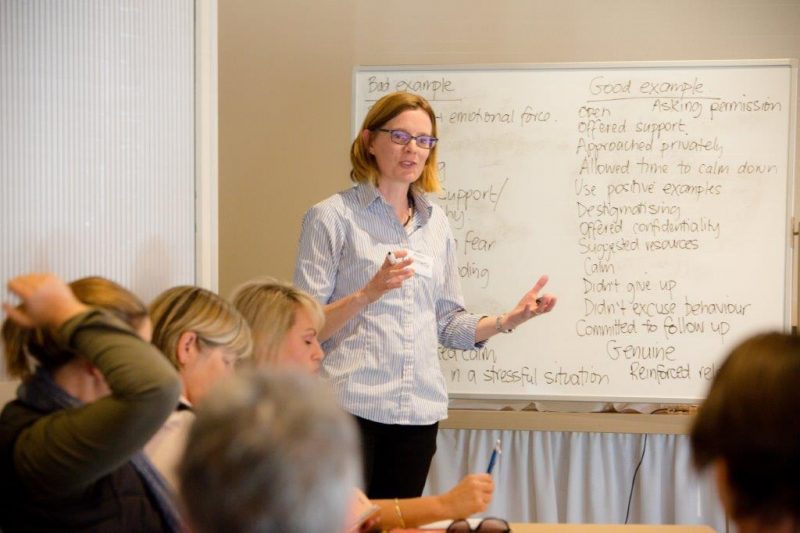
She also leads the Primary Producer Knowledge Network, working with farmers and industry stakeholders to prevent work-related risks to mental health for farmers and farmworkers. Her research findings have informed the development of a range of community-driven and community-informed programs and resources including mental health education workshops, the Steering Straight prevention-focused plan to support personal mental health, and the Campfire digital platform, podcasts, and blogs.
The selection process was rigorous in order to identify prospective directors who would add significant experience and insight to the Centre and the work it is doing. NCFH Chair, Mr. Greg Walcott, said it was particularly pleasing to be able to appoint a new Director from within the staff.
“Dr. Kennedy has developed the qualifications and ability required and is widely known and respected for her leadership in mental health and suicide prevention within farming communities. After serving as Acting Director, Dr. Kennedy’s appointment will ensure a seamless transition into a new era for the Centre as it continues to grow and broaden its activities.”
Dr. Kennedy takes on the position after the Centre’s Founding Director, Professor Sue Brumby, stepped down from the role. Professor Brumby was the driving force behind the establishment of the Centre in 2008 and led the Centre through its developing years and into the important position it maintains today.
Dr. Kennedy said about her predecessor, “Sue has left a great legacy through the formation and development of the NCFH, and has been (and continues to be) a wonderful mentor to myself and others in the NCFH team.
While recognising that we have made important gains in recent years to support health, wellbeing, and safety in farming communities (locally, nationally, and internationally), there is certainly much more that needs to be done. I’m looking forward to working collaboratively with the community, industry, and our health and research partners to create innovative and effective ways to enable and empower farming populations to take control of their own health, wellbeing, and safety.”
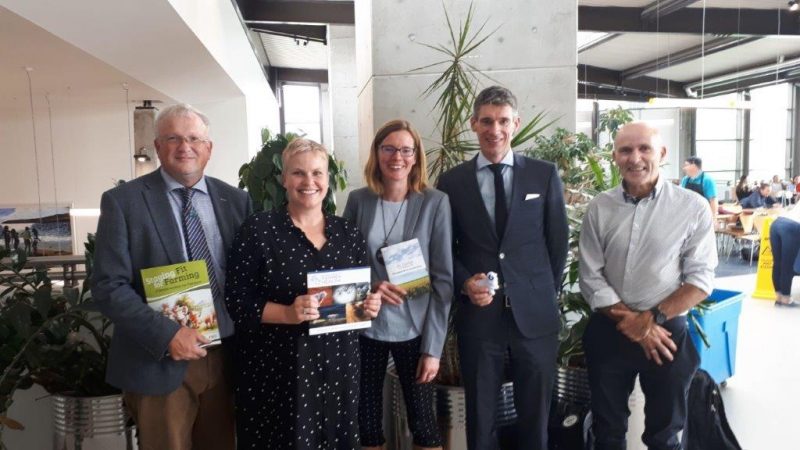
To connect with Dr Kennedy, email alison.kennedy@wdhs.net or call the NCFH on (03) 5551 8533.
Farmer Health eNews April 2022
Find out the latest from the National Centre for Farmer Health
- The NCFH welcomes Associate Professor Alison Kennedy as our new Director
- Join us for our upcoming events!
- Join us around the Campfire in 2022!
- Wellness Wednesday
Do you want to receive our eNews?
Episode 8: “Healthy ageing on the Farm”
In this episode, Sam Marwood from Cultivate Farms and Dr Kylie Crnek-Georgeson discuss a range of innovative options available to farmers as they transition to retirement while remaining on the farm or in their rural community. This includes talking about physical capabilities, farm safety, changing work roles and sense of identity and purpose as a farmer.
Now streaming on Spotify, Apple Podcasts and here.
This podcast is part of the Primary Producer Knowledge Network led by the National Centre for Farmer Health to promote mentally healthy workplaces. Campfire, part of the Primary Producer Knowledge Network, was funded by the Victorian State Government’s WorkSafe WorkWell Mental Health Improvement Fund.
Fuelling for increased energy
Di Dixon is a graduate of the NCFH Graduate Certificate in Agricultural Health and Medicine and founder of Panoramic Health and Fitness. In this blog, Di combines her expertise in farmer health and her passion for empowering people to overcome lifestyle obstacles with confidence, courage and ease.
The agricultural workforce is constantly on the go. Working long hours and often eating on the go, it’s no wonder that one of the biggest complaints is that you’re tired. Between family life, off farm work and the running of the farm, it’s no wonder you’re often leaning towards ‘grab and go’ style foods. Yet, while those ‘grab and go’ foods are easy in the moment, are they leading to the long term tiredness you’re feeling each day?
It’s no secret that farmers and farm workers have increased rates of chronic diseases, such as cardiovascular disease, diabetes, respiratory disease and certain cancers compared to their city counterparts. Lifestyle factors, such as diet and exercise, can reduce the likelihood of some of these conditions.
So how does diet and exercise decrease the chance or severity of these diseases and increase our energy?
By decreasing chronic inflammation in our body and allowing our immune system to work as effectively as possible.
The key thing to remember is that our bodies are geared towards survival – always. Inflammation is the body’s protective response to what it sees as invaders or trauma, and is part of the natural recovery process from an illness or injury. However, when this inflammation is constant, it can slow the processes in the body down in an attempt to heal or fight off the invader.
Common signs of inflammation include:
- Excessive fatigue
- Excess Visceral (belly) fat
- Sudden weight gain or loss
- Digestive problems
- Excess bloating of the stomach
- Persistent infections
There are two types of inflammation:
- Acute inflammation – this is when the body responds to illness or trauma in a specific region of the body. For example, if you tear a muscle, the area around that tear will swell in order to heal. This is the body doing its job to help you recover as soon as possible.
- Chronic inflammation – this is when we notice signs of inflammation that have no known trigger and don’t go away.
Put simply, if the body is busy implementing a protective response to an injury or illness (that may or may not be there), then its taking resources away from other systems and processes that we need to live optimally.
The good news is that one of the most powerful tools to combat inflammation doesn’t come in a prescription box but instead from your local fresh food grower or your local supermarket.
Foods known to increase inflammation, and that we should try to limit, are ones that include:
- Refined (processed) carbohydrates, such as soft drinks, white flours, and high fructose corn syrups.
- Trans fats – often listed as hydrogenated oils, they’re often added to foods to extend shelf life.
- Excessive alcohol.
- Processed meats – incl, sausage, bacon, ham, beef jerky, salami.
Foods known to decrease inflammation, and that we should try to increase our intake of:
- fruits, incl tomato
- green leafy vegetables
- Nuts
- healthy oils,
- fatty fishes, like salmon.
I hear you, “that’s all good, but how do I get those fresh foods into my lunch box and them still be edible by lunch or dinner time, when I’ve been on the tractor all day?”
- Ice packs are your new best buddy. Supermarkets now stock a whole array of ice packs for lunch boxes. Check out the school lunch box section in the supermarket or in the online apps.
- Separate your salad or meal ingredients and mix them just prior to eating. Lunchboxes with built in separators or smaller individual tubs are widely available.
- Freeze your sandwiches. A wholegrain sandwich is still a great option. Pre-make and freeze it and it will act like a cool pack for the rest of your lunchbox while it defrosts during the day. Same goes for fruit. Freeze and let it defrost during the day until you’re ready to eat.
- Pre-prep your salads for the week so you can ‘grab and go’ easily. If you know you’ve got a busy week coming up, plan out 1 or 2 lunches and have them in the fridge ready to go. A couple of different dishes including beg, beans and some added protein takes just a few minutes to throw together and provides a much healthier option than the usual grab and go foods.
For further info regarding inflammatory foods or if you think chronic inflammation might be an issue for you please see your local GP, Registered Dietician or Nutritionist.
References
Health Line: Chronic Inflammation – https://www.healthline.com/health/chronic-inflammation#symptoms
Farmer Health and Safety Toolkit – AgHealth Downloadable PDF
Further Information
NCFH fuelling farmers lunches toolkit – Diet and Nutrition – Fuelling Farmers’ Lunch Boxes | National Centre for Farmer Health
NCFH farmer fitness – Farmer fitness | National Centre for Farmer Health
Have a question or area of interest you would like Di to address?
This blog was written as a part of an ongoing collaborative blog series written by Di Dixon to help farmers, agricultural workers, and rural communities improve their overall health and wellbeing in a sustainable, achievable way. Di’s blog posts will be released fortnightly, and she welcomes any questions, topic requests or feedback.
To get in contact with Di, please submit a form below.
Child farm-related injuries – the unique challenges of the farming workspace
Abstract
Introduction: Globally, agriculture is one of the most dangerous industries. In Australia, the agricultural industry experiences the highest fatality rate per number of workers. The blurred division between the farm as a workplace and home results in children being engaged with the agricultural industry. Australian fatal and non-fatal child farm injury rates have been consistent over the last 20 years. This study investigated if behaviours, attitudes and lifestyles on farms influence the risk of child farm-related injury.
Material and Method: A modified Delphi process developed two Surveys—one for children (5-14 years) and their parents—measuring children’s exposure to farm hazards, risk-taking behaviours, attitudes to farm safety and experience of farm-related injury. Surveys were distributed in regional/rural Victoria.
Results: The developed surveys can be used in varying geographic regions to understand common behaviours occurring on family farms. Results identify the activities children frequently engage with on Victorian farms and describe children and parents’ attitudes and knowledge of farm safety.
Conclusion: Employers are required to provide safe workplaces. Children are exposed to and involved in the agricultural industry; often families rely on children for labour. However, current regulations do not protect them. To date, child farm injury data has been interpreted without an understanding of the behaviours on family farms. Developing a greater understanding of common exposures, behaviours and attitudes is required to inform the development of culturally appropriate child farm injury prevention strategies.
Co-designing the translation of research into practice to support mentally healthy workplaces in agricultural industries
Abstract
Introduction: Australian agriculture is vulnerable to an ageing and deceasing workforce, increasing technological demands, global markets, climate change and uncertainty. This poses challenges for work demand/control, workplace support, change management, role clarity/conflict, workplace relationships and environmental conditions—ultimately increasing psychological distress and suicide risk. The Primary Producer Knowledge Network (PPKN) aims to develop practical strategies to prevent work-related mental health risks in agriculture.
Method: PPKN engaged in a detailed co-design process with farmers and industry stakeholders—including stakeholder interviews, online development and feedback workshops, and pilot testing, and delivered online due to COVID19 restrictions. Co-design was informed by mental health research, evidence-based co-design strategies for working with vulnerable consumers, and identified work-related risks to health, wellbeing and safety.
Results: 9 recommendations were derived via co-design—guiding development of an interactive web platform, roadshow, and complementary resources to meet varying digital access/expertise. Ongoing solution-focused topic development—an iterative process with experts and primary producers—reflects varied needs of industry groups and age cohorts, and drives change in the design/management of work systems.
Conclusions: PPKN addresses work-related risk factors via an approach that is relevant, meaningful and empowering for the agriculture workforce. Co-design outcomes, challenges and recommendations are applicable across occupational groups where mental health and safety are of concern.
So did I pass the assessment? Following farm safety checklists to understand pesticide risk reduction using an actor-network theory approach.
Abstract
Introduction: Farmers are responsible for workplace safety which includes family, employees, contactors, visitors and themselves. Tragically farming injuries, illness and fatalities continue to occur in Australia. Despite a plethora of accessible farm safety self-assessment checklists that are designed to support farmers to achieve a safe workplace the rate of on farm fatalities has remained consistently unchanged over the last decade. Little is known about how farm safety checklists are used by farmers and remains allusive to those who create and make them available.
Materials and Methods: Using an actor-network theory informed ethnography, a farm safety self-assessment checklist is traced to a cropping farm where a range of herbicides are used including diquat dibromide and paraquat, and insecticides including chlorpyrifos and fipronil. The purpose is to understand the checklists’ role in influencing farm safety culture, specifically around the use of these pesticides and pesticide application, storage and PPE.
Results: Considering the origin of the checklist and how it crosses a university, workplace regulators, farm machinery, and legislation, this method shows where power and authority is held amongst these unrelated groups. Checklists are designed as farm safety culture mediators but this depends on the farmer who holds power until a fatality or severe injury occurs shifting this power to law and legislation.
Conclusions: So did I pass? Maybe, but there’s no grade. The checklist mediates safer pesticide practices when it is used by farmers to exert control over the health and safety of every person on the farm.
Child safety on farms spotlighted in a new study
The National Centre for Farmer Health and Deakin University are conducting a study to investigate the way behaviours, attitudes and lifestyles on Victorian farms are contributing to farm-related injuries in children.
For the past 20 years, the injury rate of Australian farming children has refused to come down, despite ongoing safety campaigns and horror stories of injuries and fatalities.
The problem is now the target of a major research project – that is missing just one thing.
The voice of farm children.
The National Centre for Farmer Health researcher and Deakin University Ph.D. candidate Jessie Adams needs rural Victorian children aged 5-14 years – and their parents.
“Everyone should be concerned about the injury rate not shifting after all this time – particularly as these injuries can be largely preventable,” Jessie said.
“There is a romantic view that farms are healthy, safe places for children to grow and develop,” she added.
“Which they can be, they should be, but they must also be seen as what they really are – work environments with hazards and dangers that are not seen in urban Australia”.
“By investigating the common behaviours, attitudes and lifestyles on Victorian farms we will be able to come up with a tangible assessment of what might be causing these problems.”
Participation in the research closes on March 31st and the more children engaging in the study, the more relevant the findings and recommendations will be.
Jessie said participation in this research can be done from the comfort of your own home/farm and does not require any travel or extensive time commitments.
“We know being involved in the daily work schedule of the family farm is also an accepted part of life in rural Australia – and always has been,” Jessie explained.
“But Australian research is yet to understand children’s exposure to occupational hazards, their risk-taking behaviours or to what extent common safety measures are being used on farms,” she said.
“This study will give us important insights into the context of children’s experiences on Victorian farms and help develop targeted ways to prevent fatal and non-fatal child injuries.”
Jessie said the project needed children in that 5-14 age range, who live on a farm or have visited one at least twice in the past 12 months, as well as their parents.
Participating will involve the completion of an online survey, the first half for parents while children will fill in the second section.
“The contributions of parents and children will be essential – and invaluable – in assisting to reduce child farm-related injuries.”
To find out more information and access the survey please visit: https://farmerhealth.org.au/injury-risk-and-safety-behaviours-of-children-on-victorian-farms
Media Contact
Annabelle Macgugan
amacgugan@wdhs.net
0458517699
Improving the choices we make, for a successful farming business
This topic will be discussed as part of our online Bonfire Q&A on March 23rd at 7:30pm, “Decision Making: Thinking About Your Thinking”
Steve thought he had things under control – but he had just lost his third staff member in less than 12 months.
And it couldn’t have come at a worse time. Shearing started in three weeks; and with his new share in a next-generation $50,000 bull; he wanted to start flushing his elite females next week.
Three staff members, three strikes. Steve was thinking it could be his fault, and starting to recognise that during this pretty challenging year he may have made some poor staffing decisions. Not only taking on inexperienced staff, but also setting some fairly unreasonable demands based on their skill levels. Maybe he needed to put some more planning and time into recruiting and training his staff before he got a reputation as a bad boss and lost the potential for getting help at all.
Right now, he could feel his stress levels rising—thinking about how he would get through the next month – and try to find a new worker at the same time.
The Grains Research Development Corporation has been thinking about the same problems, and its report shows staffing issues are a constraint for many in agriculture (https://grdc.com.au/news-and-media/news-and-media-releases/south/2020/september/paddock-practices-managing-and-retaining-staff).
GRDC says human resources management is an essential component of any business; but is often undervalued (and misunderstood) as employers have evolving responsibilities to staff and regulations to follow, especially as a result of COVID-19 control measures.
It says planning for labour hire and managing employees fairly and appropriately can set an employer up for success – or not.
And the hidden damage of Steve’s problems did not end with him overthinking all those things going wrong.
Three staff members lost in such quick succession also ate away at Steve’s sense of self-worth, and his confidence to tackle the next job.
In effect, it can start mental health challenges, or compound existing ones.
Making agricultural workplaces mentally healthy impacts so many – the farmer, his or her family, their staff (and their families) and the people with whom they interact in their various roles.
While that might leave you thinking it is a mental minefield, it starts with identifying the factors in the design and management of our work that can positively or negatively impact a farmer’s, or employee’s, mental health; such as:
- High work demands
- Low levels of control
- Poor workplace support
- Poor organisational change management
- Poor organisational justice
- Low role clarity
- Role conflict
- Poor workplace relationships
Good overall decision-making drives a healthy and resilient business, and requires the ability to think clearly.
When we talk about decision-making – it seems to be influenced by the head (logical, rational, calculation), the heart (emotional, values) and the gut (intuition).
Some farmers like to make all their operational and business decisions alone, others use their work team or family to make decisions. Some also bring in consultants to help.
Running a farm business can be a complex work environment; with a lot of different stressors … and often a lot of factors outside of our control, no matter what we think (https://www.lls.nsw.gov.au/regions/murray/articles,-plans-and-publications/production-advice-may-2020/how-can-i-make-better-farm-management-decisions).
Being proactive and making decisions early should be part of every farm business plan. Behavioural Scientist and Acting Director of the National Centre for Farmer Health Dr Alison Kennedy explains that there is plenty of evidence to show that making good decisions is very difficult during periods of high stress:
“People often make riskier choices and don’t think through the full consequences of decisions. There’s also evidence to show that high stress levels can encourage shift people’s decision making strategies from those that are goal-directed to those that are based on habit. From a farming context, we know that avoiding making any decisions can be just as damaging as making poor decisions. Many of us will know stories about farm succession decisions that have been put off for too long, resulting in family conflict and financial difficulty. Others will know of experiences where farmers have avoided making decisions like destocking in the face of impending drought, only to be forced to sell stock in poor condition when the market is already down.”
Adrian Smith, senior NSW land services officer, says the differences between the top 20% of profitable farmers and the rest is their ability to think clearly; make the right decision at the right time.
But don’t think that comes naturally, Smith says making good decisions is a skill that can be learnt even though making decisions is something we all do nearly every waking minute – often without thinking at all.
Making informed, rational and practical decisions is integral to a successful farm business.
Just because we make decisions all the time, it doesn’t necessarily follow that we are good at making them!
But if you stop and think about it, you realise there are ways we can improve the choices we make.
We can listen to the experiences of others, and think about how we can learn from their experiences (https://www.peopleinag.com.au/). Before you think too much on your problems, think about the options and support that is available – it’s more than worth thinking about
Injuries on the farm can lead to stress, long-term health concerns and loss of income or even fatalities, so preventing them from happening is the best way of protecting your mental health. When it comes to running the family farm, investing in mental health initiatives is not only good for your family and workers, but it’s good for business too. The NCFH is supporting farmers just like you to manage and respond to work-related risks that impact on workplace mental health – these are factors in your work that can affect an employee’s mental health and include high job demands, low job control, low role clarity and more. Managing these factors, means decreasing the risk of work-related stress, which can prevent physical injury, mental injury or even both at the same time.
Find out more about being mentally safe on farm at www.farmerhealth.org.au/campfire.
This blog is part of the Primary Producer Knowledge Network led by the National Centre for Farmer Health to promote mentally healthy workplaces. Campfire, part of The Primary Producer Knowledge Network, is funded by the Victorian State Governments WorkSafe WorkWell Mental Health Improvement Fund.
You can join the online bonfire session, “Decision Making – Thinking About Your Thinking” on March 23rd at 7:30pm.
*Primary producers featuring in this blog are fictional, but based on research interviews with farmers, and developed with the assistance of the National Centre for Farmer Health
The health and wellbeing of rural women
Our guest blog writer for International Women’s Day is Di Dixon— a graduate of the NCFH Graduate Certificate in Agricultural Health and Medicine and founder of Panoramic Health and Fitness. In this blog, Di combines her expertise in farmer health and her passion for empowering people to overcome lifestyle obstacles with confidence, courage and ease.
When you think of a woman on a farm, what picture comes to mind?
Is it an image of them holding a baby on their hip waving their husband off for the day, then heading back in to tidy up the breakfast dishes?
Or do you imagine them in boots, jeans, old shirt and hat rushing around getting the kids to the school bus then heading out to work on the property for the day?
A day in the life of a woman in agriculture is now more often than not, the second one and with that comes a lot of mental load. This is what I’m going to discuss with you today.
Like many industries, the role of women in agriculture has evolved rapidly over the past 50 years. We’re no longer the main child rearer while our partner heads out to work for the day. We head out into the paddocks, dairies, shearing sheds and onto tractors and physically take on our share, while, in many cases, also contributing to the family finances through off-farm employment. This can also be the case with our male counterparts, yet, what we do know is that women take on a disproportionate amount of the mental load that comes along with the actions of running a family household, farm and outside employment.
What is mental load? Mental load is the often unseen actions performed and the decisions made on a daily basis that ensure our lives continue to run smoothly. Things like making sure budgets are on track, appointments are made on time, knowing when household chores need to be performed, being the first to drop everything to pick sick kids up from school, and knowing the safety protocols for farmworkers. In more recent times, it’s organising that there’s enough sheep drench ready and booking appointments for her partner’s vaccinations too.
So how does carrying this mental load affect our health?
According to the Australian Institute of Health and Welfare, chronic stress, regardless of the cause — it’s all just stress to your body — can cause problems with your:
- immune and digestive systems
- reproductive and cardiovascular systems,
- sleep, and
- Can cause serious chronic health issues like diabetes, high blood pressure, heart disease, depression, and anxiety.
To add to that, in July 2021 the National Rural Health Alliance reported that while rural men have consistently higher suicide rates, incidences of non-lethal self-harm are higher for rural women. It is suggested that these self-harm occurrences are often intended to alleviate negative emotions or for self-punishment. Can we concede from these rates that the stress and expectations rural women are putting themselves under from carrying this mental load is leading to an increase in poor mental health? While I may not be able to decrease your mental load, I’d like to chat about how to ensure you care for yourself while carrying it.
When coaching my clients through caring for themselves, I focus on the five pillars of healthy habits and pick simple strategies to surround them.
𝑬𝒂𝒕 – eat slowly at mealtimes and stop when you feel 80% full.
𝑴𝒐𝒗𝒆 – aim to move in some capacity 5 days per week. Somedays this might be a full workout, others it might be a 10min walk. It all counts.
𝑻𝒉𝒊𝒏𝒌 – take time to enjoy and reflect on your day. Practice gratitude. You can keep a journal or not, but actively focusing on what you are grateful for can help to turn the tide of negative emotion. Did your kids do the dishes today without being asked? Did it rain? Is the harvest finished for another year? There are many things to be grateful for in our days, but sometimes they’re harder to see.
𝑹𝒆𝒔𝒕 – take time to stop and recover. Sleep for 7+ hours per night and try to enjoy at least one slow morning each week.
𝑪𝒐𝒏𝒏𝒆𝒄𝒕 – take time away from farm work and your outside employment to connect with those around you. Maybe this is heading out for a short walk by yourself and calling a friend along the way, maybe it’s catching up for a hot beverage. Whatever works for you, our social connection plays a large role in improving mental health outcomes.
If you’re reading this and thinking that’s way too much and only adding to the mental load. Pick one. Work on one strategy at a time and work to implement that in a way that works for you. Our health is not a race. Take as much time as needed to build these habits slowly to ensure they’re not just a flash in the pan. Consistency and doing something will always win over trying to do it all.
References used in this blog
nrha-mental-health-factsheet-july2021.pdf (ruralhealth.org.au)
Stress and trauma – Australian Institute of Health and Welfare (aihw.gov.au)
Further information
NCFH Fact Sheets – Stress and farming – coping tips | National Centre for Farmer Health
NCFH Managing Stress on the Farm Managing-Stress-on-the-Farm Booklet
Preventing bullying on the farm: a workplace obligation
This topic will be discussed as part of our online Bonfire Q&A on March 9th at 7:30pm, “Preventing bullying in the farming workplace” with John Darcy (Victorian Farmer’s Federation).
My name is Sharon. Not Shazza, not Shaz and absolutely not Girlie or Dopey.
It doesn’t seem such a big deal; but very quickly after I landed my first ‘dream’ job it was sounding alarm bells in my head.
Growing up on a ‘hobby’ farm all I ever wanted to do was work on a real one, and I had not been able to resist those dreamy-faced Jerseys on a dairy down the road – so that became the dream.
I couldn’t believe how lucky I had been to find a job straight out of ag school; it all just seemed perfect.
Just as I still can’t believe how wrong it all went; or how long I put up with it.
I was employed after an interview with the farm owner and his wife; but their son-in-law Steve actually ran the business; the owners were stepping back and spending more time away from the farm.
And he started on me from day one; introducing me to the rest of the team as ‘Shazza’ and when I politely said I preferred Sharon he just laughed and said: “Hey, it’s just a nickname”.
But it wasn’t. Clearly, he didn’t like being corrected and when I look back my first day was the beginning of the end of my dream.
I got on well with everyone else; was a good worker who rarely needed to be told anything twice, but it was never good enough. Steve was always watching me, complaining I was too slow, wasn’t treating the animals properly, was cleaning up and Shazza soon became “bloody hell, girl, you are a useless lump”.
Yes, I know, I should have walked out then but for some unknown reason I thought it would make me a failure. And I wasn’t the only one suffering. Steve treated the two other women just the same – but was all buddy-buddy with the guys we worked alongside.
Even worse, his ‘mates’ knew what was happening, you could see it in their faces, but not one of them ever spoke up, or said anything to support us. It wasn’t until much later I realised they were probably intimidated by him too, and worried about their jobs.
Within 10 months I had had enough. The day Steve grabbed the cups I was reaching for, called me “useless bitch” and shouldered me aside I simply kept going in the direction he had pushed me, walked out of the dairy and out of the job.
I tried to explain it to the owners, but they simply said Steve “didn’t mean anything by it, he was just getting used to managing people”. If I hadn’t been taught respect by my parents; I would have laughed at them; I certainly felt like it.
But in the end, the worst thing about it all was not the job lost, it was my loss of self-confidence; and it would take me a couple of years and a bit of therapy before I realised none of this was my fault, that dairy had been simply set up for disaster.
I learnt, through time and talking about my experience, that the workplace had an obligation to me to set a culture and standard that does not tolerate bullying. That obligation wasn’t met.
It should never have been my responsibility to walk away from the job, to solve the problem – there should have been systems in place to prevent it ever happening.
Sadly, Sharon’s story is much more common than most of us would know – or like to admit. Perhaps the one upside of the pandemic is the focus it has put on mental health; especially in the workplace. Because if it isn’t positive and fair, somewhere, someone, is going to pay the price.
Injuries on the farm can lead to stress, long-term health concerns and loss of income or even fatalities, so preventing them from happening is the best way of protecting your mental health. When it comes to running the family farm, investing in mental health initiatives is not only good for your family and workers, but it’s good for business too. The NCFH is supporting farmers just like you to manage and respond to work-related risks that impact on workplace mental health – these are factors in your work that can affect an employee’s mental health and include high job demands, low job control, low role clarity and more. Managing these factors, means decreasing the risk of work-related stress, which can prevent physical injury, mental injury or even both at the same time.
Find out more about being mentally safe on farm at www.farmerhealth.org.au/campfire.
This blog is part of the Primary Producer Knowledge Network led by the National Centre for Farmer Health to promote mentally healthy workplaces. Campfire, part of The Primary Producer Knowledge Network, is funded by the Victorian State Governments WorkSafe WorkWell Mental Health Improvement Fund.
You can join the online bonfire session, “Preventing bullying in the farming workplace” with John Darcy (Victorian Farmer’s Federation) on March 9th at 7:30pm.
*Primary producers featuring in this blog are fictional, but based on research interviews with farmers, and developed with the assistance of the National Centre for Farmer Health
Reflecting on our role in the COVID-19 response
By Susan Brumby.
Recently a family member and friends arrived home to play a weekend game of cricket. It was an exciting time as, due to COVID, it was the first opportunity for activities like this to go ahead. We followed the rules and everyone did RAT tests before coming into the house. A couple of them had young families and were looking forward to school going back. One of them mentioned that they had a nice break over Christmas and January and felt rested and grateful for the holiday. I reflected on the break – or short break – that many of us had recently had in health care.
For many of us working in healthcare we had been called back from our week of leave to assist with an outbreak of COVID – 19 (Omicron variety).
The Western District experienced a large outbreak following the Christmas and New Year period where families and lots of young people had come together at the traditional district beach spots (Port Fairy, and Robe in SA) to celebrate the conclusion of 2021 and welcome with hope 2022. As cars of young people appeared at our drive-thru testing clinic on the week of January 3, 2022, many were showing signs of COVID. They were unsure if it was a hangover or really something to be worried about and wanted to be tested and do the right thing. Some lived on farms and were worried about taking COVID back home with them. Later in the week the demographics started to shift, with older people and parents bringing family members in.
As a result of the COVID-19 pandemic and the outbreak in Southern Grampians, a huge number of individuals, groups, and businesses all stepped up to help in their local communities. Extra volunteers were called in and staff were recalled from leave. Our NCFH team was among them, and I wanted to share some insight into the small parts we played in the COVID-19 response, and thank the many people who assisted and volunteered to help our community.
Across the pandemic, our team have helped in the delivery of contact tracing efforts to slow the spread of infection in our local community of the Southern Grampians. We have also taken on responsibility for managing our local COVID-19 hotline, providing information, vaccination bookings and referrals to local COVID-19 support services to help with meals, food delivery, and hospital in the home to our community members–fielding over 640 calls since January 2022. In addition, various team members have taken on responsibilities assisting with the mass testing screening clinics which involved working at the showgrounds, swabbing and triaging and generally helping where we could along with the coordination of the COVID-19 respiratory clinic. It’s been a very busy start to the year!
What was also amazing was the huge work of volunteers who were there directing cars for testing, helping with vaccinations, delivering meals, and completing numerous other tasks behind the scenes – selflessly assisting to keep our community safe. There is no doubt that together we are stronger.
As for the cricket – it was a great weekend and wonderful for the community to get together and enjoy everything our district has to offer. Let’s hope we see more of this in 2022.