

Keep it simple
Di Dixon is a graduate of the NCFH Graduate Certificate in Agricultural Health and Medicine and the founder of Panoramic Health and Fitness. In this blog series, Di combines her expertise in farmer health and her passion for empowering people to overcome lifestyle obstacles with confidence, courage, and ease.
I’m sure we’ve all heard of the KISS principle and we often might describe ourselves or our actions as “all or nothing”. Both of these can affect our overall health habits and our overall lifestyle. So let’s look at both of them today and how they tie into your lifestyle.
KISS – Keep It Simple. When it comes to our health and improving what we already do we often overcomplicate it. I’m not sure about you, but my life is too short and too busy for complicated habits and routines. We also know that it’s what we do every day that will make the biggest difference to our overall results, not the things we do as a once-off.
That would be like buying your cattle, putting them in the paddock and expecting them to nurture themselves. In order to thrive they need daily feeding.
So, much like the cattle, we can’t expect that by doing all the healthy things for a day, then forgetting about them. We need consistency to thrive. This is where 5-minute actions come into play.
5 Minute Actions
These are very much what they sound like. An action that can be done in 5 minutes or less will take us closer to our goal. These actions must be realistic and achievable. Often these actions will feel insignificant, but over the course of weeks, days, months, and years these are the actions that add up. A simple equation to work by is that:
consistency = progress
In order to set yourself a 5-minute action start with your goal, then break it down into smaller and smaller steps, until you get to an action that is realistic for you to achieve in 5 mins or less and can be done every day.
For example, I would like to lose 10kg 🡪 eat less and move more 🡪 slow eating of meals down to stop over eating 🡪 place knife and fork down between mouthfuls.
In this example, your 5-minute action is to place your cutlery down between mouthfuls. By doing that small action daily your satiety (hunger/fullness) signals have time to take effect when you’re eating and you end up eating less overall. A simple, uncomplicated way to get daily runs on the board and improve your overall health habits.
Building this consistency into our habits also takes away from that “all or nothing” mentality that we can often slip into when we hit a stressful point with our health. Have you ever said to yourself “I just need a reset”? This is when we dive into the latest fad diet, 6-week challenge, or 30-day detox. These are the ones where we dive in and make wholesale changes to our lifestyle. We exercise every day, eat only veggies and protein, and practice self-care. How long does all that usually last?
While these programs and diets have their place, they’re often not designed to be the long-term fix we are after which is why we find that once they finish, we fall back into old habits, and soon enough the results we achieve are reversed. So let me ask, when it comes to your farm, would you harvest your crops and shear your sheep at the same time? Not usually, you’d pick one and focus on that. So why do we try to do both when it comes to our health?
So here are the key takeaways. If you’re feeling overwhelmed with your health and feel like you can’t keep it all up. You’re making it too complicated and likely engaging in that all-or-nothing mindset. Break it down and keep it simple. Pick daily habits that you can achieve and focus on doing them well and consistently.
Di Dixon Healthy and Active Farmer Blog Series
This is blog post four in a series exploring health and wellbeing among farmers and farm workers, and how they can take simple, easy steps to improve their overall health and fitness. A list of the previous posts to date is below.
Fuelling for increased energy | National Centre for Farmer Health
The health and wellbeing of rural women | National Centre for Farmer Health
If you have a question or queries for Di, please reach out to her via admin@panoramicfitness.com.au.
New Mental Health Support For Australian Farmers Developed in Victoria’s Great South Coast
Farming communities across Australia will benefit from two ground-breaking initiatives in suicide prevention developed on Victoria’s Great South Coast; a framework to train farming communities in mental health support and a self-managed mental health action plan.
Deakin University’s National Centre For Farmer Health has recently completed a two year project to improve access to appropriate and effective mental health support in rural farming communities.
The project was part of the Great South Coast Suicide Prevention Place Based Trial (GSCSPPBT), a joint commitment between the Western Victoria Primary Health Network (PHN) and the Australian Government recognising the benefits of collaborative, community-based approaches to suicide prevention.
Key initiatives of the Farmer Health Suicide Prevention Project include the development of a framework to train and support farming community members to provide mental health support to each other, as well as Steering Straight, a self-managed mental health action plan.
While the framework will underpin ongoing work in community-based suicide prevention, Steering Straight is already being utilised by farmers across Australia. It has also attracted international attention, with farmers in New Zealand and Canada requesting access to the plan.
Both initiatives are designed to provide crucial support in farming communities where access to face-to-face mental health support is limited and does not always meet the needs of farming populations.
According to national coronial data, an Australian farmer dies by suicide every 10 days – almost 60% more frequently than non-farmers. While there is no clear evidence of higher rates of diagnosed mental illness in farming communities, farmers face a wide range of situational factors that can increase their risk of experiencing poor mental health and suicidal thinking. These factors include geographic and social isolation, extreme climatic events and an unpredictable and uncertain future.
Steering Straight was co-designed with farming community members and uses practical strategies to empower individuals to take responsibility for their own wellbeing. The personalised action plan helps to build resilience and also reduces the chance of experiencing a challenging situation as a crisis event.
Steering Straight has been incorporated into the National Centre For Farmer Health’s Managing Stress On The Farm book, and has been accessed over 1,000 times in digital format. Managing Stress On The Farm is also available in printed format.
Alison Kennedy, Director – National Centre for Farmer Health, Associate Professor – Deakin University (picture attached) said, “It’s been exciting to involve the farming community so closely in the design and development of Steering Straight —knowing that the resource is meaningful and helpful for those who use it. It’s also great that we’ve been able to include it as part of the Managing Stress on the Farm book, which has strong existing interest from farmers around Australia and internationally. We’ve already had requests for Steering Straight from as far away as New Zealand and Canada”.
Steering Straight was developed in conjunction with community members who understand the unique challenges of farming life.
Kelly Barnes said “Being part of the co-design process for Steering Straight was very rewarding. Having experience of life on the farm and of poor mental health whilst living and working remotely enabled me to contribute ideas and allowed us to design a plan that worked. It allowed me to draw on my own experiences to create something relatable and practical to help others. I have also used it myself to keep on track during these challenging times”.
Rowena Clift, Chief Executive Officer at Western Victoria Primary Health Network said “The development of Steering Straight is a great example of a collaborative, community-specific approach to suicide prevention. It is heartening to see that the resource is being used by farming communities in the Great South Coast, as well as across Australia”.
Steering Straight is accessible via the Managing Stress on the Farm Booklet – https://farmerhealth.org.au/managing-stress-book
Free hard copies are also available by contacting National Centre For Farmer Health on (03) 5551 8533
Available For Interview: Alison Kennedy, Director – National Centre for Farmer Health, Associate Professor – Deakin University. Email: Alison.Kennedy@wdhs.net
Photography: Courtesy of the National Centre For Farmer Health – Click here to download.
Campaign Materials: Click here to download
Media Contact: Janet Boland, Passionfolk on behalf of Western Victoria Primary Health Network
Email: janet@passionfolk.com Phone: 0409 523 258
——————————-
Further Information On The Great South Coast Suicide Prevention Place Based Trial:
The Great South Coast Suicide Prevention Place Based Trial is an initiative aimed at delivering activities to reduce the suicide rate in the shires of Corangamite, Glenelg, Moyne and Southern Grampians and the City of Warrnambool.
Coordinated by Western Victoria Primary Health Network (WVPHN) in partnership with the Federal Government and a range of health care service providers, the trial offers a coordinated approach to reducing the suicide rate in the Great South Coast with a range of community network support activities.
WVPHN Chief Executive Officer Rowena Clift said: “Many families across the Great South Coast are struggling to understand why their loved ones have taken their own lives. From teenagers to adults and both male and female; the suicide rate for Great South Coast is unacceptably high. We want to ensure that every single person who may be struggling with thoughts of suicide or has attempted suicide has support networks available to help them when and where they need it. These activities will help us achieve this by filling identified service gaps and giving the community the support it requires.”
Information on the all of the individual activities in the Great South Coast Suicide Prevention Place Based Trial can be found here: https://bit.ly/3xCi9LL
Boosting your security on the farm – it’s well worth your while
This topic will be discussed as part of our online Bonfire Q&A on May 18th at 7:30pm, “Preventing Crime on Farm”
Bill Jones and his family live through some pretty tough times on the land.
But they were challenges he could see coming, could meet face on.
Being robbed is different; it’s an invasion of your private life. The idea that someone could take whatever they wanted from your house had really rocked Bill – and his family.
They’d never bothered with locking doors; lived a long way from town and the homestead couldn’t be seen from the road. But that hadn’t stopped thieves trashing the house and cleaned out his wife Sue’s jewellery and every bit of technology.
And while Bill was trying to process losing those personal treasures, with his faith in the goodness of others shaken to the core, his son Steve came in and said he’s called the police, the telehandler and twin cab ute had vanished from their other property. No-one really knew when, none of them had been out there for almost two weeks.
Bill said he had gone from unlocked doors and keys in the ignition of farm vehicles to doubting his neighbours, people he had known most of his life, “because none of them got robbed”.
“I’m probably wrong but just can’t help thinking it. I saw Jim and two farmhands in town today and I struggled to even speak as we crossed,” Bill said. “I know it wouldn’t have been Jim, but he has quite a few people working for him and who knows?” he said.
“What’s more, when the police came out they were very supportive. They had this very precise guide on boosting security – and your safety – on farms.
“It was really good, and I could have kicked myself because so many of its tips were so obvious; but I thought life in the country was different; here nearly everyone knows everyone else, we’re mates, families connected by marriage, we shouldn’t have to lock our doors.
“But I guess the times might have finally caught up with us, and it’s just so sad.”
Sue says sad doesn’t define what her husband has gone through.
She said he was blaming himself and just couldn’t let it go.
“He is devastated by the loss of my jewellery, a lot was my mother’s and grandmother’s, and was going to our daughter,” Sue said.
“I have tried to tell him it’s not the end of the world, but it is really eating at him.”
During the first visit, and when they came back to the farm to tell Bill the ute was recovered, police once more went through the steps he needed to take.
Bill was still getting that organised when Sue came flying out the back door to the shed where he was working, screaming with delight: “The police just rang, they think they’ve got nearly all my jewellery back after chasing up some clues from the ute”.
“How fantastic is that? From what they read out on their list of items I don’t think anything is missing,” she said hugging Bill.
That was when she noticed Bill crying. She knew all this had changed her husband, but now she was crying too.
“It’s alright,” he said. “It’s just all washed over me – we left ourselves wide open, and now we’re getting a second chance, I can’t believe it.
“Insurance will replace the telehandler but nothing would ever replace your jewellery.”
And Bill wasn’t taking any chances again, following police advice to the letter:
- Bill keeps an inventory of tools and equipment with each make, model and serial numbers recorded.
- All gates, doors, windows, and other openings have secure and working locks.
- His gates close properly, and gates to roads are chained.
- If you want the key to a farm vehicle it’s stored indoors – not in the ignition.
- All stock is more regularly counted and all are tagged.
- Firearms, chemicals, fuel, and other dangerous goods are stored in safe containers.
- All machinery and vehicles are catalogued, photographed, engraved and a copy is held in records – and a second registered with police.
- And he has CCTV cameras and sensor floodlights set up around buildings on all properties.
It took a bit of work, and a little bit of money to get all these things working – but Bill knows it’s priceless work.
Injuries on the farm can lead to stress, long-term health concerns and loss of income or even fatalities, so preventing them from happening is the best way of protecting your mental health. When it comes to running the family farm, investing in mental health initiatives is not only good for your family and workers, but it’s good for business too. The NCFH is supporting farmers just like you to manage and respond to work-related risks that impact on workplace mental health – these are factors in your work that can affect an employee’s mental health and include high job demands, low job control, low role clarity and more. Managing these factors, means decreasing the risk of work-related stress, which can prevent physical injury, mental injury or even both at the same time.
Find out more about being mentally safe on farm at www.farmerhealth.org.au/campfire.
This blog is part of the Primary Producer Knowledge Network led by the National Centre for Farmer Health to promote mentally healthy workplaces. Campfire, part of The Primary Producer Knowledge Network, is funded by the Victorian State Governments WorkSafe WorkWell Mental Health Improvement Fund.
You can join the online bonfire Q&A, “Preventing Crime on Farm” on May 18th at 7:30pm.
*Primary producers featuring in this blog are fictional, but based on research interviews with farmers, and developed with the assistance of the National Centre for Farmer Health
Preparation and prevention – our tools to build rural resilience in the face of disaster
This topic was discussed as part of our online Bonfire Q&A on May 4th at 7:30pm, “Rural Resilience and Disaster Prevention”
Bill was at the weekly training night at his CFA station – it was a planning session for the coming summer.
But even as the brigade captain started outlining the latest advice from headquarters Bill was drifting, thinking even the military runs a distant second to agricultural Australia when it comes to planning.
We plan everything, from paddock rotations, to harvest, we plan to invest in more genetics for herd, we plan to trade more sheep, we have financial plans, expansion plans, succession plans, occasionally even holiday plans, hell at the dinner table we even plan to have planning meetings.
In 1904 a 19-year-old girl in London planned to write about her faraway country and Bill reckoned just a few lines told the Australian story:
I love a sunburnt country,
A land of sweeping plains,
Of ragged mountain ranges,
Of droughts and flooding rains.
That’s Australia alright, he thought – we burn, we flood, we face famine. In between we have bumper crops, bull markets, prices go up, then we burn, we flood, we face famine.
Of them all Bill knew fire was the worst, he’d seen it. Too often, too close. He knew the soul-destroying agony of drought, had seen floods, and yes, they could be bad.
Like fire, they can all be planned for. But on the fire frontline things change fast – and when they do plans quickly become panic.
As brigade communications officer, it was Bill’s job to get the most important message to local media and communities in his region.
“The thing is,” Bill told the journalist at the local paper, “there really is just one plan anyone needs to know – and done right it never fails.
“Check with all the other agencies, I’m pretty sure they all agree with the CFA advice,” he said.
“Which is?” said the journo, reaching for his recorder.
“It’s simple. Plan for all aspects of disaster preparation and recovery, and make sure everyone understands the plan, knows what to do, where to go and where everyone else is,”
“That’s it?” said the journo, now putting away his recorder.
“Of course not,”
“It’s much simpler – have your plan, work it out, and when there’s even the most remote chance you only have to do one thing.
“Leave. And leave early. And if you think you are leaving early enough, it’s already too late. So get out earlier. If the forecast is for extreme fire danger on Friday, make sure you are gone Thursday. Is that simple enough?”
Except now the journo wanted to add some meat to his story.
Without a lived example, he could not turn Bill’s brief lines into an eye-catching story.
Eye-catching? Bill almost shook his head with despair, looking at this young kid making his start on a bush paper with absolutely no idea about what fire could really do.
So he told the journo about that day.
Because at Bill’s place, despite all the plans, despite his time in the CFA, when the flames came, and they came so fast, he wasn’t there. Didn’t need to be, because his family had a plan.
Leave early, never look back, believe the fire rating when it warns a day could be catastrophic.
And it was. Bill and his brigade – along with dozens of others – were at the fire front that day, miles from home, when the wind suddenly turned, picked up the flank they thought was under control, and went tearing west towards town, faster than fire trucks could get out of the way, faster than anything anyone had seen.
So he told the kid about the small town in the unexpected path of the fire, about the people who died, the people he had known. The grief of losing family and friends that day had shaped his believe and understanding that you prepare to get out, and you get out early.
“This is great stuff,” said the kid. Flicking the switch on his recorder and they parted outside the station. And Bill drove home – hoping the message was received, but he could never know for sure. Because he didn’t know to leave early, until it was already too late for those he loved.
Injuries on the farm can lead to stress, long-term health concerns and loss of income or even fatalities, so preventing them from happening is the best way of protecting your mental health. When it comes to running the family farm, investing in mental health initiatives is not only good for your family and workers, but it’s good for business too. The NCFH is supporting farmers just like you to manage and respond to work-related risks that impact on workplace mental health – these are factors in your work that can affect an employee’s mental health and include high job demands, low job control, low role clarity and more. Managing these factors, means decreasing the risk of work-related stress, which can prevent physical injury, mental injury or even both at the same time.
Find out more about being mentally safe on farm at www.farmerhealth.org.au/campfire.
This blog is part of the Primary Producer Knowledge Network led by the National Centre for Farmer Health to promote mentally healthy workplaces. Campfire, part of The Primary Producer Knowledge Network, is funded by the Victorian State Governments WorkSafe WorkWell Mental Health Improvement Fund.
You can review the online bonfire session, “Rural Resilience and Disaster Prevention” from May 4th at 7:30pm.
*Primary producers featuring in this blog are fictional, but based on research interviews with farmers, and developed with the assistance of the National Centre for Farmer Health
Overcoming isolation on the farm – it starts with prevention
This topic was discussed as part of our online Bonfire Q&A on April 20th at 7:30pm, “Overcoming Isolation on Farm”
Steve knows stress and isolation are trending conditions in the Covid world.
And the fifth-generation mixed farmer also knows that these days everybody is stressed about something – from people on the farm to people in every walk of life. The uncertainty of Covid and the restrictions imposed kept us away from others in the community. For months on end Steve almost never got off the farm. He’d lost contact with his mates. He became really isolated and spent too much time in his own head, overwhelmed by his worries.
Unlike serious physical illness, stress and the emptiness of isolation allow you to soldier on, initially. However this is often a mistake because stress is not just an emotional cancer, its physical toll is very real and it is insidious, so you could be a ticking time-bomb without realising it.
Yet Steve, who denied his problems for more than a year, is now a willing advocate for spreading the message that isolation and stress can be prevented; or once they start, can be managed.
“Isolation and stress were my problems,” Steve explained. “My wife had seen it, my father had as well – and both had spoken to me about how I was managing it (or failing to manage it) on several occasions. They could see how deeply fatigued I was by carrying this burden alone. I just soldiered on, but I had started to shut them out.
“For me, the wake-up call came from our 12-year-old daughter. I had jumped in the header and switched it on. I must have completely tuned out for a little while. The next thing I knew Zoe was in the cab with me, shaking my shoulders and when I focused I could see she was terrified.
“I told her it was fine, nothing was wrong. But I had been so exhausted that I’d been asleep at the wheel of the header. Luckily it wasn’t moving! Turns out my wife had sent Zoe straight after me because I had forgotten my phone.”
Steve knew he could not do that to his child again. He knew what his wife and the rest of the family had been doing, trying to tell him something critical and urgent. The problem was he had tuned out and wasn’t listening.
“My family saved my life. My daughter snapped me out of my declining mental health. Getting over it wasn’t easy. It was a real team effort, but it saved me, my marriage, my family and our farm.”
The best research – here and around the world – has shown the recognised risks of social isolation for farmers, compounded by stress is a problem everywhere.
In parallel with his medical support, Steve and his wife read the booklet Managing Stress on the Farm (published by the National Centre for Farmer Health). It provided a bullet-point precis of the problems he dealt with on a daily basis – but always tried to solve alone.
“There’s a feeling in rural communities that only mentally ill people go to counsellors or psychologists. That label can be stigmatising and result in those support services not being used. And that was me, the typical stoic, self-reliant male, unable to ask for help when it was so obvious that I really needed it” he added.
Managing Stress on the Farm booklet helped Steve to take positive steps to tackle his sense of isolation, stress, and depression. The first step was to talk about his worries with other people who he trusted and to come up with a plan.
“Even if you only confront one or two issues at a time, you quickly realise each one is like adding another deadweight to your ability to perform at anywhere near your best,” Steve said.
“Just like footy, or any sport, you can actually be coached to overcome your fears or weaknesses. You can learn to be a happier person, be more organised, and have some boundaries. Most importantly, you need to recognise that you can’t do it all on your own – farming is a team challenge and your family and friends need to be part of every step you take on the road to recovery,” he added.
Further reading:
- From inside the farm gate stories: From Inside the Farm Gate | National Centre for Farmer Health
- NCFH Managing Stress on the Farm booklet: Managing Stress on the Farm Book | National Centre for Farmer Health
Injuries on the farm can lead to stress, long-term health concerns and loss of income or even fatalities, so preventing them from happening is the best way of protecting your mental health. When it comes to running the family farm, investing in mental health initiatives is not only good for your family and workers, but it’s good for business too. The NCFH is supporting farmers just like you to manage and respond to work-related risks that impact on workplace mental health – these are factors in your work that can affect an employee’s mental health and include high job demands, low job control, low role clarity and more. Managing these factors, means decreasing the risk of work-related stress, which can prevent physical injury, mental injury or even both at the same time.
Find out more about being mentally safe on farm at www.farmerhealth.org.au/campfire.
This blog is part of the Primary Producer Knowledge Network led by the National Centre for Farmer Health to promote mentally healthy workplaces. Campfire, part of The Primary Producer Knowledge Network, is funded by the Victorian State Governments WorkSafe WorkWell Mental Health Improvement Fund.
You can review the online bonfire session, “Overcoming Isolation on Farm” from April 20th at 7:30pm.
*Primary producers featuring in this blog are fictional, but based on research interviews with farmers, and developed with the assistance of the National Centre for Farmer Health
Episode 10: “Overcoming isolation on farm”
In this episode, Darren Devlin from Rural Aid discusses the impact of isolation on those working in agriculture and how it can be overcome or managed proactively to protect farmer mental health. Rural Aid provides free tailored counselling support to farmers across the country.
Now streaming on Spotify, Apple Podcasts, and here.
This podcast is part of the Primary Producer Knowledge Network led by the National Centre for Farmer Health to promote mentally healthy workplaces. Campfire, part of the Primary Producer Knowledge Network, was funded by the Victorian State Government’s WorkSafe WorkWell Mental Health Improvement Fund.
Episode 9: “Preventing bullying in farm workplaces”
In this episode, Michael Plowright from Working Well Together talks about creating a positive workplace culture and management tools for employers to counteract workplace bullying in agriculture. John Darcy from VFF Making Our Farms Safer program also talks about some of the legal responsibilities of eliminating bullying.
Now streaming on Spotify, Apple Podcasts and here.
This podcast is part of the Primary Producer Knowledge Network led by the National Centre for Farmer Health to promote mentally healthy workplaces. Campfire, part of the Primary Producer Knowledge Network, was funded by the Victorian State Government’s WorkSafe WorkWell Mental Health Improvement Fund.
On the road again…
We just could not wait to get back out on the road again!
These past few months we have had the opportunity to go back out and about to connect with various rural communities. Our team had a blast teaching school children in Manangatang about safety practices on farms, talking to Nowa Nowa locals about resilience, and delivering AgriSafe checkups across the Western District. Read more about our travels below…
Gear Up for Ag
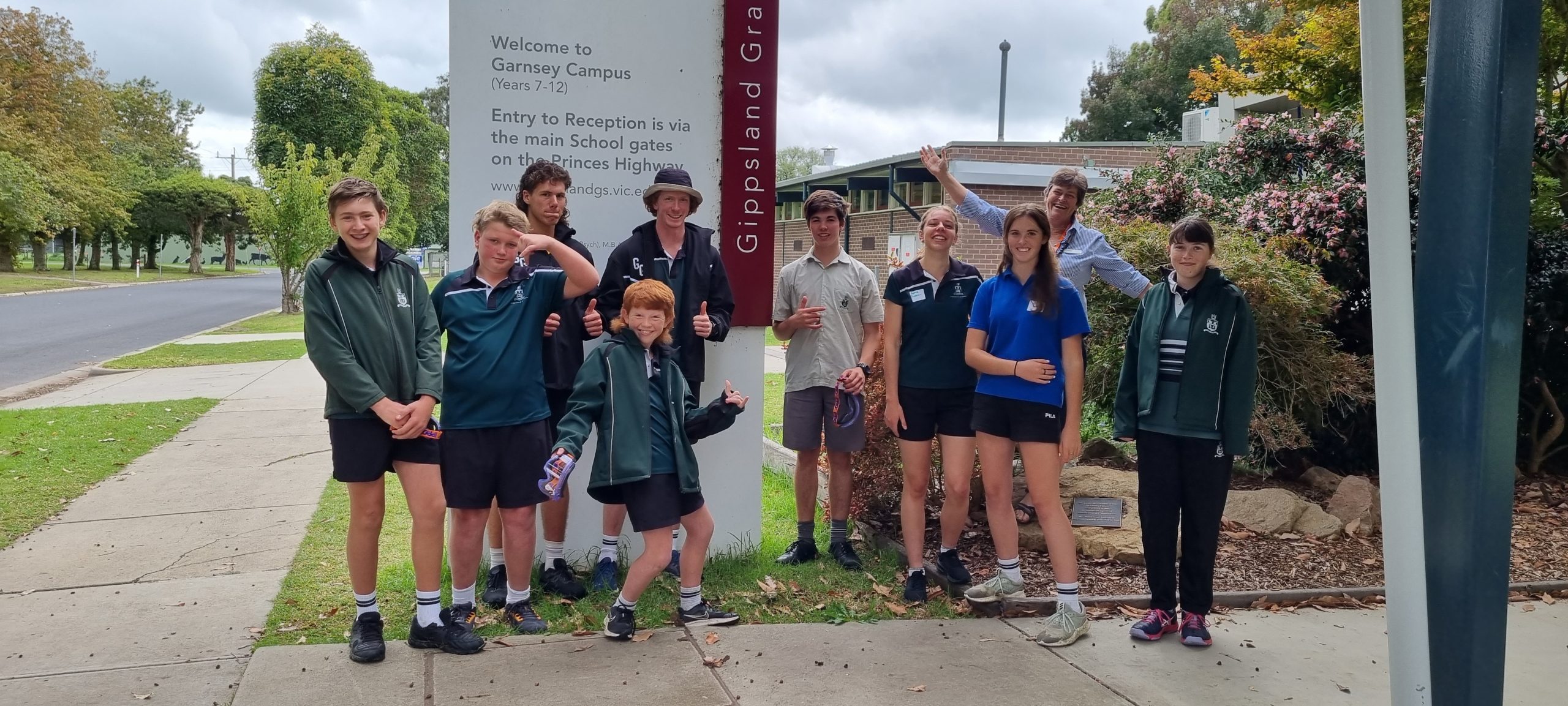
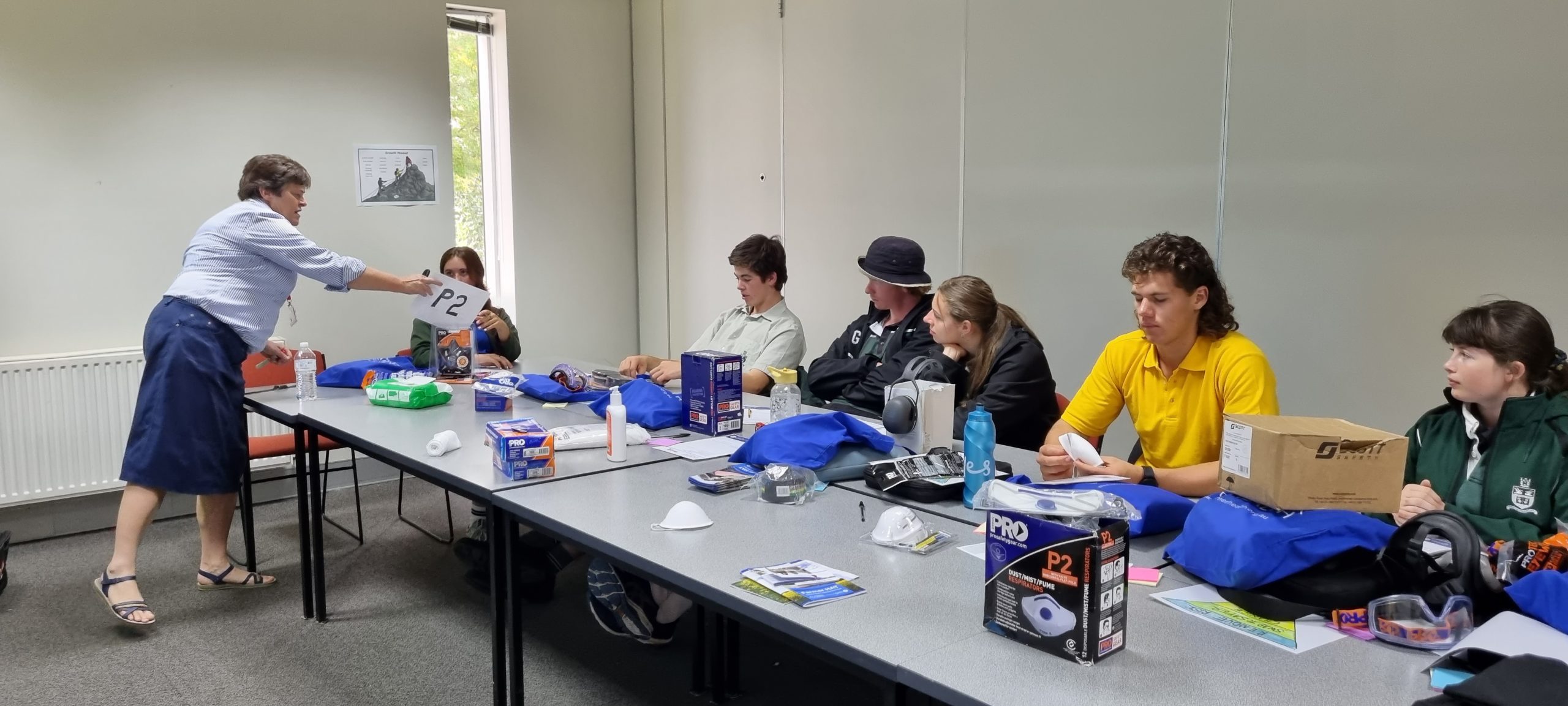
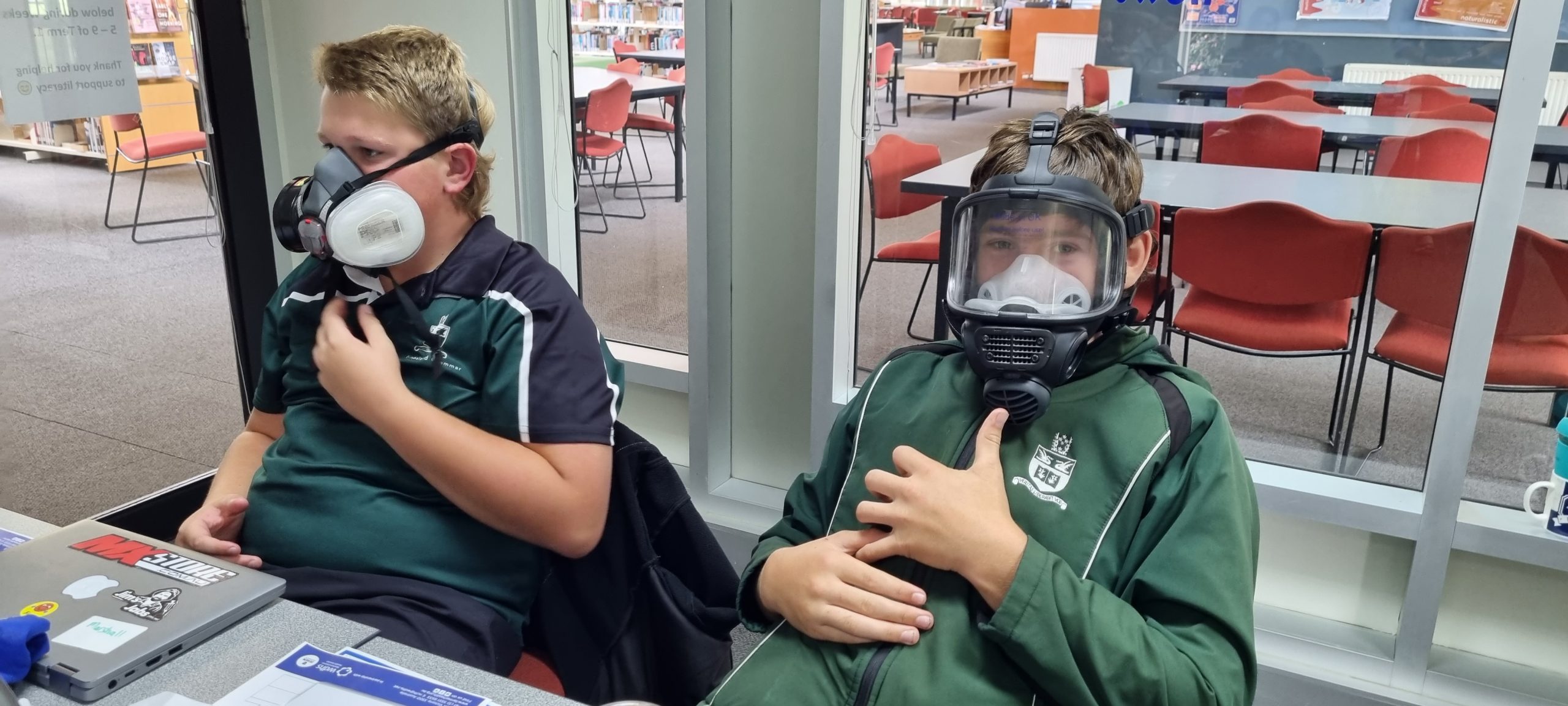
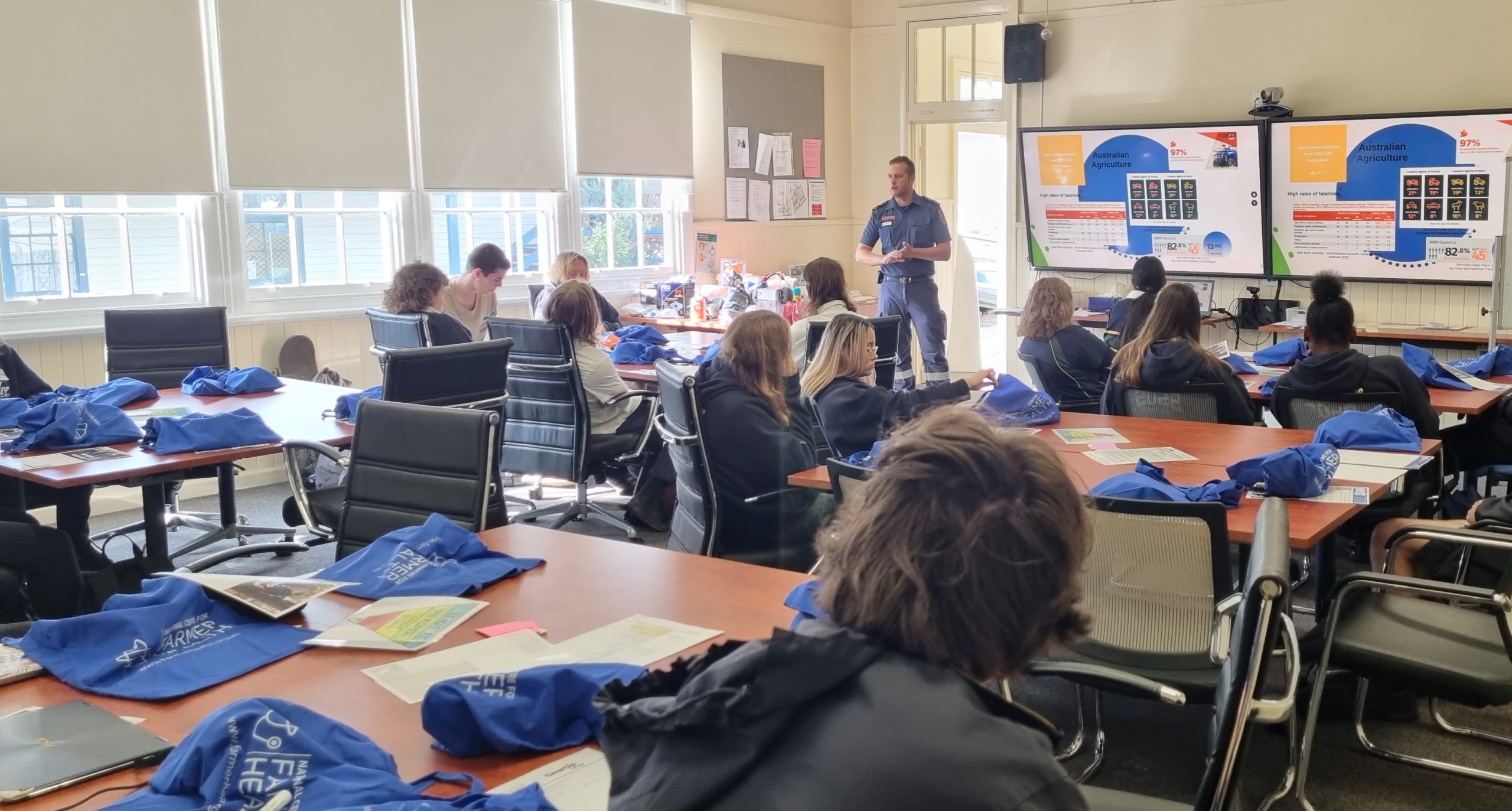
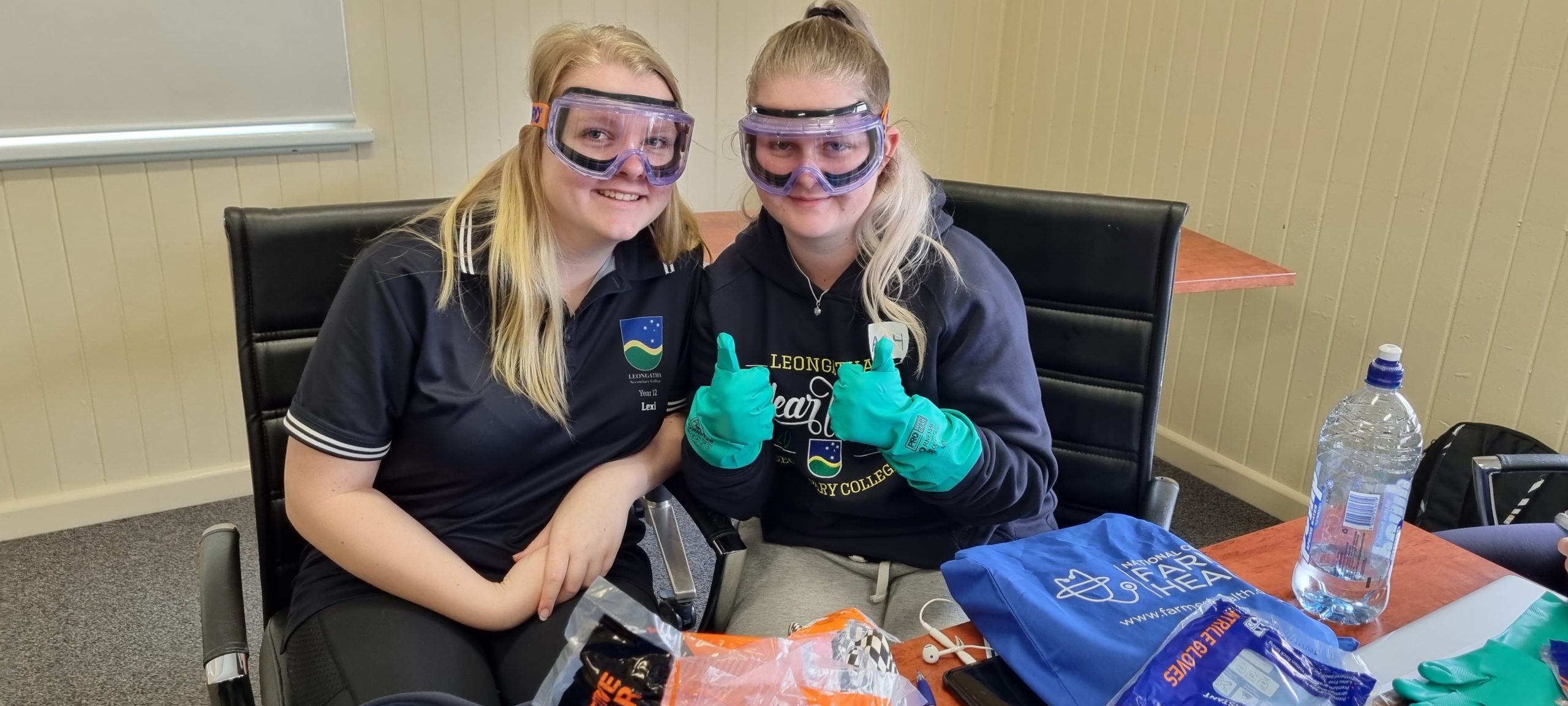
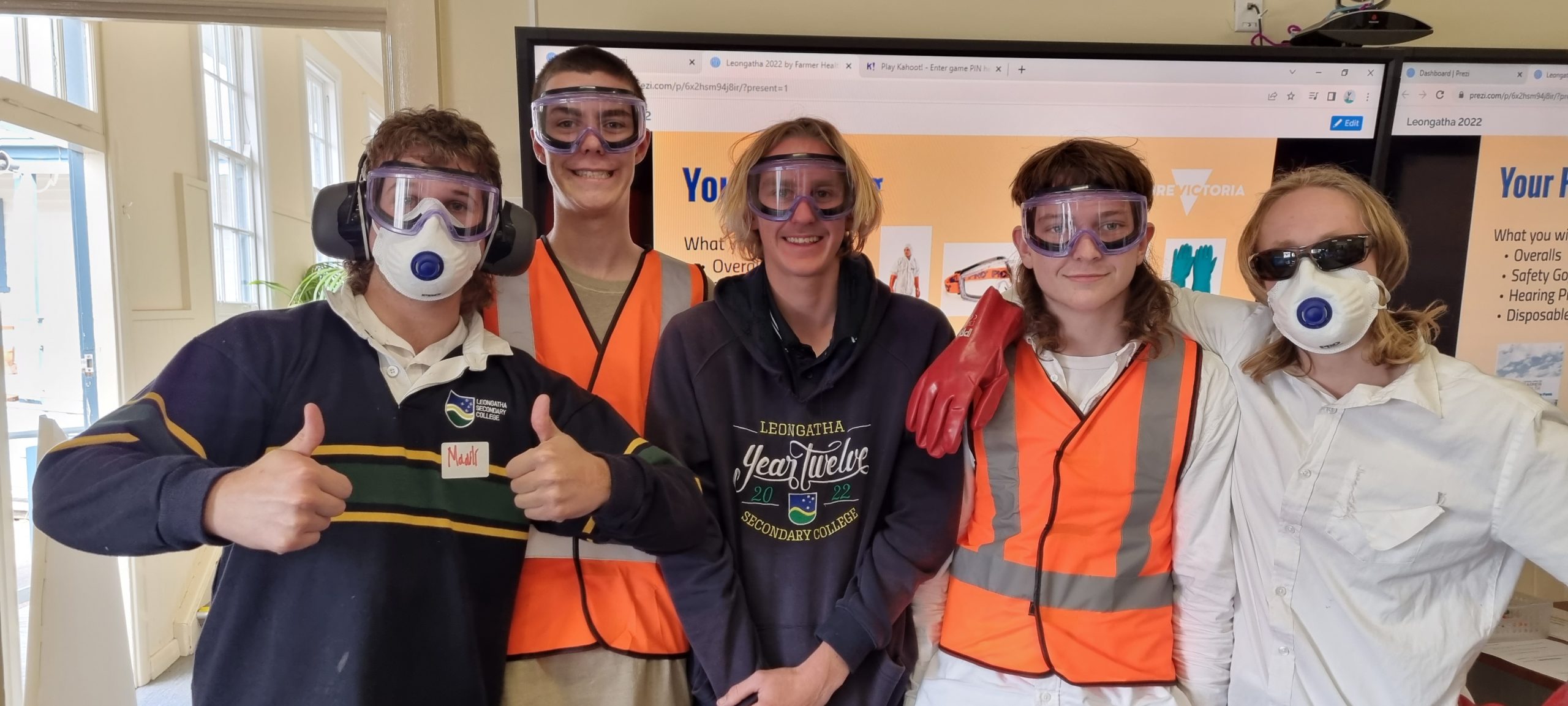
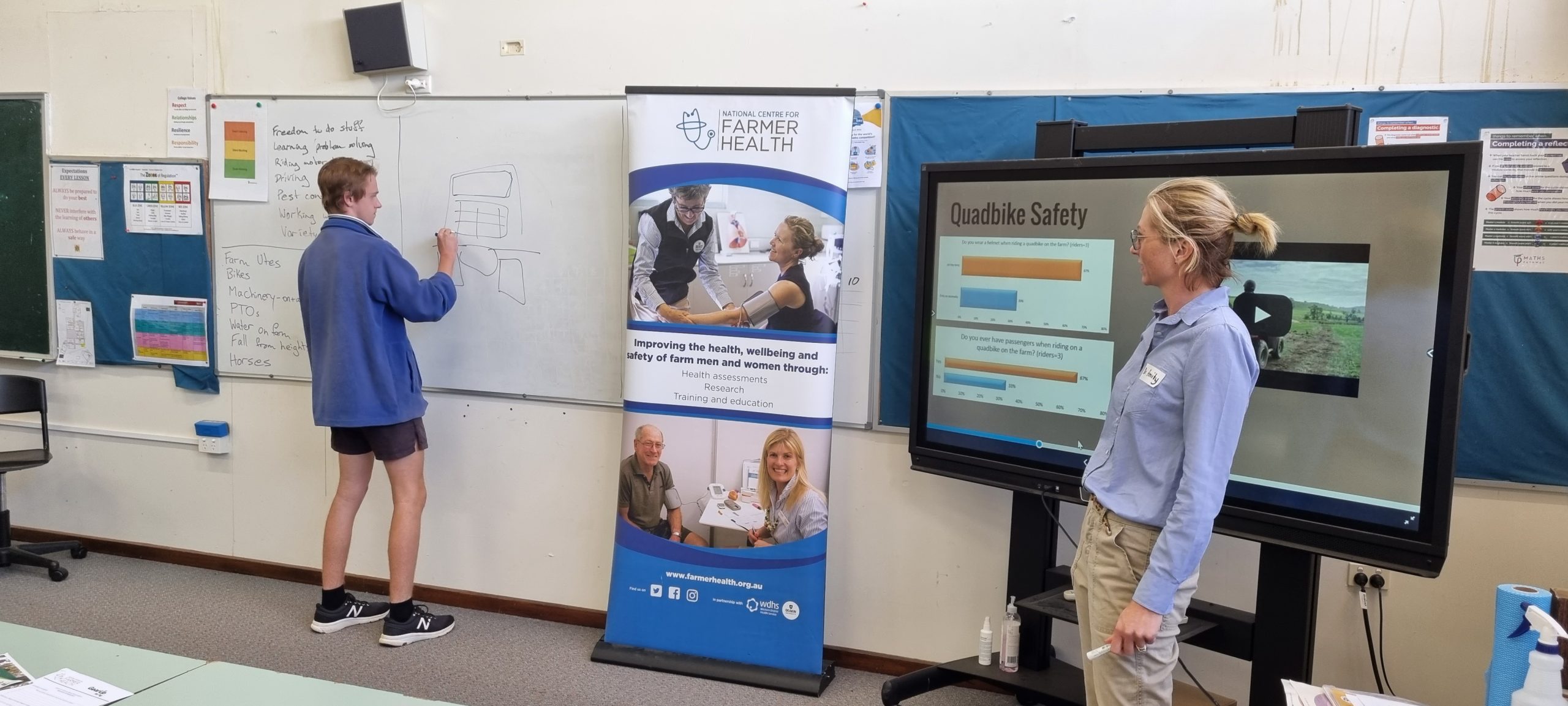
Gear Up for Ag Health & Safety, an intervention, and extension program targeted at secondary school students, was delivered at Manangatang P-12 College, Leongatha Secondary College, and Gippsland Grammar during Term 1 of the school year.
Using a combination of theoretical, audiovisual and hands-on activities, our facilitators, Cecilia Fitzgerald, Sally Cunningham and Amity Latham taught farm hazard identification and risk control to help keep young people safe on farms.
Prior to each session, each student is required to complete a survey of their farming exposures. This data supports the facilitators’ knowledge of the cohort, enabling a tailored approach to the classroom discussions. This year the data shows that from an early age, many young people are operating agricultural plant, quad bikes, and vehicles, and engaging in high-risk activities such as working with cattle and supervising younger siblings on farms.
Gear Up for Ag Health & Safety is a mutually beneficial program. These incursions allow students to learn about farm safety with a strong health and science focus from experts. Gear Up for Ag also enables us to connect with the next generation of farmers, giving facilitators the opportunity to listen to younger peoples’ perceptions and understanding of how safety fits in a farm business.
Gear Up for Ag provides each student with their own PPE pack including coveralls, earplugs, gloves and our Managing Stress on the Farms booklet. In the 1800 kilometres traveled in Term 1, we are confident that our time at these schools has resulted in the students having safe school holidays as they adopt safer behaviours and have important conversations with their parents and grandparents about the risks and hazards of farming.
If you are interested in bringing Gear Up for Ag to your school, please reach out to Cecilia Fitzgerald via cecilia.fitzgerald@wdhs.net or call (03) 5551 8533.
Campfire
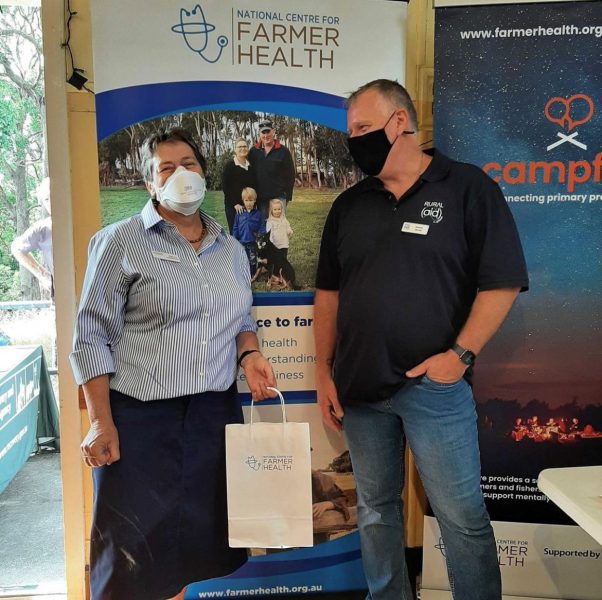
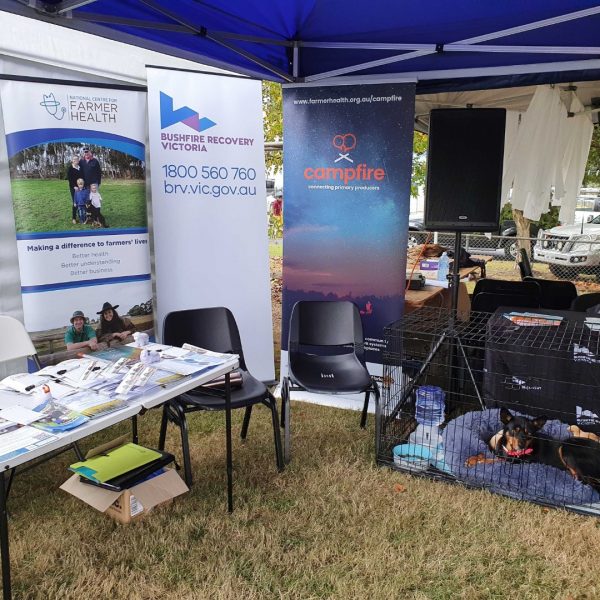
What is a mentally healthy farm workplace? Our Campfire project manager Sally Cunningham has been out and about talking about this question with Gippsland farmers as part of the National Recovery and Resilience Agency Community events in Buchan and Nowa Nowa in March. For farmers and communities affected by the bushfires of 2020, looking after mental health through the long recovery journey is really important. Sally was there to promote NCFH resources like How to manage stress on the Farm, Steering Straight and Farmer Health Assessment Tool (HAT) as well as the online Campfire platform which provides a solution focussed community for farmers to improve work systems and support mentally healthy workplaces. Hundreds of farmers attended these NRRA events gaining information from many government and non-government agencies on where to go for specific services and funding to help them with their ongoing recovery journey.
Campfire brings together topic experts to talk about issues impacting mental health in the agricultural workforce. Every second Wednesday they address a different topic – sign up to join the conversation through the Campfire platform here: Contact us | National Centre for Farmer Health
AgriSafe™
AgriSafe™ Clinicians Morna Semmens and Megan Little have been busily running clinics from Penshurst to Harrow and Hamilton. Morna and Megan have been conducting AgriSafe™ Clinics – 90-minute health testing including blood glucose and cholesterol levels, hearing and vision screening, skin checks, and urine testing. Specific to AgriSafe™ is the agrichemical exposure testing and education surrounding occupational risk, exposures, and safety. They’ve also provided Health & Lifestyle Assessments (HLA’s) to the farming community during their visits to the Harrow Bush Nursing Centre.
To make an appointment with Megan or Morna for your free AgriSafe™ check-up, call 03 5551 8533 or fill out the contact form here: AgriSafe™ Australia – AgriClinics | National Centre for Farmer Health
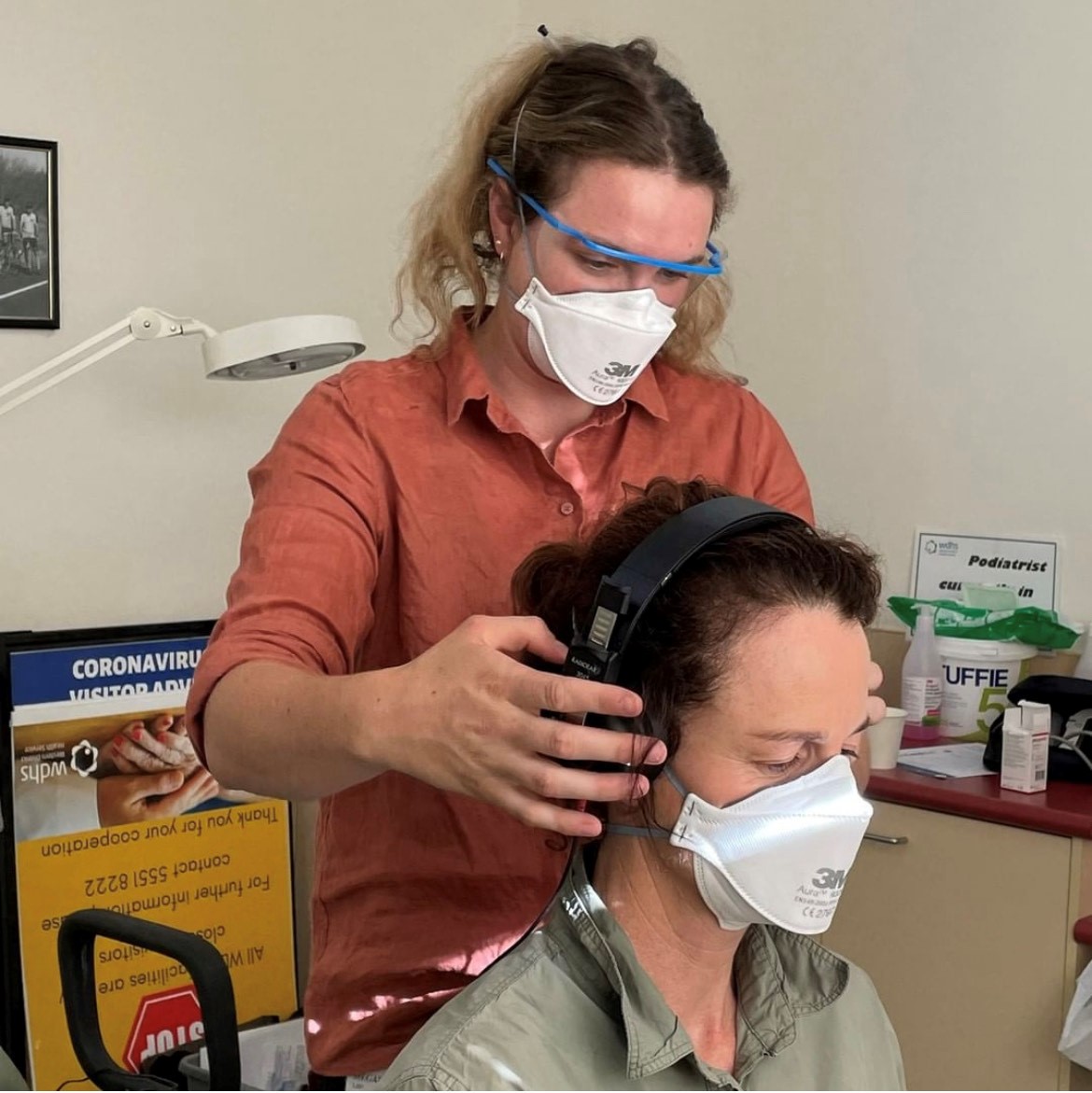
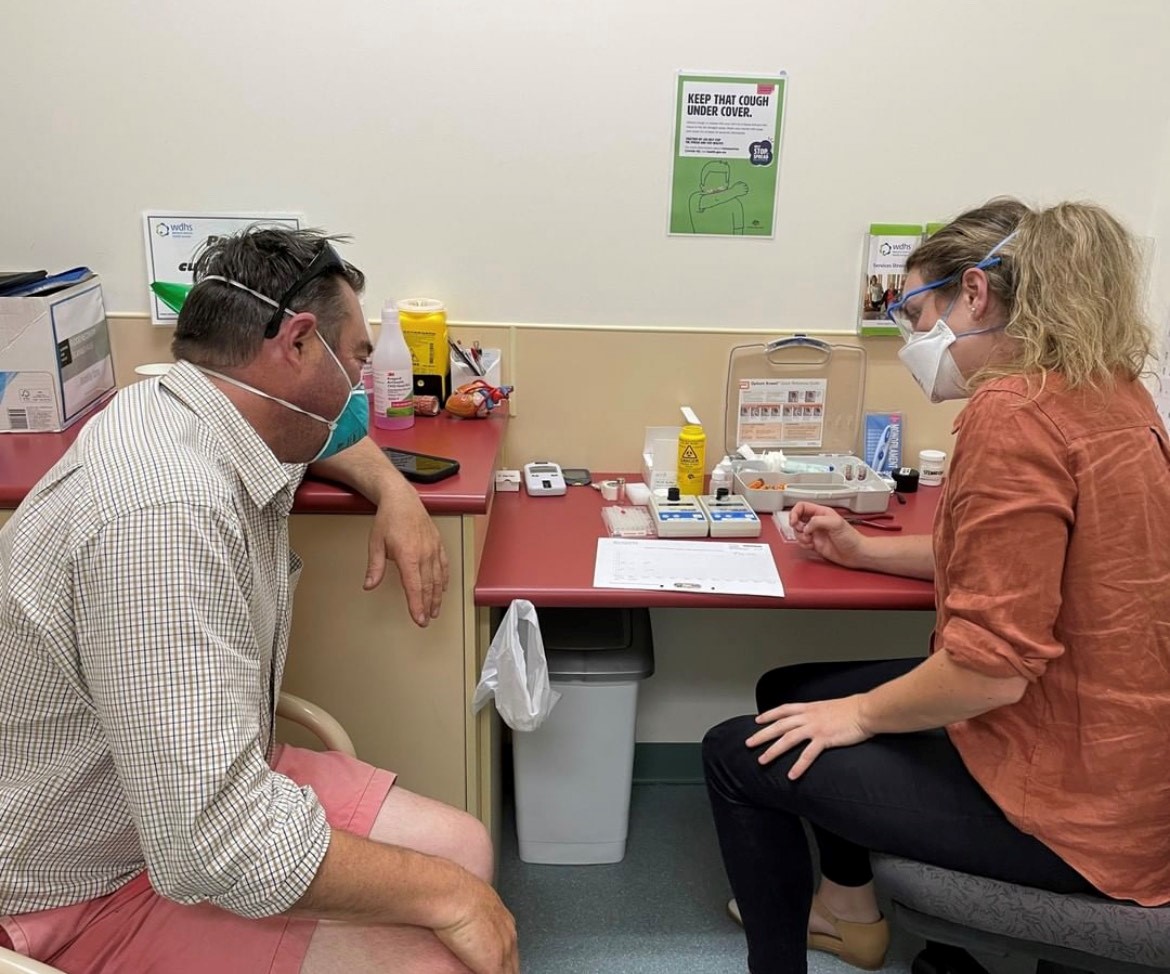
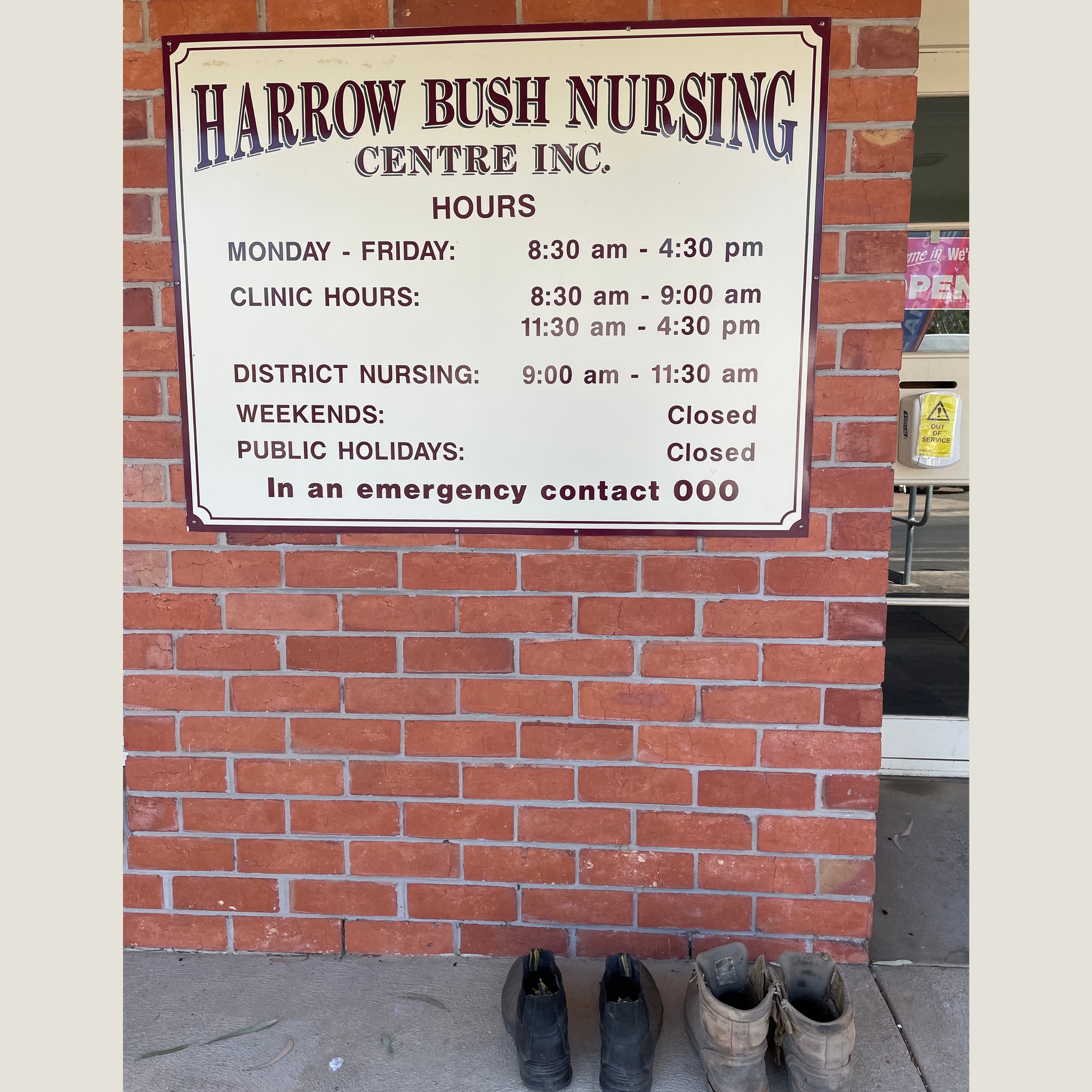
Agriculture-dependent Community Resilience project – face-to-face meeting
This group came together in Ballarat on the 15th of March to share their knowledge, ideas, and experience about the resilience projects they are running within their communities. Research Assistant Kelly Barnes and Professor Susan Brumby ran the session, with Dr. Alison Kennedy and Dr. Jo McDonald joining in via zoom.
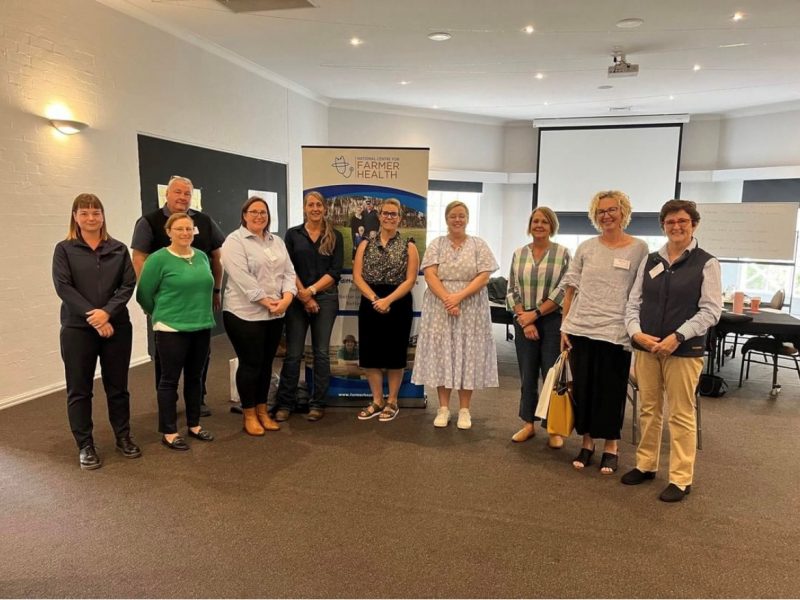
Upper Murray Agricultural Field Days in Corryong
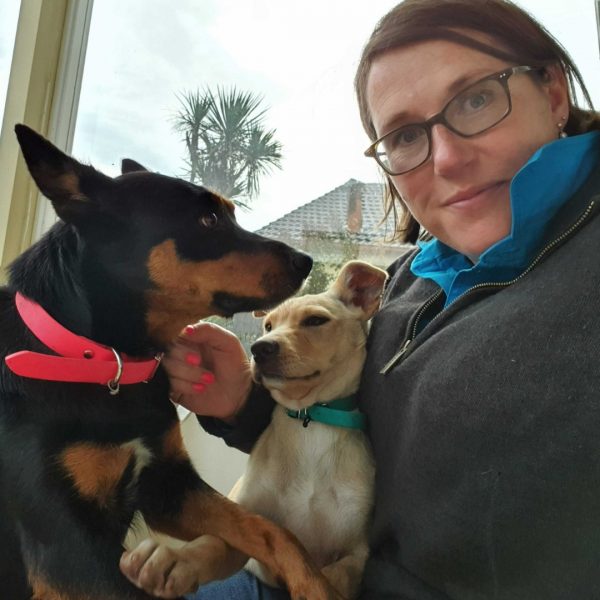
Research Assistant Kelly Barnes travelled with honorary NCFH team members Ashley and Jess to Corryong to attend the Upper Murray Agricultural Field Day. She spoke with local farmers about the mental health resources available to them from the NCFH, as well as the current project work being undertaken by the centre.

Farm World
Professor Susan Brumby attended Farm World to connect with farmers, agricultural workers, and key agricultural stakeholders about the services and research the NCFH offer. Susan spoke with Camille Smith from the Weekly Times – press play to have a listen!
Farmer Health eNews May 2022
Find out the latest from the National Centre for Farmer Health
- Scholarships to study online with us are open now!
- On the road again…
- Do you need someone to Lysn?
- Wellness Wednesday
Do you want to receive our eNews?
Remaining mobile for active farming
Di Dixon is a graduate of the NCFH Graduate Certificate in Agricultural Health and Medicine and founder of Panoramic Health and Fitness. In this blog series, Di combines her expertise in farmer health and her passion for empowering people to overcome lifestyle obstacles with confidence, courage and ease.
Over time the landscape of active farming has changed. Active farming used to require being physically active and able to move large objects manually, to walk long distances daily, and to be able to handle the physically heavy repetition that farming encapsulated. Now technology and innovation mean that we spend less time in the paddock and field doing manual labour. So while the image of the active farmer remains, the reality can be very different. It’s not surprising that our farmers are physically seeing some of the same issues creep in as their office dwelling counterparts.
Mobility has a tremendous impact on your quality of life. It affects how you feel when you wake up in the morning, the ease of your daily activities and when you can move better, you just plain feel better. So first up – what is mobility? It is the ability to move freely and easily. It’s the active range of motion through your joints and muscles. In everyday terms, it’s being able to reach overhead to get something off the top shelf or easily bending down to pick up something off the floor or even being able to turn your head to look over your shoulder.
There are a few factors that can affect your mobility. Some within our control, and others not. These include age, activity level, our build, the tissue surrounding our joints and any previous injuries. By improving factors in the area we can control we can lower our risk of injury, improve posture, and move more easily – particularly as we age.
In focusing on the factors that are within our control (activity level and the tissues surrounding our joints) let’s look at what can be done to improve our mobility.
Start with the area where you feel the tightest and then move onto the others. Remembering that it’s all connected, so by working on one area you might already improve the others anyway.
Over time, aim to build up to 2-3 mobility sessions of between 8-15 minutes each week. The best time of day to do these exercises is when you have time. They don’t need a specific warm up or cool down, just get stuck straight in.
Ankle Mobility:
Tennis ball roll
- Place a tennis or lacrosse ball under your foot and with light pressure, slowly roll from side to side so the ball goes across your arch. Repeat for 20-30 seconds.
- Then, roll the ball from heel to toe for another 20-30 seconds.
- Switch sides.
Experiment doing this both sitting and standing to see what feels best for your feet.
Hip Mobility:
Walking Hip Openers
- Take a step forward and lift the other leg’s knee up in front of you (hip height if you can), and then move it out to the side and around before stepping forward with it.
- Repeat on the other side, for a total of 10-20 steps and then do it in the reverse direction (walking backward, being careful to avoid obstacles).
Upper/Middle Back Mobility:
Thread the Needle
- Get on your hands and knees on the floor. Keeping your hips square and your left hand on the floor, lift your right arm up toward the ceiling as you twist to the right.
- Goal: fully extend your arm to point up to the sky.
- From here, drop your right arm down and “thread” it beneath your chest, reaching out beyond your left side, dropping your right shoulder and temple to the floor if you can.
- Stay for a couple breaths and repeat the sequence 2-3 times before performing on the opposite side.
Shoulder Mobility:
Shoulder passthrough
- You’ll need a stick (like a broomstick or dowel) or a resistance band to do this exercise.
- Stand with your feet shoulder-width apart and your arms in front of your body.
- Hold the stick or resistance band with straight arms, with an overhand grip.
- The stick/band should be below your waist, your hands wider than your shoulders. If you’re using the band, gently press outward to create a light amount of resistance.
- Engage your core and keep the rest of your body in position as, with straight arms, you slowly raise the stick or band above your head, keeping your arms straight. Only go as far as comfortable.
- Hold the pose for a few seconds.
- Return to the starting position.
- Repeat 5-10 times.
Wrist and Neck Mobility:
Chin tucks
- Stand or sit tall, with your core engaged. Let your arms rest alongside your body.
- Draw your shoulder blades back and down.
- Slowly draw your chin in toward your chest.
- Hold for a few seconds. Return to the start position.
- Repeat for 3-5 repetitions.
Di Dixon Healthy and Active Farmer Blog Series
This blog is post three in a series exploring health and wellbeing among farmers and farm workers, and how they can take simple, easy steps to improve their overall health and fitness. A list of the previous posts to date are below.
Fuelling for increased energy | National Centre for Farmer Health
The health and wellbeing of rural women | National Centre for Farmer Health
If you have a question or querie for Di, please reach out to her via admin@panoramicfitness.com.au.
The role social media plays in creating a safer, healthier agricultural community
The uptake of social media use in agricultural communities has been astonishing over the last decade. Rural men, women, kids and businesses have taken to social media to tell their stories, share precious moments, and engage in various discussions about agriculture. By sharing content on social media, people in agriculture contribute to the overall image and conversation surrounding life and work in our industry.
Although picturesque, agricultural communities face unique challenges and dangers. Therefore, when posting online, everyone has an opportunity to present agricultural practices and rural life in a way that promotes healthy and safe practices.
To engage with those who are active on social media or who are simply curious about its existing and potential impact, our Director, Dr Alison Kennedy, hosted this event to explore the influence online communications have on shaping peoples’ perceptions of health and safety behaviours on farms.
Our exciting panel of guest speakers will be sharing their expertise on the following topics:
- Increasing understanding of your rural audience
- How social media posts can positively influence your audience’s attitudes and behaviours
- How your online content can support rural health, wellbeing and safety (even if this is not the focus of the post).
Meet our panellists
Rachel Jacobson
Rachel Jacobson is the Communications and Engagement Officer for Smarter Safer Farms with Agriculture Victoria. She has worked in agriculture communications for over 15 years and has experience communicating with rural audiences across a range of topics. Rachel talks about how the effective use of images can reinforce positive safety messages.
Lavinia Wehr
Lavinia is the Founder and Creative Director of AGSOCIAL, and the co-host of the popular podcast Generation Ag. As a native of Scadden, North-East of Esperance, she understands the challenges and opportunities unique to the agricultural industry. Lavinia uses her communication skills to grow the voices of rural businesses and communities, and specialises in creating tailored social media strategies that help individuals and businesses get the most out of their online presence.
Communication and connection – your unexpected farming essentials
This topic will be discussed as part of our online Bonfire Q&A on April 6th at 7:30pm, “Managing difficult workplace conversations”
The farm had been in Jim’s family for six generations by the time his father decided to call it a day and hand over the reigns.
And as he brought the staff together to explain the changes taking place, he was still puzzling over his father’s last comment the previous Friday.
“Jim, you’re a natural with cattle, but that’s farming. The farm, however – well that’s management. Make sure you don’t mix them up,” he had said.
As he ran the team through changes he would be making now he was the one signing the cheques, he couldn’t miss the unease on the faces of several property managers.
“Right, that’s about it. Any questions?” he asked, staring straight at two managers, standing side by side.
No-one spoke; eyes downcast and the group shuffled out the door and back to their stations – but Jim had missed these signs.
Two months later the first property manager resigned; a week later another. Both outstanding and long-term workers.
Jim was just devastated; he was also taking it personally; these two men had left him – and left him in the lurch.
His father let it go another week and then dropped in to see his son.
“What do you think happened?” he asked; getting an angry grunt in response.
“Do you remember what I said about farming and management?” his father persisted.
An angrier grunt.
“You need to talk to, talk with, but not talk at, your staff,” he said. “And you need to be aware of the dynamics between them. Their relationships. How they like to work.”
“How can they turn to you for help in an issue, if they feel you have no connection with them, no plan and no empathy.”
Jim didn’t enjoy hearing the way that your business handles (and works to prevent) conflict between employees, management or business partners can have a big impact on profits, productivity and morale.
That conflict is a major cause of staff turnover and costs your business money.
Queensland Government research shows more than 65 per cent of employee performance problems are the result of strained relationships, rather than a lack of skill or motivation.
It says good management practices can help you avoid unnecessary conflict and deal with inevitable conflict in an effective and professional way.
And developing a dispute resolution process can reduce staff turnover and save your business time, money and unnecessary damage.
“Jim, you have to manage the whole business, not just the cattle. As employers, it’s our role, now mostly your role, to be proactive by being aware of what is happening with the people around you,” his father emphasised.
“Ignoring it doesn’t make it go away, if there are ongoing conflict issues then we, you, are doing something wrong,” he added.
“It’s your responsibility in dealing with – and mostly heading off – conflict (and preventing it’s escalation).
“When I started jackarooing in the pastoral country your grandfather told me to give it a couple of years before thinking about coming home.
“The day I arrived four jackaroos couldn’t wait for my train so they could get out of there. I lasted four months. That business did not last much longer.
“That’s where we’ll end up, and as someone who has been stuck in seriously-negative workplaces, I can assure you we might be heading in the same direction – it’s all about communication, communication, communication and you need to set something out on paper now and get it to all staff…
“Hey, where are you going…?”
“I might be a bit full of myself dad, but I’m no fool. This isn’t time for an email, I’m going to call in on all the staff and personally invite them to a strategy session where everybody has a say on what makes a better workplace; then ‘we’ will all have the blueprint for me being a boofhead.”
Injuries on the farm can lead to stress, long-term health concerns and loss of income or even fatalities, so preventing them from happening is the best way of protecting your mental health. When it comes to running the family farm, investing in mental health initiatives is not only good for your family and workers, but it’s good for business too. The NCFH is supporting farmers just like you to manage and respond to work-related risks that impact on workplace mental health – these are factors in your work that can affect an employee’s mental health and include high job demands, low job control, low role clarity and more. Managing these factors, means decreasing the risk of work-related stress, which can prevent physical injury, mental injury or even both at the same time.
Find out more about being mentally safe on farm at www.farmerhealth.org.au/campfire.
This blog is part of the Primary Producer Knowledge Network led by the National Centre for Farmer Health to promote mentally healthy workplaces. Campfire, part of The Primary Producer Knowledge Network, is funded by the Victorian State Governments WorkSafe WorkWell Mental Health Improvement Fund.
You can join the online bonfire session, “Managing Difficult Workplace Conversations” on April 6th at 7:30pm.
*Primary producers featuring in this blog are fictional, but based on research interviews with farmers, and developed with the assistance of the National Centre for Farmer Health