

How to be a leader: no matter what your role is
By Sonya Duke, Research Assistant at National Centre for Farmer Health
At the beginning of October, I was lucky enough to attend a three-day online leadership forum, run by Farmers for Climate Action. The forum was open to farmers and people from farming communities across Australia, and was attended virtually by people from Victoria, New South Wales, and Tasmania. Everyone there was passionate about their local communities and the central role that farming plays in rural life. It’s a testament to the engaging facilitator and interesting participants that the three days of Zoom passed in a flash, and I was left wanting more!
The training taught us skills that are helpful for any type of leadership role. Of course, everyone present was also united by a love of the land, the valuable contribution rural Australia makes to Australia more broadly, and keeping rural communities thriving in times of change. The skills we learned, however, could be applied to just about any leadership role – whether as a farm manager, small business owner, or someone passionate about improving rural healthcare.
We learnt about:
- Change – why do some people love it, others resist it, and what makes groups of people adopt new behaviours
- Understanding your own vision and how to put this into practice
- What makes teams perform well
- What is power, and understanding (and using) your own power
- Strategic planning, and talking to others about visions of the future
- Media training
We also heard from a variety of accomplished and inspiring speakers from federal, state, and local government, including (amongst others) Cathy McGowan AO and Judy Brewer AO. They provided useful information on how to successfully engage with your political leaders and the political system.
What I would like to share today is something that we can all apply in our own lives. It can help us make better decisions – no matter whether our goals are small-scale or large-scale. It is the 5D reflective thinking process.
Let’s take a light-hearted example. Say that you recently heard that your neighbouring farmer went for a weekend camping trip in the Grampians. You looked out your window (or from the harvester, as things have been too busy to be at home lately), and thought, “I’d never have time for that. I’m too busy.” And then you quickly pushed down your secret desire to get off-farm and have a trip away. In this situation, the 5D reflective thinkingprocess would look something like this:
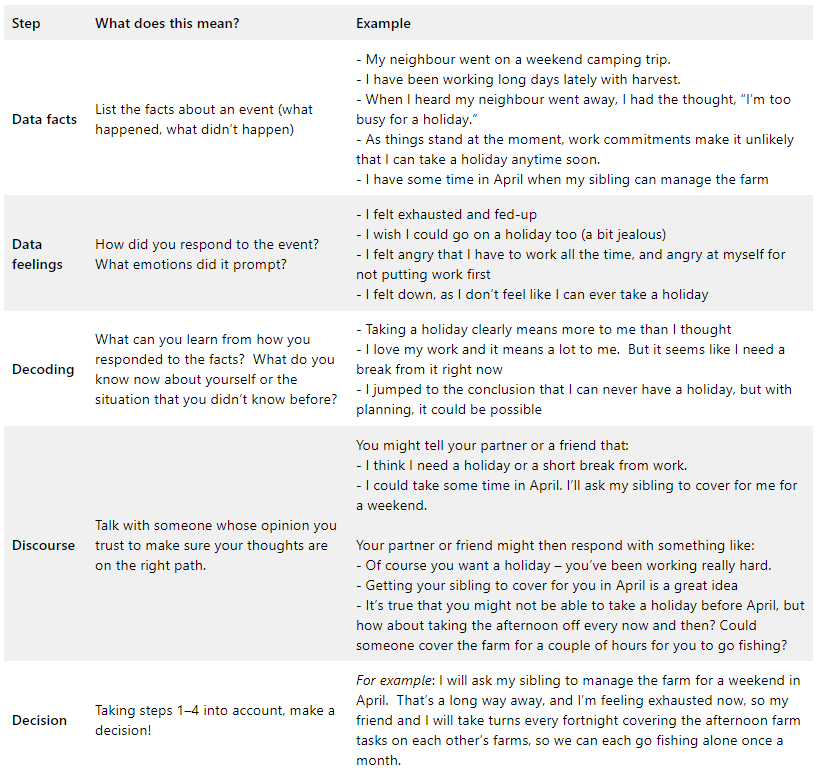
The 5D reflective thinking process resonates with me, as it speaks to the Mental Health for Ag project that I am currently working on. The 5D reflective thinking process could help when filling out the change and goals section of “Steering Straight: My Plan to Keep on Track.” Whether you aim to make change in your daily life, on your farm, or in your community, the 5D reflective thinking process shows that it is important to:
- Think first about the facts
- Check in with your emotions (i.e. gut reaction)
- Learn something new about the situation and/or yourself from your reaction to the situation
- Share your thoughts with someone you trust
And only then do you make a decision! This process can help keep us clear-minded when a situation might be challenging, new, or overwhelming. It is a good way of “getting out of your own head” and seeing things for how they really are. It also encourages us to connect with others, and show them we value their opinion. And it’s when we can see things clearly that we’re capable of positive, meaningful change. Which brings me to a great quote that one of the guest speakers shared:
“Never doubt that a small group of thoughtful, committed citizens can change the world. Indeed, it is the only thing that ever has.”
Margaret Mead, cultural anthropologist
Drugs and alcohol on farm – a difficult conversation, but one worth having
This topic will be discussed as part of our online Bonfire Q&A on December 01 at 7:30pm, “Alcohol and Drugs on Farm” with John Darcy (VFF) and Dr Alison Kennedy (National Centre for Farmer Health).
Jack has been away at university and only occasionally been back to the farm – although his long-term plans will see him take over the family business when his parents start to step back.
But his most recent visits have opened his eyes to what he now sees as a serious alcohol problem amongst his peers.
“When I was playing footy at home I know Saturday nights could become a bit of a swim-through, especially if we won, but now I am looking at it in a new, and disturbing light,” Jack said.
“My mates still on the farm do work hard, but I reckon they play even harder and if I thought things could get a bit wild in Melbourne; I’ve seen some pretty crazy stuff at home.”
Jack said what he found even more concerning was some of his schoolmates were happy to hit the bottle hard even if they were home alone.
He said he had also noticed an increase in drug use.
“I knew about drugs before I went to uni; but in the past three years it seems to have exploded, and there isn’t a thing you go to, even just a meal at the pub and a couple of drinks after, where you don’t see people using them – or offering them to you,” Jack added,
“And then some of them go straight back to the farm and jump on the header or chaser bin and they shouldn’t be anywhere near heavy machinery. A few of my shearer mates also talk about drug use in the sheds to improve performance being pretty common.”
Farming is already a dangerous enough industry. Safe Work Australia’s report on deaths at work has found farming, fishing and forestry accounted for 23 per cent of all workplace deaths recent figures.
While farming does involve long and irregular hours; it is also an industry of isolation, high stress and job insecurity with success and failure often beyond the farmer’s control; with seasons, markets and weather the deciding factors.
All these things can encourage drug and alcohol use. Research into substance misuse clearly finds links between the use of drugs and alcohol and mental health problems, physical injury, reduced workplace productivity, accidents, drink-driving and violence.
Nearly half (44 per cent) of farm people in one study drank alcohol at high risk levels. This is a lot higher than in the general Australian population where 16 per cent of people who live in rural areas are moderate to high risk drinkers.
Cannabis was the most common illegal drug used (12.7 per cent) followed by amphetamines (8.5 per cent). Some 20 per cent of study participants reported working while affected by illegal drugs during the past 12 months; compared to 2 per cent in most Australian workplaces. One third of people in the study smoked tobacco and it was the drug they were most concerned about using and a staggering two thirds reported psychological distress.
In some ways drug and alcohol use is also a cultural burden – an expectation of regular drinking, long and irregular work hours and a lack of information and support to address substance problems.
Drinking alcohol regularly was normal. One farmer said: “If someone drops around you’ve got to have beer. That is common practice. As soon as you run out of beer there is a potential problem. If someone drops around and you can’t offer them a beer personally you would feel that you’d failed.”
Another described drinking as part of the male farming culture where “if you don’t have a beer you’re not a man”.
Jack said the message really hit home with him when he heard a friend going to work just out the road for harvest had been doing big hours and he went and had a few beers and went home and that morning he just fell asleep at the wheel and it just caught up to him – he died.
Long hours and irregular hours can mean people use drugs to stay awake and keep working.
One farm owner said: “I’ve been out harvesting … it’ll be three or two o’clock in the morning and they’re bouncing around and then they start grinding their teeth. Yeah, so I do find it a lot when they’re doing 24-hour work. Like some of them might go for three days without a decent sleep”.
Drinking and drug use outside work hours can cause problems during work from hangovers or the ongoing use of cannabis or amphetamines to keep going, but few employers made the connection. One said “so as long as they do their job, what they did the night before is irrelevant to me”.
Jack said he found that attitude even more frightening – and dangerously enabling.
Drinking alcohol increases the risk of:
- Short- and long-term health effects
- Road deaths
- Family violence
- Cancer and reducing immune system functioning
- The development and progression of poor mental health and suicide.
Alcohol masks the symptoms of depression and stress; and can make you feel worse; it’s a common but unsafe coping strategy for farmers and other people living in rural and remote areas. It’s also a risk factor for suicide.
For more information go to:
Alcohol and farmers | National Centre for Farmer Health
Farm-Safety-Assistance-v4.pdf (vff.org.au)
Farm-Safety-Walk-Talk-Flyer-Final-version.pdf (vff.org.au)
Alcohol Consumption, Obesity, and Psychological Distress in Farming Communities: An Australian Study (farmerhealth.org.au)Creating Healthy Workplaces publications (vichealth.vic.gov.au)
Injuries on the farm can lead to stress, long-term health concerns and loss of income or even fatalities, so preventing them from happening is the best way of protecting your mental health. When it comes to running the family farm, investing in mental health initiatives is not only good for your family and workers, but it’s good for business too. The NCFH is supporting farmers just like you to manage and respond to work-related risks that impact on workplace mental health – these are factors in your work that can affect an employee’s mental health and include high job demands, low job control, low role clarity and more. Managing these factors, means decreasing the risk of work-related stress, which can prevent physical injury, mental injury or even both at the same time.
Find out more about being mentally safe on farm at www.farmerhealth.org.au/campfire.
Other references:
Intoxicated workers: findings from a national Australian survey – Pidd – 2011 – Addiction – Wiley Online Library
‘You’re Less Complete if You Haven’t Got a Can in Your Hand’: Alcohol Consumption and Related Harmful Effects in Rural Australia: The Role and Influence of Cultural Capital | Alcohol and Alcoholism | Oxford Academic (oup.com)
This blog is part of the Primary Producer Knowledge Network led by the National Centre for Farmer Health to promote mentally healthy workplaces. Campfire, part of The Primary Producer Knowledge Network, is funded by the Victorian State Governments WorkSafe WorkWell Mental Health Improvement Fund.
You can join the online bonfire session, “Child Safety on Farm” on December 01 at 7:30pm to hear from John Darcy (VFF) and Dr Alison Kennedy (NCFH).
*Primary producers featuring in this blog are fictional, but based on research interviews with farmers, and developed with the assistance of the National Centre for Farmer Health
Meet the Team! Jessie Adams
Favourite Quote:
“Never let the fear of striking out keep you from playing the game.”
Babe Ruth
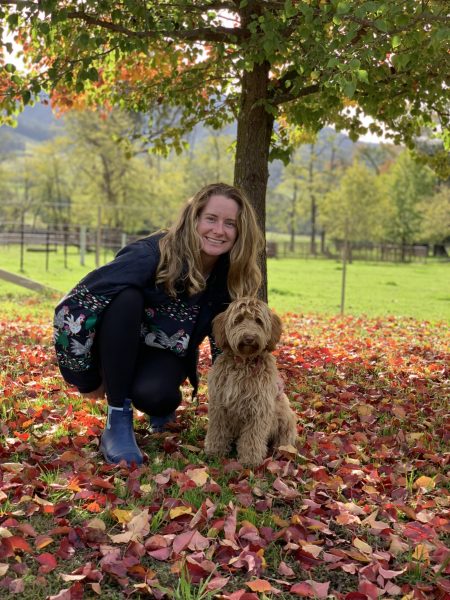
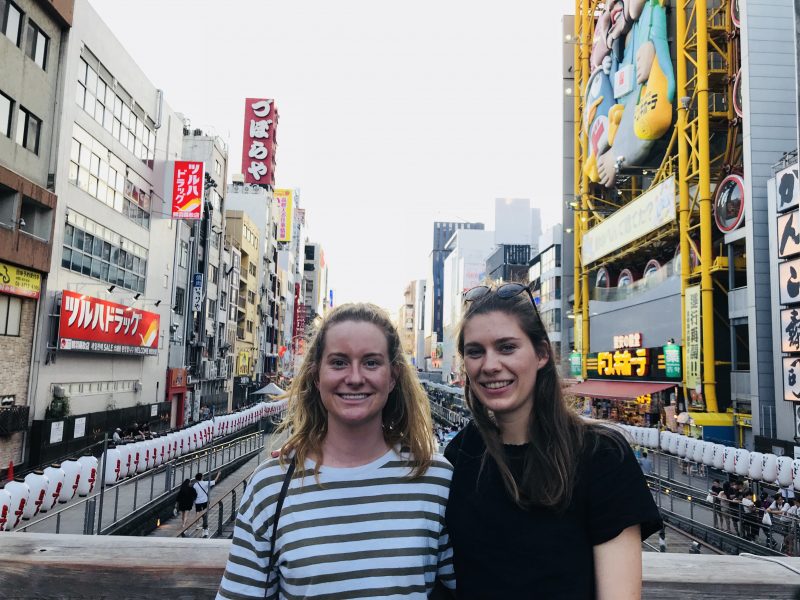
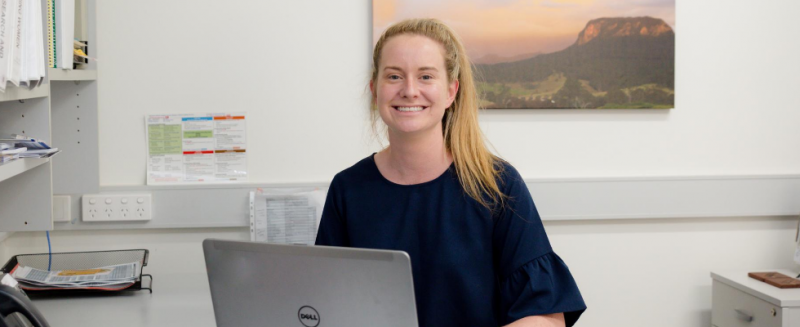
Jessie Adams completed her Bachelor of Public Health and Health Promotion (Hons) and Bachelor of Commerce at Deakin University in 2017. Following this, Jessie made the move to Hamilton to work as a Research Assistant at the centre. In 2020, she commenced her PhD focusing on child safety on farms. Growing up on a beef farm in north east Victoria Jessie is keen to help improve the health, wellbeing and safety of farming communities.
Keep reading to find out more about Jessie…

What is something that Australian farmers have to deal with that you would like to fix?
I think the lack of access to services in rural areas is a challenge all Australian farmers have to deal with. It would be great to increase the cultural competence of services in rural areas to ensure farmers find them engaging, relatable and approachable.
What do you like about working with NCFH?
I enjoy working with the supportive team at the NCFH. There are always different things going on which is exciting and means you are constantly challenged and able to develop many diverse skills.
What are you currently working on at NCFH?
I am currently completing my PhD. My study is focused on exploring if the behaviours, attitudes and lifestyles on Victorian farms influence the risk of fatal and non-fatal injuries for children. I also work as a Research Assistant and most recently have been working on ‘RAHDaR on Climate’ which is a research project aiming to understand the characteristics of presentations to the Emergency Department on extreme heat days in rural south-west Victoria.
What is your background?
I grew up on the beef farm in Staghorn Flat (north east Victoria). After a year spent living in England, I moved to Melbourne to complete a Bachelor of Public Health and Health Promotion and a Bachelor of Commerce at Deakin University. Following this, I completed my Honours year investigating children’s physical activity and motor skill use in playgrounds. In 2018, I moved to Hamilton to work as a Research Assistant at the NCFH.
What are the values that drive you?
Hard work, dependability, respect, authenticity and fun/enjoyment.
What are your three favourite podcasts/books?
Reading is not my speciality, however, I really enjoyed ‘The Dry’ by Jane Harper and ‘The Happiest Man on Earth’ by Eddie Jaku. Also, the Hamish and Andy podcast is always a laugh.
What do you enjoy doing when you are not working?
I enjoy catching up with friends, participating in sport (netball, tennis and gym) and taking my dog Bertie for walks.
Jessie’s PhD seeks to better understand the behaviour of children on farms and how this might influence their safety. If you would like to help inform Jessie’s research, you can email her at jessie.adams@wdhs.net.
Your Questions Answered: The Royal Commission into Victoria’s Mental Health System
This webinar event is the second in our series which seeks to explore how our farming communities can benefit from the findings from the Royal Commission into Victoria’s Mental Health System.
The release of the Royal Commission report revealed 65 recommendations to reform Victoria’s mental health system, with the Victorian Government pledging $3.8 billion to help turn these recommendations into a reality. Of this budget, $700 million will be directed to rural and regional areas. But what does this really mean for rural farming communities?
To better understand what these recommendations mean for rural Victorians our acting director, Dr Alison Kennedy, hosted a panel discussion to answer your questions about the challenges and opportunities highlighted in the report. These questions were asked by attendees of our first event exploring this topic.
During the webinar we encouraged attendee questions and participation, of which they contributed valuable thoughts and questions to the discussion.
Dr Alison Kennedy was joined by our esteemed panellists Dr Dom Baetens and Kelly Barnes.
Kelly Barnes – Creator and Founder of the Mates Dog School and the winner of the 2020 Victorian AgriFuture Rural Women’s Award. Kelly has lived experience and shared her experiences with the Royal Commission during the consultation stage of the inquest.
Dr Dom Baetens – Dr Baetens is the current Deputy Chief Psychiatrist at the Victorian Department of Health & Human Services. She has significant experience working in the Victorian mental health service, and brings keen insight into to opportunities presented by the final report.
Each of our panelists brought a unique perspective to this important discussion, and we hope you enjoy the webinar.
You can watch our first webinar and download a copy of the Royal Commission report through the buttons below.
Taking the stress out of child safety on farm
This topic will be discussed as part of our online Bonfires on February 10th at 7:30pm, “Child Safety on Farm” with Jessie Adams and Amity Latham (NCFH).
Matt and Susie are beef and sheep producers from North East Victoria. They both grew up farming and are really active in the outdoor work of farming, but had been struck by how many families in their district had been affected by farm accidents, some of which involved young kids.
“My mate’s young son had an accident which had left him seriously incapacitated, so that was always front of mind for me”, Matt said.
Susie continued, “We have three kids now, but right from the day we brought our first baby home to the farm we were aware that we wanted to make his childhood a safe one whilst making the most of this amazing farm we live on.”
“We were always big on supervision of the kids and in those early years, giving them a fantastic fenced play area next to the house, so they wanted to be there. Being able to call on my in-laws to help supervise the kids during really busy periods on the farm was really helpful in those early years. Sometimes we hired an extra worker, or took the work in shifts, just so we weren’t leaving kids to their own devices or leaving them to play in a zone where there were too many risks. At shearing time, we made a safe enclosed area in a corner of the shed for the kids to play where they couldn’t get into strife.”
Matt added, “I changed my quad bike to a side by side so we could have safer transport around around the farm, but I’ll only do jobs I can do in the ute when I have the kids with me, and I am nuts about booster seats and seatbelts in the twincab.”
“We often have other families and relatives visit our farm and we are really careful about safety, especially over summer when all the kids love to swim in the river. We made sure the kids could swim and I even pulled out the old lifeguard shirt and popped it on to remind me that I was taking responsibility here – for my kids and theirs! Teenagers think this is pretty un-cool now, but they know the rules.”
Susie (the ex-teacher turned farmer) tells me that “when the oldest of our three kids was 6 we made a game out of doing a safety audit around the farm with all the kids in school holidays. It was really fun and the kids loved it. We played “spot the hazard” identifying risks with things like machinery, animals in the yards, stuff in the shed, farm vehicles, etc. The kids made signs about where they were and were NOT allowed to go. We had rules about what age you had to be to do certain tasks, and we stuck to them pretty much”.
“The funny side of having these on-going safety conversations with your kids is that if you forget to do something properly, like wear your seat belt or a dust mask, or tidy up the workshop, they pick you up on it straight away. So our kids really started taking responsibility for their own safety and their younger siblings. We’ve done online shopping together on the Farmer Health Safety Shop to make sure they have the right PPE for working on the farm for the tasks they do. It makes them feel like we value their contribution. And these days there are some pretty kid-friendly safety products available.”
“From our point of view as parents, our workplace is also our family home – and the boundaries can get a bit blurred at times. But having rules gives us a sense of control and some peace of mind. We love living on the farm, it’s a great lifestyle, but the farm is not always suited to being a playground.”
Matt acknowledged, “Of course as the kids get older the rules change. I have to make sure that each kid understands how to do a task safely if they are going to be working with me. I have to set aside more time to ensure they are competent and can manage equipment safely. Inevitably, there have been some minor incidents, but thankfully nothing major, and the kids have learned more about their own capabilities, how to assess risk, and to stick to the agreed rules.”
“Our kids are now in high school and we are delighted that they want to do some of the Agriculture electives where they will be taught how to do some of the key farming tasks safely by the TAFE teachers, because learning a farm safety mentality from people other than Mum and Dad is fantastic and builds on the foundations we have laid at home.”
Susie added “Our older child recently did a program at school called GearUp for Ag Health and Safety run by National Centre for Farmer Health. We sure had some interesting conversations around the dinner table that week. They were proud of how much they knew.”
Injuries on the farm can lead to stress, long-term health concerns and loss of income or even fatalities, so preventing them from happening is the best way of protecting your mental health. When it comes to running the family farm, investing in mental health initiatives is not only good for your family and workers, but it’s good for business too. The NCFH is supporting farmers just like you to manage and respond to work-related risks that impact on workplace mental health – these are factors in your work that can affect an employee’s mental health and include high job demands, low job control, low role clarity and more. Managing these factors, means decreasing the risk of work-related stress, which can prevent physical injury, mental injury or even both at the same time.
Find out more about being mentally safe on farm at www.farmerhealth.org.au/campfire.
This blog is part of the Primary Producer Knowledge Network led by the National Centre for Farmer Health to promote mentally healthy workplaces. Campfire, part of The Primary Producer Knowledge Network, is funded by the Victorian State Governments WorkSafe WorkWell Mental Health Improvement Fund.
You can join the online bonfire session, “Child Safety on Farm” on November 17 at 12:30pm or 7:30pm to hear from Jessie Adams (NCFH) and Brooke Greig (Hesse Rural Health)
*Primary producers featuring in this blog are fictional, but based on research interviews with farmers, and developed with the assistance of the National Centre for Farmer Health
Meet the Team! Sonya Duke
To those who have participated in our Mental Health 4 Ag program, Sonya needs no introduction.
Graduating from ANU with a Bachelor of Arts and Bachelor of Science (Hons), where she majored in International Relations and Global Change Science, Sonya’s honours project investigated rainfall variability in eastern Australia. Keen to develop her understanding of plants and farming systems further, she graduated from Melbourne Polytechnic in 2020 with a Diploma of Applied Horticultural Science.
Keep reading to learn more about Sonya and the work she does for rural and remote communities through the NCFH…
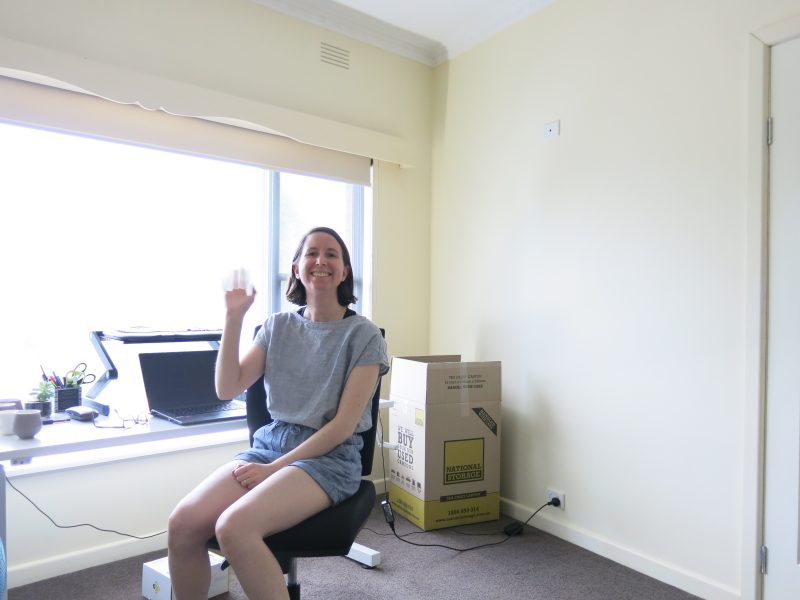
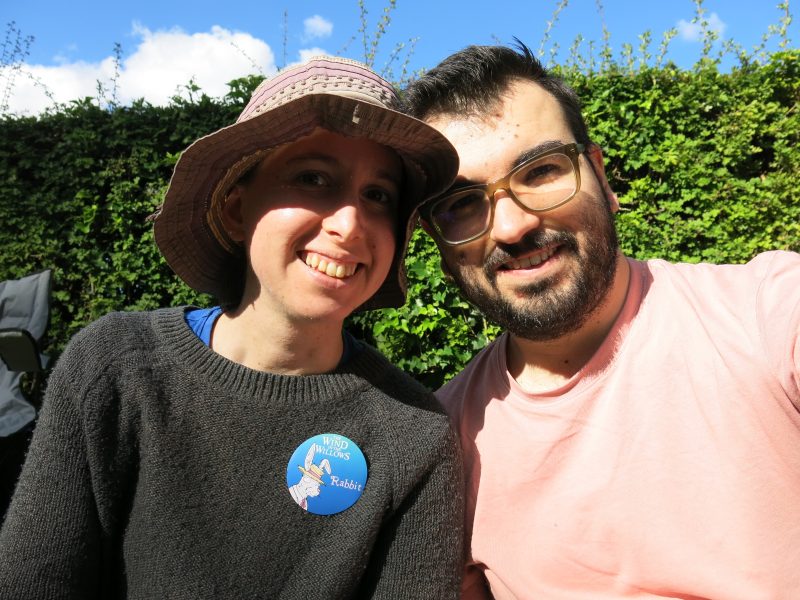
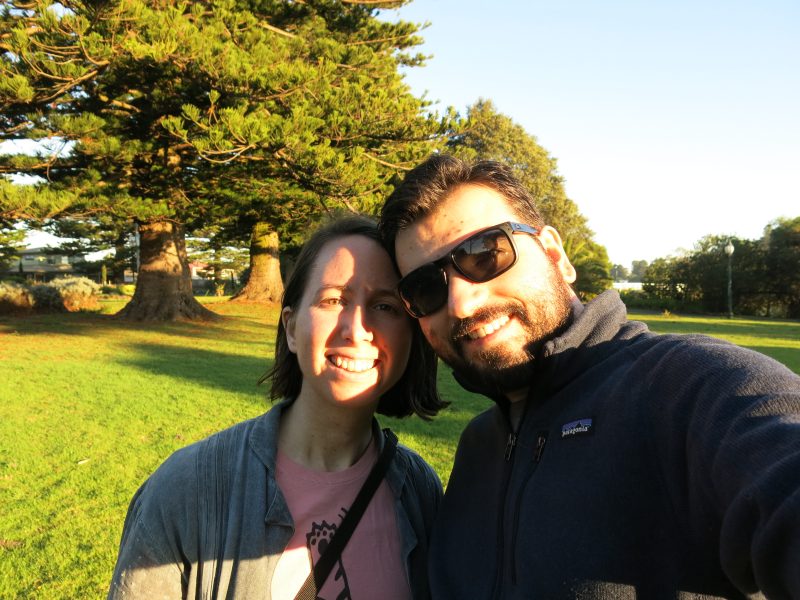
Sonya and Sam in the wild. 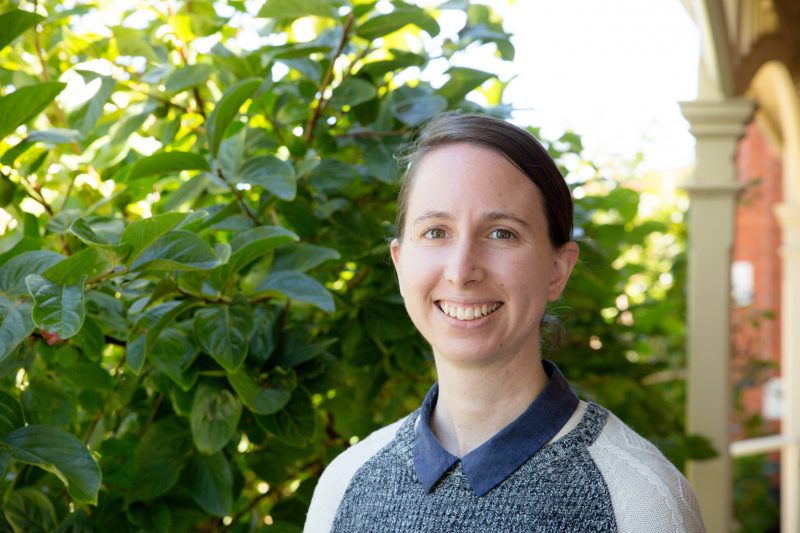
Favourite Quote:
“Life is like soil—you get out of it what you put into it!” (It’s not really a quote – more of a philosophy to live by!)
What is something that Australian farmers have to deal with that you would like to fix?
Farmers experience a lot of uncertainty (markets, weather and climate, succession planning), which, of course, can generate a lot of stress. I would like to help farmers build their resilience by learning about simple and practical things they can do to help manage stress and low mood.
What do you like about working with NCFH?
Living in the community of the people who we serve (farmers and farming types!).
What are you currently working on at NCFH?
The Mental Health 4 Ag project. We’re currently preparing for some interviews with people who have experience with community-led mental health programs.
What is your background?
I’ve always been interested in the natural world around me, and I studied environmental science at university. In my final year, my thesis explored climate drivers and rainfall variability in eastern Australia. I have also studied a Diploma of Horticultural Science—one day, I hope to grow all of my own food, and maybe have a small-scale horticultural operation.
What are the values that drive you?
Respect for others and living things, curiosity, connection, balance, freedom of expression, and hope.
What are your three favourite podcasts/books?
ABC’s All in the Mind
BBC’s Gardeners’ Question Time
Gardening Down Under, by Kevin Handreck
What do you enjoy doing when you are not working?
So many things! Anything creative and hands-on (sewing my own clothes, baking, gardening, calligraphy).
To read more about Sonya’s project, Mental Health 4 Ag, please follow this link: Mental Health 4 Ag | National Centre for Farmer Health
Rural suicide risk and physical ill health: A qualitative study of the Victorian Suicide Register, 2009-2015
Abstract
Objective
To gain new insight into contextual factors shaping how physical ill health acts as a stressor in rural suicides—informing the development of appropriate targeted interventions.
Design
Retrospective cohort study.
Setting
Non-metropolitan Victoria, Australia.
Sample
802 rural (non-metropolitan) suicide deaths between the years 2009 and 2015.
Main outcome measure
Qualitative data from the Victorian Suicide Register relating to physical ill health of suicide decedents.
Results
Thematic analysis identified 4 themes: (a) ‘living with physical ill health in a rural area’ highlights both practical and cultural challenges associated with managing physical ill health within the context of life in a rural setting; (b) ‘causes and experience of chronic pain’ highlights rural risk factors for chronic pain, how pain was experienced and treatment managed; (c) ‘when living an independent, contributing life is no longer possible’ describes the debilitating physical and mental outcomes of chronic ill health and pain; and (d) ‘the cumulative impact of physical ill health and other factors on suicide risk’ highlights the complexity of risk factors—in combination with (or as a result of) physical ill health—that contribute to a suicide death.
Conclusion
Identified themes suggest pathways to improve understanding and support for those experiencing physical ill health and associated suicide risk. These supports include contextually and culturally appropriate rural services to provide effective and necessary treatment, pain relief and mental health support; acknowledgement and response to a culture of alcohol misuse as an (ultimately ineffective) coping strategy; proactive psychosocial support mechanisms; and alternative approaches to support including consideration of innovative peer support models.
Episode 7: “Mentally preparing for fire season”
In this episode, Dr Alexandra Howard from Phoenix Australia and Cathy Sosoli from Victorian Country Fire Authority discuss how farmers And CFA volunteers can take some of the stress out of the lead up to summer fire season by consciously preparing themselves mentally. They also encourage farmers and volunteer firefighters to talk through their experiences of fire seasons past and present and their emotional responses to it.
Now streaming on Spotify, Apple Podcasts and here.
This podcast is part of the Primary Producer Knowledge Network led by the National Centre for Farmer Health to promote mentally healthy workplaces. Campfire, part of the Primary Producer Knowledge Network, was funded by the Victorian State Government’s WorkSafe WorkWell Mental Health Improvement Fund.
Farmer Health eNews November 2021
Find out the latest from the National Centre for Farmer Health
- Choose your #AgVenture this National Agriculture Day!
- Apply now to complete the Graduate Certificate of Agricultural Health and Medicine in 2022!
- New Blog Post: Reaching farmers through their best (canine)mates, to talk about mental health
- Wellness Wednesday
Do you want to receive our eNews?
Meet the Team! Amity Latham
When she is not powering through her work at NCFH, you can find Amity on her property in Telangatuk East with her husband Tom, two beautiful children – Clive and Camilla, and much loved pets – kelpie Lucy, and Maggie the cat.
Amity joined the NCFH earlier this year to support two Rapid Review Projects. After receiving a scholarship from Regional Development Victoria to undertake a PhD to address rural population decline and dispersal, her research led her to consider the theory of alienation in the context of farmers’ mental health.
Keep reading to learn more about Amity and the work she does for rural and remote communities through the NCFH…
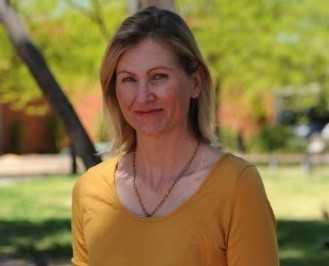
Photo taken by the Wimmera Mail Times 2019 before travelling to the US to speak at the EPIC conference.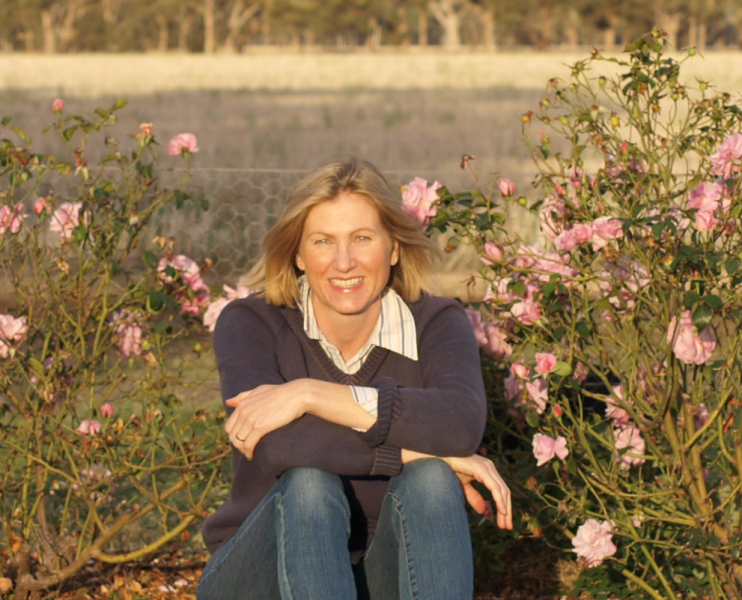
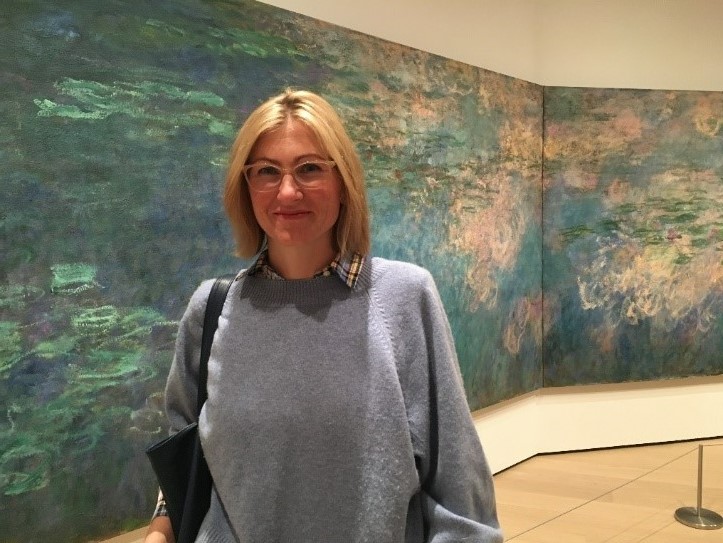
MOMA, New York in Nov 2019, in front of Monet’s Waterlilies.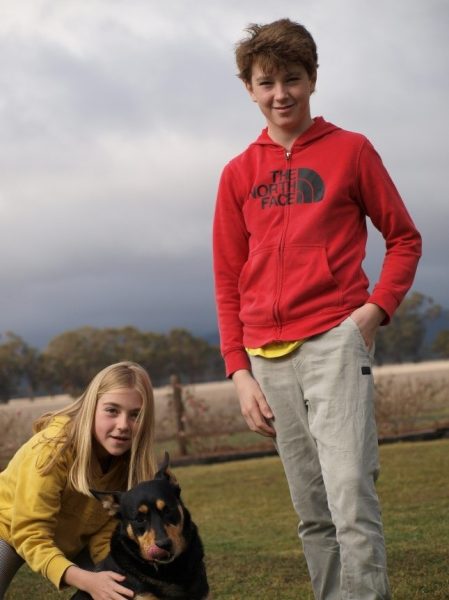
Camilla and Clive, with Lucy the Kelpie. 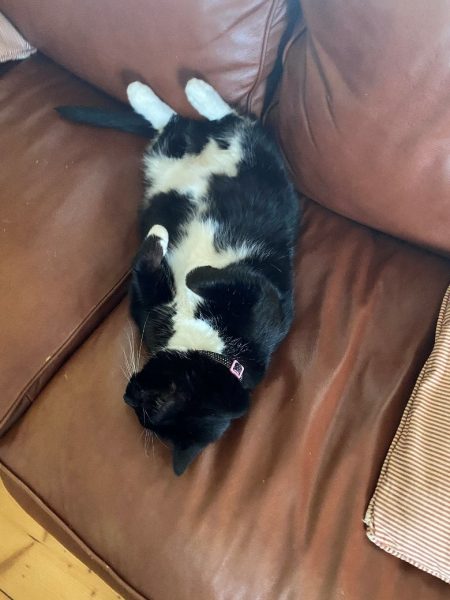
Maggie the cat. 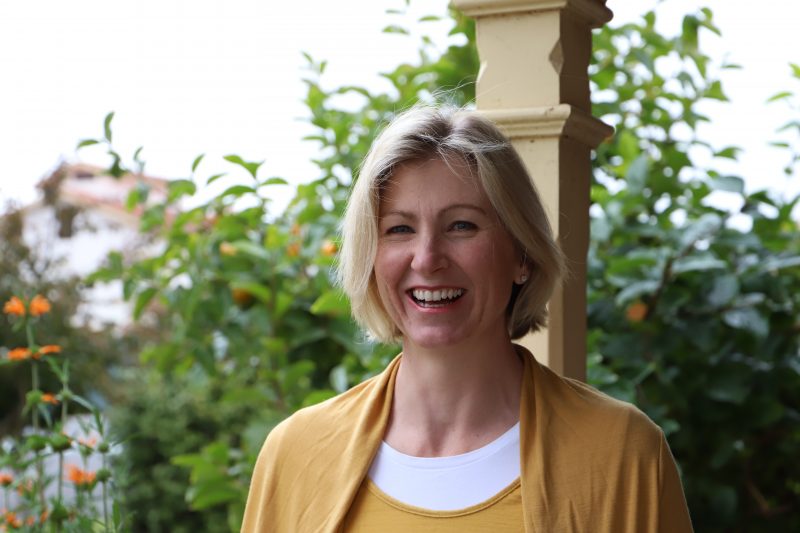
Favourite Quote:
“If we were all the same, it would be boring.”
What is something that Australian farmers have to deal with that you would like to fix?
1. Value-adding our primary products rather than relying on export markets.
2. Refinery and storage of fertiliser and fuel in Australia (reduce reliance on imports).
3. Those who make policy/ trade/ advisory decisions on behalf of farmers need to be accountable for their actions and known to the communities they make decisions on behalf of.
4. Farmers need to have more choice in where their levies are directed (safety, research, marketing, infrastructure).
What is “fixable” from NCFH view?
1. Work with online / downloadable gaming for farm safety protocol for farming simulation games.
2. Work with maternal health systems to disseminate information/ training specific to “bringing a baby home to the farm”.
3. Support for farm groups (facilitators) in safety for their extension roles and create a structure to allow them to be paid for a safety advocacy and advisory roles.
What do you like about working with NCFH?
The people and the vision for the organisation.
What are you currently working on at NCFH?
Measuring farm safety culture and Safer Agricultural Plant.
What is your background?
Farming, natural resource management, sustainable agriculture and sociology.
What are the values that drive you?
I value making the most of situations for our farm productivity and commodity marketing, and providing opportunities for my children. I value flexibility and adaptability, being open minded, and not afraid to try new things.
What are your three favourite podcasts/books?
Rosamund Pilcher‘s “September”
Sarah Whatmore’s “Farming Women”
Anne Marie Mol’s “The Body Multiple”
What do you enjoy doing when you are not working?
Gardening, walking along the creeks at home with the kids, the cat and the dog (we are slow), and making time to see friends.
Reaching farmers through their best (canine)mates, to talk about mental health
You can listen to the Campfire podcast episode “Working dogs and farmer wellbeing” with 2020 Victorian Rural Woman of the Year, Kelly Barnes, on Spotify, Apple Podcasts, and our website.
When Kelly Barnes was flicking through the stream of ‘dog selfies’ on her phone, she had an idea that would alter her life and the lives of so many others.
“I just thought dogs have been huge for me, I never really appreciated how much they helped me outside of doing farm work, with that support and that companionship,” Kelly told the AgVic Talk podcast.
In some ways, Kelly is running a covert operation. Her dog training school, Mates Dog School, is a professional 6-month training course, but she also sneaks in discussions with farmers about resilience, stress management, fear of failure and suicide.
“Even though we try to break down the stigma, people still don’t talk about it and I don’t think they really realise what’s going on for themselves or for someone else.”
Kelly lives in south-west Victoria and in 2020 she won the Victorian AgriFutures Rural Women of the Year Award which helped her create her working dog training program.
Throughout her own mental health struggles and diagnosis of fibromyalgia in 2015, a chronic condition which causes pain and fatigue, Kelly turned to her own dogs Dugald and Jess to get her through.
She also had also been studying mental health outcomes for people in rural communities through the National Centre for Farmer Health. That’s when combining her two passions started to make a lot of sense.
Kelly figured nearly every livestock farmer has a dog and could therefore receive the mental health benefits of spending more time with their working mate, as well as getting off farm to socialise.
“You do spend a lot of time on your own. And whether you work in a team or not, a lot of the work you do is on your own and the only thing you have with you, is your dogs.” Kelly said.
In fact, Kelly’s innovative dog training program is directly addressing several of the work-related stress factors identified by WorkSafe, such as isolation (or remote work) and low job control.
“It’s just becoming aware that there’s so many things that can affect what you’re doing that are out of your control, so it’s really giving you the tools to focus on the things you can control,” Kelly said.
“And it’s not necessarily for people with a mental illness either. It’s just giving people the tools to prevent them going down that path.”
Building connections with other farmers and the community is as much of a preventative tool as it is a supportive one.
Kelly also realised that getting farmers to open up and build trust within a group takes time – and having a practical element of dog training helps to open the line of communication.
“I couldn’t bowl in on day one, not knowing anyone, no one knows each other as well and then get everyone to start caring and sharing,” Kelly said.
“People would have run out the door 100 miles an hour,” she said.
And her unique approach to mental health, is already proving to be successful.
“The last session we did was about low stress stock-handling and you know, remaining calm.”
“I think sometimes people get so worked up when they’re working stock, and it’s all going wrong.”
“But all the participants you could see them over the course of the program, they’ve learned to accept that when things go wrong, it’s ok… you just get back in and go again.”
When it comes to running the family farm, investing in mental health initiatives is not only good for your family and staff, but it’s good for business too. The NCFH is supporting farmers just like you to manage and respond to work-related risks that impact on workplace mental health – these are factors in your work that can affect an employee’s mental health and include high job demands, low job control, low role clarity and more. Managing these factors, means decreasing the risk of work-related stress, which can prevent physical injury, mental injury or even both at the same time. Find out more about being mentally safe on the farm at www.farmerhealth.org.au/campfire.
This blog is part of the Primary Producer Knowledge Network led by the National Centre for Farmer Health to promote mentally healthy workplaces. Campfire, part of The Primary Producer Knowledge Network, is funded by the Victorian State Governments WorkSafe WorkWell Mental Health Improvement Fund.
If you’re interested in a wellbeing tool tailored to you, check out Steering Straight – it takes less than half an hour to complete.
*Primary producers featuring in this blog are fictional, but based on research interviews with farmers, and developed with the assistance of the National Centre for Farmer Health
Episode 6: “Practical tips to prevent stress on farm”
In this episode, Dr Kate Gunn, a Clinical Psychologist and Researcher at Uni SA explores how farmers can learn new skills to equip them to take charge and reduce the negative impact that stressful situations have on their lives, so they have more time and energy to focus on the things that make them happy and effective.
Now streaming on Spotify, Apple Podcasts and here.
This podcast is part of the Primary Producer Knowledge Network led by the National Centre for Farmer Health to promote mentally healthy workplaces. Campfire, part of the Primary Producer Knowledge Network, was funded by the Victorian State Government’s WorkSafe WorkWell Mental Health Improvement Fund.