

Q Fever
About Q Fever
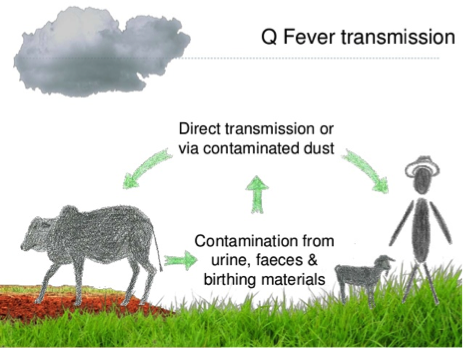
Q Fever is an infection that produces flu-like symptoms in humans but can progress to more serious symptoms and chronic illness in some cases. It is spread to humans from infected livestock and wildlife, although animals rarely show symptoms. It is most commonly transmitted by inhaling infected dust and contaminated droplets containing the bacterium – Coxiella burnetii. The bacterium is highly contagious within herds of domestic cattle, sheep, goats, and wild pigs.
The bacterium is found in infected animals’ urine, faeces, birth fluids, the placenta of a foetus or newborn as well as in uterine discharges following birth. These materials will contain high concentrations of the bacterium.
The organism is highly contagious within domestic herds and will spread quickly through stock. Once a herd is infected it will almost invariably spread to neighbouring stock, native and feral animals, and sometimes domestic cats and dogs. Once a herd is infected, it normally remains infected.
Direct or indirect inhalation of the bacterium is the most common mechanism of human infection. However, the human infection can also occur via skin abrasions and splashes of infected material into the eye. The consumption of unpasteurised milk from infected cows and goats has accounted for small numbers of Q Fever cases.
The Coxiella burnetii bacterium is resistant to heat, drying and many common disinfectants, allowing it to survive for lengthy periods in the environment. Infection can also be transmitted by direct contact with objects (boots, clothing) and ingestion (for example eating after you’ve handled animals and not washing your hands).
Usually, Q Fever is an occupational disease of meat workers, farmers, and veterinarians. People who hunt and slaughter wild goats and pigs are also at risk. However, living in a regional or remote area puts you at high risk even if you don’t work with animals.
Signs and symptoms of Q Fever
- Fever, which may last for up to four weeks.
- Severe headache, blurred vision or light sensitivity.
- Sweats and chills.
- Tiredness – prolonged fatigue may follow infection (post Q Fever fatigue syndrome).
- Muscle aches.
- Confusion.
- Sore throat.
- Dry cough.
- Chest pain on breathing.
- Nausea, vomiting and diarrhoea.
- Weight loss.
- Abdominal pain
Diagnosis of Q Fever is made via a series of blood tests. Effective treatment includes antibiotic therapy. With early diagnosis, treatment is simple, and a good outcome can be expected.
The use of personal protective equipment (gloves, P2 dust mask and waterproof overalls) will minimise your risk of exposure to infected body materials or inhalation of infected particles in the air. The most effective prevention strategy is immunisation against the disease and is achieved through vaccination with the Q Fever vaccine (Q –Vax). This can be given to at-risk people who are aged 15 years and over.
Steps towards identifying, developing and registering Q Fever immunity
Initial – blood and a skin test
This is recommended to ascertain if the individual has previously been exposed to Q Fever – either naturally or by previous vaccination. In many cases, people have been unknowingly infected previously with a mild strain of the disease, which was not confirmed by a doctor as Q Fever.
Interpretations – blood test and skin test
If interpretation confirms as – previously being infected with the disease, vaccination is unnecessary.
Implementation – Q-vax vaccination (if no immunity identified)
Once vaccinated, the vaccine will be recorded on the Australian Immunisation Register (AIR). People with an existing record with the Q Fever Register can access their information until 30/6/2025 at qfever.org. You may download your existing eStatement and have the details reported to the Australian Immunisation Register by a recognised vaccination provider.
Contact your local GP or state health listed Q Fever provider for testing and vaccination services.
Find out more information on Q Fever visit Better Health Channel.
Fast facts:
- Q Fever is spread to humans from cattle, sheep, goats and wild pigs.
- People can become infected when splashed with infected body fluids or by breathing infected dust.
- Q Fever causes flu like symptoms and can be dangerous for people with heart problems.
- Wear protective clothing and consider vaccination if you are at risk of infection.
References used for this topic
More information:
US Centers for Disease Control and Prevention
Clinical care:
Department of Health Australia
Information about Q Fever disease, vaccines and recommendations for vaccination from the Australian Immunisation Handbook
Royal College of Pathologists of Australia Manual
Q Fever
SA Health
Q Fever – including symptoms, treatment and prevention
Victorian Department of Health
Q Fever
Research & reviews:
Open Veterinary Journal
Navigating Q Fever: Current perspectives and challenges in outbreak preparedness – PMC (nih.gov)
International Journal of Microbiology
Q Fever: Current State of Knowledge and Perspectives of Research of a Neglected Zoonosis
Australian Journal of Pharmacy
Q Fever and Australian farmers: is the health system paying enough attention? A literature review
Medical Journal of Australia
Seroprevalence of Q Fever among metropolitan and non‐metropolitan blood donors in New South Wales and Queensland, 2014–2015
AgriFutures Australia
Psittacosis – Ornithosis
Psittacosis (sometimes called ornithosis) is an infection of the lung (pneumonia) caused by the bacterium Chlamydophila (Chlamydia). The bacterium is carried by both wild and domestic birds, which often show no sign of disease.
People who have close contact with birds, such as bird breeders pet shop employees, pet owners, poultry farm workers, abattoir workers, veterinarians (vets) and individuals who live near high-density native bird populations are at increased risk. This can include farmers with chickens, ducks, turkeys, geese, guinea fowl, or aviaries with pet birds. Exposure to psittacosis in pregnancy has been associated with maternal and foetal death.
Infection is caused by inhaling dust containing dried bird faeces or dry eye and nasal secretions from infected birds.
Symptoms of psittacosis may be often associated with the flu (flu-like) and include:
- fever and chills
- nausea and vomiting
- muscle and joint pain
- diarrhoea
- weakness
- fatigue
- cough, typically dry
- abrupt onset of headache
There have been reported cases in cattle, sheep, horses, cats and dogs. If the infection is contracted, treatment involves antibiotic therapy.
Find out more about this topic on Better Health Channel
Fast facts:
- Psittacosis is a lung infection caused by bacteria carried by birds.
- Poultry and parrot-like birds may carry this disease.
- People become infected with psittacosis by inhaling dust containing dried droppings or secretions from infected birds.
- Avoid beak bites and beak-to-mouth contact with birds.
- Use a grass catcher when mowing.
- Always wash hands thoroughly after tending to birds.
- Wear masks and gloves while cleaning bird cages and poultry sheds to reduce the risk of infection.
References used for this topic
More information:
Centres for Disease Control (US)
Psittacosis
Department of Health (Aust)
Psittacosis (ornithosis) case definition
BMC Infectious Diseases Journal
Animal sources for zoonotic transmission of psittacosis: a systematic review
The Journal of Obstetrics and Gynaecology Research
Gestational psittacosis: A case report and literature review
Clinical care:
Australian Government Department of Health
Psittacosis (ornithosis): CDNA National Guidelines for Public Health Units
NSW Health
Psittacosis
Australian bat lyssavirus
Australian bat lyssavirus (ABLV) is related to the rabies virus. Thankfully, lyssavirus is a rare disease in Australia and only three human deaths have been recorded since it was discovered in 1996.
People can be infected by bites or scratches from infected flying foxes or bats. There are vaccines to prevent infection and treatment after direct exposure can also be effective. It is important to seek treatment promptly if you have had contact with bats.
If you are bitten or scratched by a bat, immediately wash the wound thoroughly with soap and water, apply an antiseptic and get immediate medical help.
Fast facts:
- Australian bat lyssavirus is closely related to the rabies virus.
- Infections are rare in Australia.
- Exposure to blood urine or faeces is not known to transmit infection.
- The virus can be transmitted to humans by bites or scratches from infected bats.
- If bitten by a bat or flying fox, wash the wound thoroughly with soap and water. Apply antiseptic to the area and seek medical help.
Prevention will depend on the ability to avoid exposure to bats, particularly if they are behaving unusually or unwell. If avoidance of the animal is not possible, then prior vaccination is recommended. If an exposure occurs (bite, scratch or exposure to saliva) then post exposure treatment with the rabies vaccine is advised.
References used for this topic
More information:
Better Health Channel
Australian bat Lyssavirus infection
Department of Agriculture and Fisheries (Qld)
Australian bat lyssavirus
SA Health
Rabies virus and Australian bat lyssavirus – including symptoms, treatment and prevention
Clinical care:
Australian Department of Health and Aged Care
Rabies and other lyssavirus
Australian Immunisation Handbook: Rabies and other lyssaviruses
NSW Health
Rabies and other lyssavirus infections
Research & reviews:
Microbiology Australia
The dynamic landscape of bat borne zoonotic viruses in Australia (2020) [PDF]
Australian Journal of General Practice
Australian bat lyssavirus (2018)
NSW Public Health Bulletin
Australian Bat Lyssavirus: Examination of post-exposure treatment in NSW [PDF]
Viruses
Recent Observations on Australian Bat Lyssavirus Tropism and Viral Entry (2014)
Biology (MDPI)
Emerging Rhabdoviruses and Human Infection
Leptospirosis
Leptospirosis is a disease caused by the Leptospira bacteria. People can catch Leptospirosis when they come in contact with the urine or birth products from infected animals. This disease is a particular risk for dairy and pig farmers.
Leptospirosis is also spread by rats and known as Weils disease. It usually enters the body through cuts or scratches in the skin. Banana farmers and sugar cane growers are at particular risk.
Leptospirosis causes a flu-like illness with symptoms including coughing, fever, chills, sore joints and general weakness. In 2022 (up to September) there were 135 reported cases in Australia. To prevent leptospirosis, vaccinate cattle, control rodents and wear protective clothing (gloves, boots, overalls, P2 dust mask, protective eyewear).
Fast facts:
- Leptospirosis is a disease that can spread from infected animals to humans when people come in contact with the infected animal’s urine or birth products.
- Leptospirosis causes a flu-like illness which can be treated with antibiotics.
- Vaccinate livestock against leptospirosis.
- Wear protective clothing and always wash your hands thoroughly after handling livestock and before handling food.
- Use alcohol hand wipes before eating if you are away from home and can’t wash your hands.
References used for this topic
More information:
Meat and Livestock Australia
Leptospirosis
Queensland Health
Leptospirosis
Clinical care:
Centre for Disease Control (CDC)
Leptospirosis: Fact Sheet for Clinicians
World Health Organization (WHO)
Human leptospirosis: guidance for diagnosis, surveillance and control 2018
Research & reviews:
Australian Journal of General Practice
Leptospirosis: An important zoonosis acquired through work, play and travel (2018)
Medical Journal of Australia
Fatal leptospirosis presenting as musculoskeletal pain
Communicable Diseases Intelligence
An outbreak of leptospirosis associated with cattle workers during the wet season, in the Northern Territory of Australia, 2021.
Hendra virus
Hendra virus (HeV) is a rare, emerging zoonotic virus (a virus transmitted to humans from animals). It is spread by its natural host – fruit bats, and can then be passed from sick/infected horses to humans. Horses may be infectious for 72 hours prior to symptoms and until after disposal of the carcass.
It can cause severe disease which affects the lungs and brain of horses and humans. Symptoms of HeV in humans may range from a flu-like illness to fatal respiratory and neurological disease (WHO, 2020). There is no human vaccine for the Hendra virus and without prompt treatment, the virus is often fatal.
Take care when handling all horses. Wash and dry hands thoroughly after handling horses. Avoid contact with secretions (blood, urine, faeces, saliva, nasal secretions). Cover cuts/abrasions with occlusive dressings.
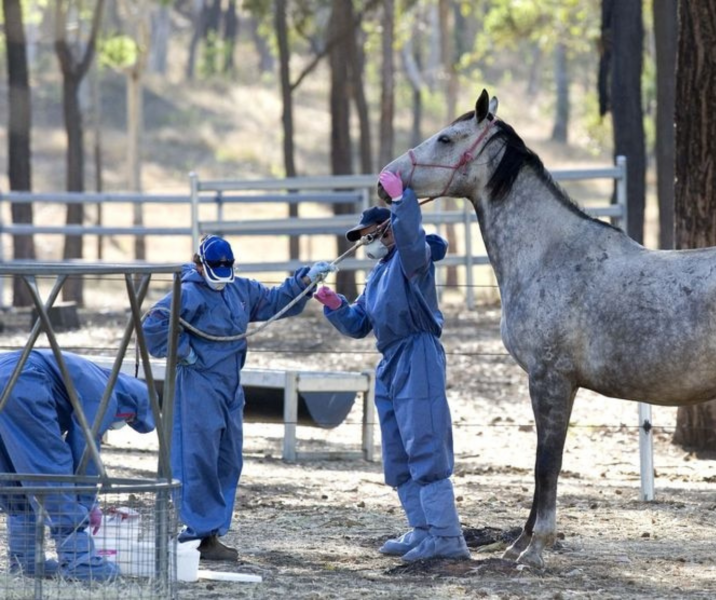
Always wear gloves, masks and protective glasses when handling sick horses Vets should take particular care during post-mortems.
Reduce the risk of transmission from bats to horses by moving feed and water troughs away from areas where fruit bats feed or roost.
Fast facts:
- Hendra virus can be fatal
- Hendra virus can be transmitted from horses to people
- Hendra virus is spread by fruit bats
References used for this
More information:
Australian Broadcasting Corporation (ABC)
Potentially deadly Hendra virus spreads further south in New South Wales
CSIRO
Hendra virus identification
Queensland Government
Hendra virus information for industry and horse owners
Better Health Channel
Hendra Virus
Australian Veterinary Association
Hendra Virus
Clinical care:
Queensland Health
Hendra virus infection for healthcare workers [PDF]
NSW Health Department
Hendra virus monitoring
Research & reviews:
Microbiology Australia
The dynamic landscape of bat borne zoonotic viruses in Australia (2020)
Medical Journal of Australia
Hendra virus infection in a veterinarian
Queensland Government
Hendra virus research
Hand washing
Washing your hands is one of the simplest, yet most effective, things you can do to protect your health and the health of others. It removes dirt, bacteria and viruses before they make you or others sick.
Farmers routinely encounter potential sources of disease and illness including dirt, farm animals, domestic pets, farm chemicals, fertilisers, pesticides, medications, solvents and soil. Farmers and farm workers can also pass on contaminants to others through produce contaminated by bacteria or viruses due to poor hand washing.
Five simple steps to clean your hands effectively
- WET
- Wet your hands.
- Turn off the tap and apply soap.
- LATHER
- Rub your hands together with the soap.
- Make sure you soap up to the wrists, get the back of your hands, in between your fingers and underneath your fingernails.
- SCRUB
- Continue for at least 20 seconds.
- Don’t have a timer? Sing ‘Happy Birthday’ in your head twice!
- RINSE
- Rinse your hands in clean, running water.
- If you’re out on the farm and clean, running water is not available, use what water is available, or keep some alcohol wash handy (containing at least 60% alcohol).
- DRY
- Thoroughly dry your hands with a clean towel or let them air dry.
When should you wash your hands?
- Before touching anything that needs to stay clean.
- After touching anything that might contaminate your hands.
- Examples include: After being in contact with an animal/s, animal feed or animal waste, before preparing food, before and after treating a cut or wound, and after using the toilet.
- Even if you have been wearing gloves while working with chemicals or livestock, wash your hands after you remove them.
The few minutes spent washing your hands throughout the day can prevent an illness that could keep you (or others) out of action for days, weeks or even longer.
Fast facts:
- Hand washing is an easy and important way to protect yourself and others from the risk of illness – and it only takes 20 seconds.
- Contact with dirt, farm animals, pets, medications, chemicals and fertilisers can all present potential risks.
- Keep an alcohol-based hand sanitiser (at least 60% alcohol) for when soap and running water aren’t available.
- Trying to choose what soap to get? Liquid soap is better than a bar of soap.
References used for this topic
More information:
Better Health Channel
Hand washing – Why it’s important
Centers for Disease Control (US)
About hand washing
Occupational Dermatology
Skin care in the workplace
The Nemours Foundation (US)
Hand washing: Why it’s so important
Healthdirect
Hand washing (provides a downloadable poster on effective hand washing)
Anthrax
Anthrax is a bacterial disease that targets sheep, cattle and other hoofed herbivores (grass eating animals) like goats and horses. Occasionally anthrax infects humans. Anthrax is a rare hazard for anyone who works with livestock or their by-products including farmers, abattoir workers, tanners and veterinarians.
Farmers and abattoir workers are more at risk than the general population. The cutaneous (skin) ulcer form is the only type recorded in Australia. There have been three cases affecting humans since 2001, all caused by exposure to anthrax spores. There have also been sporadic outbreaks in grazing animals during this time.
Anthrax occurs mainly in the pastoral areas of NSW, Northern Victoria and Gippsland.
Symptoms in Humans
Symptoms of anthrax include:
- Fever
- Headache
- Cough
- Skin Lesions
- Joint pains
- Chest pain
- Vomiting
- Flu-like symptoms (eg. fever, chills, headache, runny nose, sore throat)
Fast facts:
- Anthrax can occur in sheep and cattle and can occasionally be passed to humans.
- Do not butcher or conduct a post mortem on any suspected animal cases as this will cause massive environmental exposure from anthrax spores.
- If you suspect you have been exposed to an anthrax infected animal, seek veterinary and medical advice immediately.
References used for this topic page
More information:
Department of Primary Industries (NSW)
Anthrax
Better Health Channel
Anthrax
Clinical care:
Centers for Disease Control (US)
Fact sheet: Anthrax information for health care providers
NSW Health
Anthrax control guidelines
Department of Health (Vic)
Guidelines for Infectious Diseases: Anthrax
Research & reviews:
World Health Organization (WHO)
Anthrax
Sheep and shearing
Sheep and shearing can create many hazards for farm workers as sheep can be unpredictable and result in physical injury.
Safe work practices and good training can help to avoid many mishaps. A safe working environment can minimise the chances of both injury and illness. Well-designed yards and shearing sheds can help to prevent and reduce a range of physical, chemical and biological hazards.
When you are working with sheep – from mustering and drafting to shearing and returning sheep to paddocks – develop and communicate your plans to all workers involved. Well-designed and well-maintained yards make it a lot safer, not to mention easier, to handle sheep. Ensure your shearing shed is sufficiently lit and ventilated, agricultural and veterinary chemicals are used and stored appropriately, and machinery is safe and well maintained.
Hazards associated with working with sheep
- Mustering with dogs and motorbikes/quad bikes.
- Charging and crushing.
- Dust.
- Zoonosis.
- Trips and falls.
Hazards associated with shearing, crutching and treating sheep
- Manual handling causing musculoskeletal injuries (i.e. back strain and knee injuries).
- Slips, trips and falls.
- Crushing and foot injuries.
- Noise exposure.
- Chemical exposure and self-vaccination.
Recommendations when working with sheep
- Design yards, sheds and races carefully to ensure smooth stock flow to reduce the risk of crushing and collisions with animals.
- Have a good working knowledge of animal behaviour and a positive attitude towards stock.
- Prepare yards (water down) to minimise dust and wear respiratory protection when needed.
- Always wear a helmet when riding a motorbike/quad bike even if moving slowly.
- Use non-slip surfaces to avoid falls and slips in yards.
- Make sure safety cut-off switches are installed and working on shearing plant and wool presses.
- Have guards fitted on shearing equipment, wool presses and grinders.
- Consider using lift or slide swing gates.
- Minimise the amount of lifting needed, but if you must lift a sheep, use your legs, not your back.
- Ensure correct personal protective equipment (PPE) is used and worn including appropriate footwear.
- Maintain loading ramp and race in good working order.
- If electricity is available, have electric motors fitted to the wool press to reduce air and noise pollution.
- Avoid back injuries by maintaining good posture and using your legs instead of your back.
- Ensure workers are sufficiently trained in the task being undertaken.
- Fit emergency control/buttons, ensure all are in working order and are prominently signposted.
- When shearing, keep animals close to your body and when you need to lift them, use your thigh muscles.
- Consider using sedatives when shearing prime lambs or crossbred sires – consult your vet.
- Know what to do if a needlestick injury occurs.
Find out more about this topic on Better Health Channel.
Fast facts:
- Handling sheep can cause strains, sprains and other injuries.
- Stay fit to maintain muscle strength and reduce your risk of injury.
- When you work with rams in a race, always watch the other rams behind you.
- Make sure all sheep handling areas are safe and train all workers in safe handling practices.
References used for this topic
More information:
Australian Wool Innovation
Shearing Shed Safety
SafeWork SA
Farmers’ Guidebook to work health and safety [PDF]
NSW Department of Primary Industries
Best Practice Sheep Handling video
National Centre for Farmer Health
Farmer needlestick injuries
Research & reviews:
Primary Industries Health and Safety Partnership
Woolshed Safety: A practical guide (2016)
Children and animals
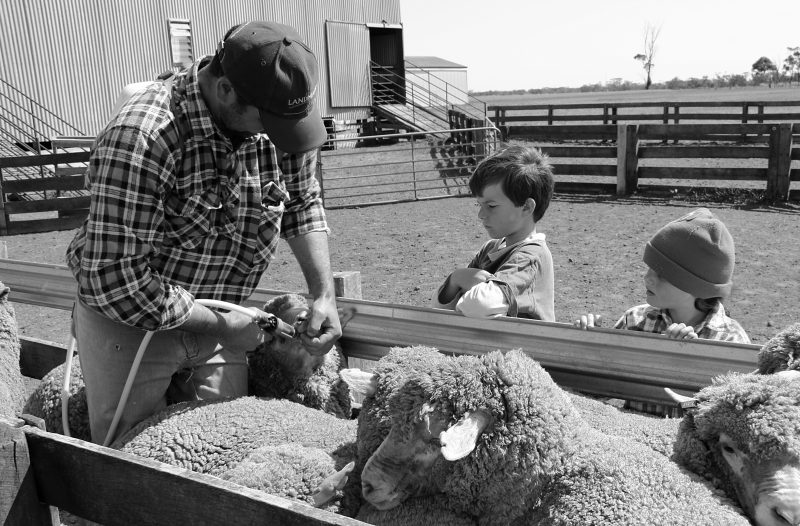
Children get great enjoyment from farm life and naturally gravitate towards animals. However, animals can cause serious injuries and children need to be taught the dangers of being around livestock and other animals. This is not only important for children who live on farms, but also children who visit the farms of friends or family.
Animals on farms are one of the key consistent hazards causing injuries to children. Horses are a leading cause of injury on farms; at particular risk are young girls. It is important children ride and handle horses that are appropriate for their age and size, and they must always wear a helmet and suitable footwear.
If children care for or are around livestock or large animals, make sure they know to always be watchful, respectful and understand basic animal behaviour.
Children should also be taught how to behave around working dogs and understand that they can behave differently to pet dogs. It is also important to be alert and aware of snakes in the warmer months.
Find out more about this topic on Better Health Channel.
See the NCFH fact sheet to read more about child safety on farms.
Fast facts:
- Teach children to be alert and watchful around livestock, especially if they are caring for animals.
- Always wear a helmet and suitable footwear when riding horses.
- Be aware of and always supervise working dogs around children.
References used for this topic
More information:
Victorian Farmers Federation
Child Safety on Farms: A practical guide for farming parents [PDF]
Worksafe
Children on farms
Farmsafe Australia
Child safety on farms
Research & reviews:
Australian Journal of Rural Health
Protecting the future: Fatal incidents on Australian farms involving children (2001-2019)
Animal handling
Handling animals such as cattle, sheep, horses, poultry and dogs is part of everyday life on many farms and will always involve some level of risk. Health and safety on farms involves managing that risk for workers, family and visitors.
All animals behave differently and can be unpredictable, especially during mating season. Cattle, pigs, horses and sheep should be treated with caution at all times. Keep the animals as calm as possible, and a fence or barrier between you and the animals and never turn your back.
Falling off horses can cause serious injuries, so riders should always wear a helmet. Ensure that all workers are appropriately trained in animal handling and that visitors are aware of the animal handling safety practices on your farm. Children should always be supervised around farm animals.
Effective maintenance and design of yards and fences is important to reduce risk of injury when handling livestock. This can include the use of appropriate animal-handling equipment and aids such as cradles and crushes which reduce injury risk from lifting or pushing animals.
Animals can carry diseases that can be transmitted to humans (this includes dogs and cats) so vaccinate for diseases such as Q Fever where appropriate and always wear suitable protective clothing to reduce your risk when handling potentially infected material such as faeces or afterbirth. Plan for tasks involving animals and get help if you need it.
Find out more about this topic on Better Health Channel.
Fast facts:
- Handling animals like cattle, sheep, horses, poultry and dogs will always involve some level of risk. Animals are unpredictable and should be treated with caution at all times. Keeping animals calm and reducing stress will help reduce risk of unpredictable behaviour.
- Wherever possible, create a barrier between yourself and the animals.
- Always wear a helmet when riding a horse to avoid a serious injury if a fall occurs.
- Ensure all farm workers and visitors are aware of the animal handling safety practices.
References used for this topic
More information:
Safework Australia
Guide to managing risks in cattle handling
Queensland Government
Safety in animal handling
Safework New South Wales
Working with livestock on farms
WorkSafe Victoria
Safer cattle handling | WorkSafe Victoria
Research & reviews:
Journal of Agromedicine
Fatal Animal Related Incidents on Australian Farms – a 20-Year Review (2023)
Cureus
Horse and Cattle-Related Trauma: A Retrospective Review of Injuries and Management in a Regional Queensland Hospital (2023)
Anger
Anger is an emotion that we all experience. However, this powerful emotion can be destructive and lead to violence if it isn’t managed.
Farming, like many occupations, can be stressful. When things go wrong you may feel rage and anger. We often take out our anger on those closest to us, our partners and families. Learning to recognise and understand your triggers can help you to manage your anger.
Look at the situations that make you angry – what can you do to avoid those things happening? Often they are due to a high level of demand on you and a loss of control over the situation. This may include machinery breakdown, broken water pipes, and people not doing what you think they should be doing.
Machinery will break down, commodity prices may drop, storms can damage farm buildings, gates may be left open – but how you react can have a profound impact on your own and your family’s health. There are many things in life that are beyond our control and recognising this is important to wellbeing. However, how we react to anger is something we can control.
Learn simple ABC strategies:
A. Be AWARE of how you are feeling: Some signs of anger include tightening muscles, pressure building in the head, feeling hot or flushed in the face, raised heart rate, rapid breathing or increased sweating.
B. BREATHE and allow yourself some time: Step away from a situation that makes you feel angry, spend a couple of minutes focusing on deep breathing and return after a break with a cool head and a fresh perspective.
C. Take CONTROL of your emotions and respond safely and non-aggressively: Use helpful self-talk such “I am not going to let this situation get to me” or “Just stop and take a few breaths”. Try ‘releasing’ your anger through visualising an image in your mind e.g. releasing a bird.
Find out more about how anger can affect you or others on the Better Health Channel.
Anger is a powerful emotion. Uncontrolled anger may cause increased anxiety, high blood pressure and headaches, and trigger fights or abuse. Anger can also be ‘contagious’, particularly in family relationships.
If you can manage your feelings of anger, you can help break the cycle of extreme emotion. Anger management strategies include regular exercise and learning how to relax. People may even be less prone to anger when they are physically fit, with recent research suggesting that cardiorespiratory fitness may help to reduce stress reactivity (e.g. becoming angry) in high stress situations. Understanding and managing your anger takes effort and practice – but the rewards are worth it.
ifarmwell has produced a great worksheet that you might find helpful: Anger worksheet.
Fast facts:
- Anger is a powerful emotion, which can affect your health and may lead to violence and abuse.
- When you feel angry take some deep breaths and walk away from the situation until you are calmer.
- Do something physical to release the tension (for example, go for a walk or dig in the garden).
- Find ways to fix the things that make you angry where possible and learn to accept things that you can’t change.
References used for this topic
More information:
The Guardian
Science of anger: how gender, age and personality shape this emotion
Psychology Today
How to control anger: Seven quick tips
Mensline
Managing anger
ReachOut Australia
All about anger
The Conversation
How to understand and harness your workplace rage
Country Guide
Manage anger on the farm
Research & reviews:
Journal of Social and Personal Relationships
Anger in the family: Dyadic Contributions. Journal of Social and Personal Relationships
Group Decis Negot (The Netherlands)
Anger in social conflict: Cross-situational comparisons and suggestions for the future
Journal of Psychiatric Research
An examination of the relationship between anger and suicide risk through the lens of the interpersonal theory of suicide
Frontiers in Psychiatry
Does Cardiorespiratory Fitness Buffer Stress Reactivity and Stress Recovery in Police Officers? A Real-Life Study
Wood fires and breathing problems
Smoke from slow-combustion stoves, wood fires, burn offs and bushfires can cause breathing problems. Wood fire smoke can pollute the air with carbon monoxide – an invisible, odourless and tasteless gas that, once ingested, can cause confusion, headaches, fatigue, damage to the heart and brain, and death. Particles in wood fire smoke can irritate the eyes, throat, nose and respiratory system.
Wood smoke may also contain carcinogenic pollutants like benzene, butadiene, formaldehyde and polycyclic aromatic hydrocarbons. Exposure to these gases can severely hinder healthy development and damage the respiratory, nervous, reproductive and immune systems.
The effects of wood smoke exposure are typically short-term, with most healthy adults recovering quickly. However, pregnant women, children, elderly persons and individuals with a diagnosis or history of heart disease, lung conditions, diabetes and high blood pressure, are particularly susceptible to smoke-induced breathing problems.
Exposure to wood smoke can occur:
Inside the home: wood heater, slow combustion stoves and outdoor smoke entering the house.
Outdoors: outdoor fires, burn-offs, crop stubble burns and bushfires.
Things to consider if you use a wood heater or wood stove:
- Operate it correctly and clean the flue or chimney regularly to minimise the amount of smoke produced.
- Only use good quality wood – make sure the wood is dry and has no paint on it or other chemical treatments such as treated pine. Try to use smaller logs rather than one large log.
- Leave a window partially open to let in the fresh air and reduce the build-up of indoor pollution.
- Maintain a bright flame and never let your heater smoulder to ensure enough heat for complete combustion.
- Clean your chimney annually.
- Be aware of signs like drowsiness, an indication that carbon monoxide levels are high.
To find out more about woodfire smoke and breathing problems visit Better Health Channel
Fast facts:
- Wood fire smoke contains particles that can harm your health.
- Wood smoke exposure can occur inside and outside the home.
- Operate and maintain wood heaters and wood-burning ovens properly to minimise the amount of smoke generated.
- Wear properly fitting P2 dust masks if burning crop stubble. These are available in our Safety shop
References used for this topic
More information:
Australian Government Department of Sustainability, Environment, Water, Population and Communities
Woodheaters and Woodsmoke – air quality
Better Health Channel
Wood fires and breathing problems
Tips to reduce wood heater pollution (2019)
EPA (South Australia) 2018
Burn Better for Good
Research & reviews:
European Respiratory Journal
Wood smoke exposure and risk of chronic obstructive pulmonary disease [PDF 194kb]
Environmental Toxicology and Pharmacology (2017)
Wildfire Smoke Exposure and Human Health: Significant Gaps in Research for a Growing Public Health Issue