

2020-06-15: Working together with a shared understanding: growing workforce putting farmer health in the spotlight – Partyline
Despite continued higher rates of workplace injuries, earlier morbidity and mortality and challenging climatic environments, few formal programs focus on the health, wellbeing and safety of farmers. In the farming context, culturally competent professionals have a greater understanding of the unique hazards and conditions farmers face and therefore be able to obtain more detailed histories, make better diagnosis and provide more appropriate treatments, interventions and discharge plans.
This notion extends beyond health workers to professionals working in agricultural communities and in policy development. Deakin University’s Agricultural Health and Medicine unit, developed in 2010, developed to increase cultural competence and empower rural professionals to improve the health, wellbeing and safety outcomes of farming populations in Australia.
“Our workforce across Australia continues to grow as more and more health professionals complete their Graduate Certificate in Agricultural Health and Medicine,” said National Centre for Farmer Health Business Development and Industry Engagement Manager, Cecilia Fitzgerald.
“This, coupled with dynamic and effective collaborations with our industry partners, means together we are able to engage with rural communities, increasing their health literacy and make a real difference”.
Partnerships and collaborations reinforce the understanding that to engage rural communities and change the culture surrounding taking care of your health, wellbeing and safety requires consistent messages shared and spread by both the health and agricultural industries working together.
Throughout 2019, the Murrumbidgee Primary Health Network (MPHN), through the Australian Government’s ‘Empowering our Communities’ initiative, partnered with the National Centre for Farmer Health to deliver Health and Lifestyle Assessments to people impacted by drought across the Murrumbidgee region.
MPHN was one of nine Primary Health Networks to be funded under the Empowering our Communities initiative to provide additional mental health support to help farmers and rural communities to deal with the uncertainty, stress and anxiety of drought conditions.
“It was important to engage with activities that help build community capacity and foster long-term resilience,” said MPHN Chief Executive Officer Melissa Neal.
“Offering free health check-ups through the NCFH is one way people living in drought affected communities can engage in a fairly neutral and private way with a health professional and receive a specialized assessment of their general and mental health.”
The success of these collaborations comes as a result of the understanding that to engage communities and change the culture surrounding taking care of your health, wellbeing and safety requires consistent messages shared and spread by both the health and agricultural industries working together.
National Centre for Farmer Health Agrihealth professional, RN, and Agicultural Health and Medicine graduate, Amelia Cottrell from NSW is one of a team of nurses using their expert understanding of Agricultural Health to conduct the health checks across the country.
“The National Centre for Farmer Health has helped me fulfil my passion to improve the health and wellbeing of rural communities through conducting HLA’s and educating participants of the health risks associated with the Agricultural industry and to make a positive change to farmers lives,” said Amelia.
Fellow graduate, RN and farmer, Jeanne Van Der Geest Dekker from Victoria also understands the importance of effective engagement of communities in their health, wellbeing and safety.
“Coping with stress on farm has its unique challenges,” she said.
“It’s often isolating with many factors affecting stress on farm – for example drought, fire, floods and economic downturn. Many have survived years of persistent stress but having an awareness of stress and how it manifests into physical, emotional and behavioural symptoms is key to dealing with stress. It’s about finding the balance.”
Victorian farmer Logan Symes received a health check in 2019, afterwards saying: “If I didn’t get a free health check from you guys, I wouldn’t have discovered that I had type one diabetes at an early stage”.
To learn more about the Graduate Certificate of Agricultural Health and Medicine and our partnerships and how to apply for July 2020 commencement visit www.farmerhealth.org.au.
View article: 2020-06-15: Working together with a shared understanding: growing workforce putting farmer health in the spotlight – Partyline
Looking after your most important asset, your mind – Podcast: Safe Ag Systems
Eight Australians die every day by suicide. 75% of these people are male and people in rural populations are 2 times more likely to die by suicide. So why is there over 65,000 Australians attempting suicide each year and is there anything that can be done about it?
Kirby Richmond-Davis from Safe Ag Systems caught up with Al Gabb for Farm Safety Week to have a conversation about his experience.
2020-07-20: Farmer health is better with specialist Ag health and medicine support – Press Release: Deakin University
New research shows Australian farming communities enjoy better health outcomes when university health graduates understand the specific challenges faced by people living and working on the land.
National Centre for Farmer Health Research Assistant, Jessie Adams, said the study found doctors, nurses, health professionals and agricultural students who graduated from Deakin Agricultural Health and Medicine courses felt significantly better equipped to work in farming populations.
“76 per cent of graduates from the Agricultural Health and Medicine unit felt their ability to diagnose, treat and prevent agricultural occupational illness or injury in farmers had improved,” Ms Adams said.
“Furthermore, 42 per cent of the Agricultural Health and Medicine alumni said they use the specialist skills gained from the unit in their professional lives on a weekly basis. Both these results strongly suggest there’s a real benefit to farmer health when specialist learning is applied to take account of the unique values and experiences of farming communities.”
The field of agricultural health and medicine looks at occupational and environmental health; aiming to reduce injuries and illnesses within farming populations by developing students’ ‘cultural competence’.
National Centre for Farmer Heath Director, Professor Susan Brumby, introduced the specialist unit to Deakin students back in 2010.
“From research, I saw a need for a specialist course that could increase cultural competence and empower medical professionals to improve the health, wellbeing and safety outcomes of farming populations in Australia,” she said.
“Farmers and agricultural workers want to engage with health care services that truly understand the unique culture and risks associated with farming work. They also require services to be personally relevant and engaging, so that they feel comfortable.
“Another significant hurdle remains the culture of stoicism and lack of confidence in health professionals held by farmers, exacerbated if they think the professional they are seeing isn’t from a farming background. Too often this leads to farmers not engaging regularly with health services, instead, leaving health and wellbeing issues until they are unable to function adequately.”
Professor Brumby says Australian farmers remain over-represented in workplace injuries and fatalities and experience some earlier disease within challenging climatic environments, compared to other workers.
“But despite all this, there’s few formal programs in Australia that adequately focus on the health, wellbeing and safety of farmers to combat these problems,” Professor Brumby said.
“Deakin’s Agricultural Health and Medicine unit highlights at-risk populations through covering the distinct characteristics and higher rates of chronic disease associated with farming. Agricultural respiratory diseases, skin diseases, some cancers, zoonotic disease, mental health, traumatic farm injury, pesticide exposure and musculoskeletal disorders are all covered by graduates challenged to consider these major influences on agricultural life today and into the future.”
With National Farm Safety Week beginning today, Professor Brumby said Ms Adams’ research highlights the need for further investment in specialised training relating to agricultural community health.
“The benefits are twofold: health care professionals more confident in dealing with farmers and recognising problems, and farmers are more likely to seek out assistance in the first place for better health outcomes,” Professor Brumby said.
“It’s really pleasing to see this study finding that graduates have taken the skills they learnt at Deakin and identified barriers and enablers facing health professionals and farmers and agricultural workers in seeking healthcare and medical support, but there’s still a long way to go and this is a great time to have that conversation.”
View Publication: CLICK HERE
Read on Deakin website: CLICK HERE
Mallee Sustainable Farming Podcast 4 – Child Safety on farm
LOOKING AFTER YOUR MOST IMPORTANT FARM ASSET – New Podcast Episode out now!
We’re shining a light on PPE and why it is SO important in your day to day farming operations.
In this episode we’re talking about Child Safety on Farms!
Welcome to our episode guest speaker, Jacquie Cotton (National Centre for Farmer Health).
We discuss:
Where to start when it comes to discussing child safety on your farm.
Practical safety ideas
School Holiday farm fun – how to approach child safety topics with your family, friends and community.
Handy resources:
https://www.safework.nsw.gov.au/your-industry/agriculture,-forestry-and-fishing/farming/child-safety-on-farms
https://www.vff.org.au/policy/farm-safety/
View more podcasts on the MSF website
Directors Blog – Farmer Health Matters and Farm Safety Week
by Dr Susan Brumby
Twitter: @brumby_susan
Across Australia 27% of all workplace fatalities occur in the agriculture, forestry and fishing industries and yet they make up less than 3% of the total workforce(1). Despite a variety of programs to address this tragedy, the rate has not changed significantly over the last decade despite substantial improvements being made in other occupations such as mining and construction.
But it’s not just higher rates of workplace deaths. Shorter life expectancy and poor health outcomes compared to metropolitan populations appear an accepted risk of rural and agricultural life. Research suggests higher rates of preventable conditions such as cardiovascular disease, injury, diabetes, suicide, loss of hearing, some cancers and less access to services as the cause for shorter life expectancy(2).
Is farmer health a new problem?
This isn’t a new problem. Farmer health was an issue when the father of Occupational Medicine, Bernardino Ramazzini wrote his seminal work Diseases in Workers back in 1713(3). Few programs— nationally or globally —focus exclusively on the health, wellbeing and safety of farmers. The national Safe Work and state based WorkSafe organisations recognise agriculture as a high priority sector focusing on prevention of workplace fatalities and injuries. Various mental health organisations have a specific focus on rural/farming communities, particularly males where suicides remain high. There are also initiatives that focus on building the social capacity and resilience of rural and regional communities and government incentives to attract medical staff to our rural and regional areas. All of these are aiming to address the health, wellbeing and safety of farmers and agricultural workers.
Walking in their shoes
Farming men and women trust health and rural professionals who know farming realities and the type of workplace that farms are. Numerous studies have reported this. Being able to empathise and engage with farmers and agricultural workers is easier when you have walked in their shoes.
Farm Safety Week across the globe | 20-25 July 2020
This week is Farm Safety Week. Over the next 5 weeks I am going to release a weekly infographic on a farmer health matter that we believe is important.
Our hope at the National Centre for Farmer Health is that farmers and rural and health professionals find the infographics a handy reminder to always consider farmer health and not just during farm safety week.
References:
- SAFE WORK AUSTRALIA 2019. Work-related Traumatic Injury Fatalities, Australia 2018. Canberra: Safe Work Australia
- AUSTRALIAN INSTITUTE OF HEALTH AND WELFARE 2019. Rural & remote health. Cat. no. PHE 255 Canberra: AIHW.
- RAMAZZINI, B. 1949. De Morbis Artificum Bernardini Ramazzini Diatriba (The diseases of workers). The Latin text of 1713 revised, with translation and notes by Wilmer Cave Wright. The History of Medicine Series. Chicago:: University of Chicago Press issued under the auspices of the Library of the New York Academy of Medicine.
2020-08-27: National Centre for Farmer Health: Social media campaign showcases country life during coronavirus – The Weekly Times
Poster boy: Dougal and Bo taking it easy after a long day tree planting. Picture: Prue McAllister
Article: Bethany Griffiths
A SOCIAL media campaign is hoping to connect isolated rural Victorians through sharing digital stories of how life has changed during the pandemic.
Run by the National Centre for Farmer Health, the #SnapshotRuralVic campaign kicked off at the start of the month and has already seen tales of how differently life in the country looks, from socially-distanced bonfires to remote learning in the ute.
“#SnapshotRuralVic aims to unite Victorians through storytelling, humour and creativity.
Social media has become a part of everyday life for many Victorians, and now we hope to turn the spotlight onto rural Victorians and share their stories across the digital landscape,” project officer Hilary McAllister said.
Entrants can win weekly prizes for showing off their creativity through pictures, poems or even Tik Toks. Every submission received will be collated into a coffee book as a hard copy time capsule of what life looked like throughout coronavirus.
“The campaign is now in its second week and already we’ve had good traction across both Instagram and Facebook. We’ve had some great photos come through of what people are up to during this unprecedented time, and stories of how people are coping with the ever-changing circumstances,” Ms McAllister said.
“It’s interesting to think that plenty of men and women are getting out of bed on frosty mornings to check on their stock, often going at it alone and nothing to keep them company but the sunset and bleating lambs. But really across the state, there are hundreds of farmers doing the same thing. It’s really nice that sharing through #SnapshotRuralVic shares these personal experiences and reminds people that they are actually not alone.”
Though working on the farm remains virtually the same for many, the ways in which people have had to adapt to connecting with the wider community has certainly changed, and showing that off is a focus of the campaign.
“From the local CFA meetings embracing Zoom technology, to people learning the art of mask making and getting their hands dirty in the vegetable garden, I hope #SnapshotRuralVic can help educate, inspire and hopefully provide some insight into rural life during these troubling times,” Ms McAllister said.
Gear Up for Ag
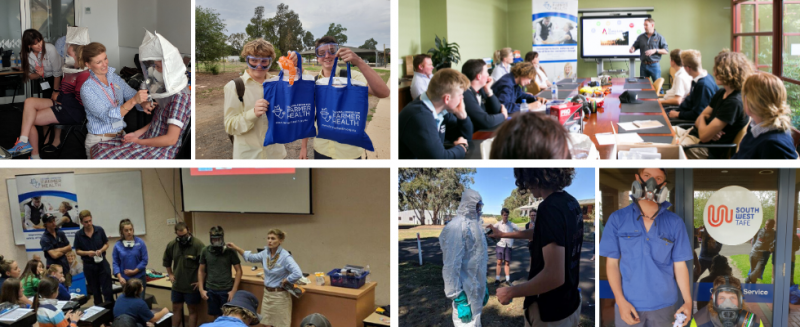
2020-08-21: Lockdown’s upshot for bush health – Farm Weekly
by Shan Goodwin
FOR all the challenges lockdowns have delivered, one of the upshots has been those in the bush now have access to more mental health and wellbeing services than they ever have before.
At the same time, acceptance of the vital need to look after mental health in farming communities has never been stronger.
Still, farmers wait far too long before seeking help.
These are some of the insights to come from those at the forefront of delivering health services to farming communities at a recent beef industry online event.
Initiated by the Australian Beef Sustainability Framework’s consultative committee, the webinar aimed to highlight current trends in farmer wellbeing and offer priorities for initiatives moving forward.
Dr Tim Driscoll, from the Outback Mental Health team at the Royal Flying Doctors Service, said access to Telehealth through Medicare had been a remarkable advancement for those in the bush.
“There is really nowhere now where you can’t get support and the wait times are not large,” he said.
“As a result of COVID, we are seeing how effective video conferencing is as a way of developing great therapy models that work well.
“What we have learnt is that people get the same benefit over a video conference as they do face-to-face.
“If you’re in a rural area, you now have access to a much wider pool of therapists – one of the big problems previously was those in the bush were stuck for options.”
Dr Driscoll did say, however, that farmers were still waiting far too long to seek help, for both mental and physical health issues.
And a key point, particularly with mental health, was not to give up if the first therapist wasn’t a good fit, he said.
“Think of it like a haircut – if you get a bad one it doesn’t mean you never have another haircut, you just find a new hairdresser,” he said.
“You want to make sure you are getting the right service.”
The best starting point was a GP, who could provide a suitable recommendation so it’s not ‘hit and miss’, he said.
Alternatively, Lifeline is a great service – 131114, it’s 24/7 and they can link you with other services in your area.
Pip Job, who runs a resilience program with the NSW Department of Primary Industries, said mental health was now far more a part of the conversation than ever – the community stigma had been well addressed.
“It we reflect back to the millennial drought, we have come so far in communicating the importance of looking after mental health,” she said.
“I’ve never heard more people, in particular men, talk about how they are feeling and reach out to mates to ask are they ok, and actively seek support.
“We’ve had some very challenging circumstances and compounding situations in the past couple of years so farming people are experiencing a lot of stress. But they are seeking help in how they can address that.
“People are able to articulate when they are feeling stressed and when they are burnt out – the language of mental health is excellent among our community at the moment.”
Building resilience
Resilience was the ability to cope with unexpected changes, Ms Job said.
“You can’t prevent difficult times and adverse events from happening – resilience is the ability to recover,” she said.
“What’s important is the lessons you learn – what will we change in the future, what will we continue with, how can we use this experience as a growth mechanism to mitigate risk in the future.”
Family units that have improved communication and decision making processes seem to express stronger levels of resilience, she said.
Agrisafe clinician with the National Centre for Farmer Health Morna Semmens said many farmers were struggling with home schooling routines.
And a key issue on the workplace safety front was the implications of more children on farms unsupervised, she said.
North Australian Pastoral Company general manager Stephen Moore said farms were a unique environment and producers faced the highest risk to life across the industry.
Producers were managing plant, chemicals, noise, dust, sun exposure, animals and, often, solitary or remote location work.
Studies had shown producers and lot feeders were above average in life satisfaction ratings, he said.
“Many farmers find the work they do rewarding and fulfilling. However, they also face many pressures that are out of their control such as drought, natural disasters and trade shocks,” Mr Moore said.
“When prolonged, these pressures, coupled with the isolation of rural life, can have a real impact on the mental health and wellbeing of farming families and this has been even more relevant in the midst of COVID.”
Dr Driscoll said good basic lifestyle factors were the pillars of mental health.
“Sleep, exercise, diet and social connection makes a huge difference,” he said.
“A lot of time what you’re doing with someone who is struggling is getting those things back on track.”
The story Lockdown’s upshot for bush health first appeared on Farm Online.
Nursing is a journey: A profile of an agricultural health clinician
By Rosi Bear, RN – Northern District Health Service VIC
Nurses are vital to the community. A career in nursing can be challenging, while also rewarding as it involves helping sick individuals become healthy again. Developing our knowledge, skills & experience over time means we can work in many and varied environments. This also allows us to have the opportunity to work flexible hours.
Each nurse’s journey is unique. A caring & empathetic nature is common and nursing soon becomes part of your being.
It is caring for people when they are vulnerable and involves educating individuals to achieve health & wellbeing, empowering them to have control of their personal journey.
I was in the first intake of University trained nurses at Warrnambool Institute of advanced Education which later became Deakin University. I studied for 18 months, qualified as a State Enrolled Nurse – now known as Registered Nurse Division 2. I then deferred and commenced my practical nursing career at Hamilton Base Hospital on Fitzgerald wing, a surgical ward.
At 21 I travelled to the UK, I enjoyed agency nursing in London and also worked as a Nanny out in the country – the families I worked with valued & were comforted with my nursing qualification & knowledge.
Returning to Australia in 1991, I worked as an agency nurse in many hospitals & nursing homes around Melbourne. This grew and embedded my medical & pharmacology knowledge. During this time, I developed sound nursing and communication skills. Here I learnt to work as a team member and adapt quickly to changing environments & circumstances. I soon returned to Deakin University where I completed my Bachelor of Nursing and registered as a Division 1 Nurse. My graduate year was at Wimmera Base Hospital in Horsham. This was a wonderful 12 months with rotations & experience in Surgical, Theatre, A&E and Renal Dialysis.
A country girl, I met and married a country boy. I was welcomed into a family farming business in Northern Victoria but I have always wished to continue nursing; it is part of my being & my identity.
I am a partner in our sheep grazing business and unlike many, we have had a smooth succession to our generation. Whilst I don’t work actively in the business; however, I do work actively on the business. As a nurse we have policies written in relation to health & safety for individuals and various workplace practices & procedure, e.g. If forecast over 38oC then inside between 11-3pm. Wearing PPE when using Chemicals, tools, implements or machinery etc.
When our children were small I had a yearning to work in Community Nursing. An opportunity opened and I was welcomed into District / Domiciliary nursing at our local hospital. I was now developing my knowledge of Community Support Services to clients needing support whilst living at home. In community health, I now work with people from different cultural backgrounds, often with disadvantaged and marginalised people.
In partnership with the local community, I work to prevent illness and promote health across the lifespan by identifying barriers to healthy lifestyles and general wellness. I work with families and communities to empower individuals accessing care to change unhealthy lifestyles and provide post-acute care to people in their homes.
It is important to be able to assume responsibility and a leadership role, take initiative in emergencies, have strong communication skills, work autonomously and as part of a team, maintain patience and discretion when providing health care.
In community health we provide an interpretative bridge between the acute sector and community services. We embrace a social model of health to advocate and give a voice to the community accessing health care. In a system which is often complex and hard to navigate, we as community health nurses are able to simplify the health systems, referral pathways and access to care.
I work in an interdisciplinary team which can include, but is not limited to, mental health nurses, podiatrists, general practitioners, psychologists, women’s health nurses, Aboriginal health workers, allied health and hospital services. As a nurse my skills have also been valued in case management roles with Aged care and disability services…. such a diverse journey a nurse can have.
Nursing, an interest in health and farming life is my being. Not actively working in our agricultural family farming business, I wanted to use my breadth of knowledge and skills built over the last 25 years to educate & empower our farmers about their health.
Then I found the National Centre For Farmer Health (NCFH). Our local community had been suffering a lot of adversity with drought, political water war-fare leading to reduced or no irrigation water allocation, poor commodity prices in some sectors and associated mental health issues to many families. This ripple effect has affected many businesses within our community as they rely on the agricultural sector.
I applied for & completed the unit HMF 701 Agricultural Health & Medicine through Deakin University in partnership with NCFH. Also very fortunate to have a supportive employer, Northern District Community Health who could recognise the need to be able to offer this specific agricultural health service to our community. I studied Agricultural Health & Medicine with the intent to becoming an AgriSafe Clinician in my local area in Northern Victoria. I now feel comforted that I can use my extended nursing knowledge to contribute & support our agricultural and farming sector.
I now look forward to delivering the Primary Prevention and health awareness program to our agricultural community. If health is compromised it can affect your family and business.
By educating our farmers they can improve their health, wellbeing and safety to be able to get the most out of their life and fulfil their farming business’s potential. Health is a person’s number 1 asset.
May my journey continue with my passion for health and farming….
Important Information
Applications are now open for the Graduate Certificate in Agricultural Health and Medicine. For more information:
or contact
Agricultural health and medicine education—Engaging rural professionals to make a difference to farmers’ lives
Despite continued higher rates of workplace injuries, earlier morbidity and mortality and challenging climatic environments, few formal programs focus on the health, well‐being and safety of farmers. The agricultural health and medicine unit, developed in 2010, was designed to increase cultural competence and empower rural professionals to improve the health, well‐being and safety outcomes of farming populations in Australia. This study aimed to understand the extent to which graduates (2010‐2018) use the knowledge and skills gained in their current occupations and identify barriers and enablers faced in implementing them.
2020-08-18: Rural snapshot competition – Stock and Land
Express yourself with photos, videos, poetry, a tune or even a meme in the #SnapshotRuralVic competition run by the National Centre for Farmer Health.
Snapshot online project officer, Hilary McAllister said #SnapshotRuralVic encouraged all forms of creativity, from TikToks to haikus.
https://e9f15d015321c124b2588a6af3379a50.safeframe.googlesyndication.com/safeframe/1-0-38/html/container.html
There will be a weekly vote for the People’s Choice entry, who will receive a voucher to a rural business of their choice.
“This initiative hopes to share the stories of everyday Victorians who are sadly no stranger to challenging times,” she said.
“Whilst we navigate the coming months, #SnapshotRuralVic aims to unite Victorians through storytelling, humour and creativity.”
“From the local CFA meetings embracing Zoom technology, to people learning the art of mask making and getting their hands dirty in the vegetable garden, I hope #SnapshotRuralVic can help educate, inspire and hopefully provide some insight into rural life during these troubling times”.
#SnapshotRuralVic launched on Monday August 3rd 2020 and will run for 10 weeks.
Visit the campaign on Instagram at @SnapshotRuralVic and Facebook on the @Farmer_Health page to connect with the community.
A coffee-table style book will be published in digital and hard copy formats at the end of the program.
For further information, visit www.farmerhealth.org.au/snapshotruralvic.
The Ripple Effect: A digital intervention to reduce suicide stigma among farming men
Compared with the general population, Australian farmers—particularly men—have been identified as at greater risk of suicide. A complex range of factors are thought to contribute to this risk, including the experience of Stigma. stigma also impacts those who have attempted suicide, their carers, and those bereaved by suicide—manifesting as shame, guilt, social isolation, concealment of death, reduced help seeking and ongoing risk of suicide. This paper evaluates the effectiveness of an intervention, tailored for the farming context, designed to reduce stigma among farming men with a lived experience of suicide.