

Breaking the stigma: Peer-led Behavioural Activation interventions for farmers’ mental health
Farming is a high-stress occupation with a range of factors that negatively impact farmers’ mental health, including financial pressures and isolation. Yet, farmers often lack access to appropriate support.
Our recent study has shown that Behavioural Activation (BA), an evidence-based therapy, can be effectively delivered by nonclinical workers within the farming community. By working with members of the farming community, this approach could overcome the well-established barriers to mental health help-seeking and improve outcomes for farmers.
The co-design phase of the study involved ten online focus groups with 22 participants and identified four overarching themes: filling the gap in rural mental health support, aligning with the farming context, the importance of the messenger, and ensuring sustainability and support.
The findings suggest that peer-led BA interventions can be an appropriate model of support for the farming community, and ensuring governance structures to support peers to deliver the intervention will be essential to facilitate effectiveness, safety and sustainability.
The insights gained through co-design have been critical to the success of developing this new model of support for members of farming communities experiencing depression or low mood. This approach could make a significant difference to the mental health of farmers and help address the mental health crisis in farming communities.
Co-designing a peer-led model of delivering behavioural activation for people living with depression or low mood in Australian farming communities
Abstract
Introduction
Farmers face a range of factors that negatively influence their mental health and suicide risk, yet have limited access to appropriate support. Behavioural activation (BA) is an evidence-based therapy that can be effectively delivered by nonclinical workers. Working with members of farming communities to deliver BA to their peers has the potential to overcome many well-established barriers to mental health help-seeking and improve outcomes for this at-risk group.
Objective
This paper describes the findings of a co-design phase informing the development of a peer (farmer)-led approach for delivering BA for farmers living with depression or low mood.
Design
This qualitative study used a co-design approach involving members of the target community. Focus groups were transcribed and analysed using Thematic Analysis and the Framework approach.
Findings
Ten online focus groups with 22 participants were held over 3 months. Four overarching, interlinked themes were identified: (i) filling the gap in rural mental health support; (ii) alignment with the farming context—tailoring how, where and when we engage about mental health; (iii) the ‘messenger’ is as important as the message; and (iv) sustainability, governance and support.
Discussion
Findings suggest BA could be a contextually appropriate model of support for the farming community—given its practical and solution-focused approach—and could help improve access to support. Having peer workers deliver the intervention was viewed as appropriate. Ensuring governance structures are developed to support peers to deliver the intervention will be essential to facilitate effectiveness, safety and sustainability.
Conclusion
Insights gained through co-design have been critical to the success of developing this new model of support for members of farming communities experiencing depression or low mood.
Join our team!
Hey there nursing superheroes! Are you passionate about improving the health and wellbeing of our farmers? Then we have the perfect opportunity for you! The National Centre for Farmer Health (NCFH) in Hamilton, Victoria is on the lookout for a dynamic and experienced registered nurse to join our team as a Farmer Health Clinician.
As a Farmer Health Clinician, you will play a crucial role in developing and delivering farmer-focused health programs, including health checks and AgriSafe Clinics. You’ll also have the opportunity to represent the NCFH through speaking engagements, promoting the organization and its partners, and developing links and partnerships with industry and community.
To be considered for the role, you must be a Division 1-qualified nurse with at least 3 years of post-graduate experience and a current AHPRA registration. Bonus points if you have completed the postgraduate unit HMF701 Agricultural Health & Medicine or are committed to completing it in 2024, or have obtained the Graduate Certificate of Agricultural Health & Medicine (GCHAM).
The position is part-time to cover a maternity leave, but part-time or casual employment may be possible after the leave period ends. And as you’ll be required to travel to provide clinical services in remote and rural locations, you must have a valid driver’s license.
So if you’re ready to make a difference in the lives of our farmers and communities, and be part of an incredible team of passionate individuals, then apply now and join us at the NCFH!
To read the full job description and apply, follow this link:
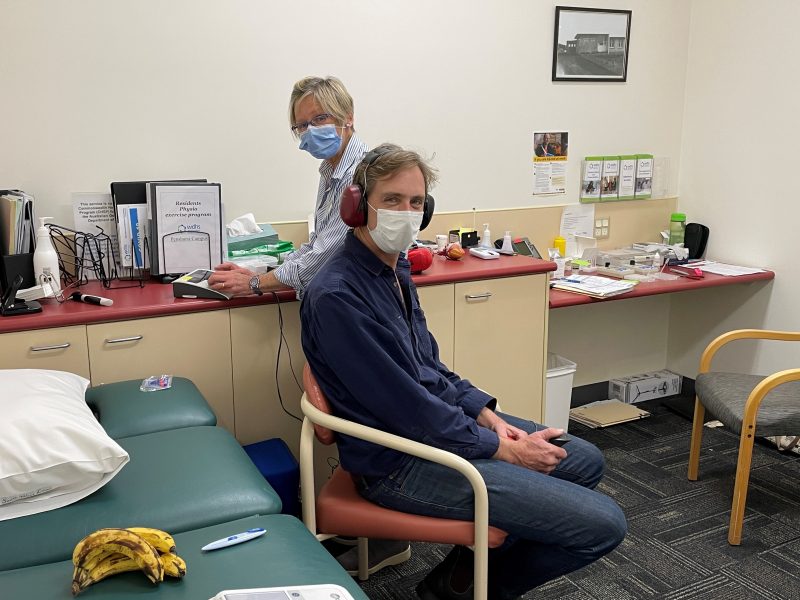


What GPs need to know about accidental livestock vaccine injury
Article republished from RACGP – What GPs need to know about accidental livestock vaccine injury.
Gudair and Silirum are vaccines that provide protection against Johne’s disease, an incurable and terminal wasting disease of livestock caused by the bacteria Mycobacterium paratuberculosis.
While safe for sheep, goats (Gudair) and cattle (Silirum), there are potential consequences associated with accidental human injection.
Even when a small amount of these vaccines is accidentally injected into a human, intense swelling and a persistent granulomatous inflammatory reaction can occur.
Reactions to the vaccine are particularly serious if injected into a finger joint or tendon sheath. With the latter, the product may track along the tendon and the swelling and inflammation post injection may compromise blood supply and result in necrosis, which in rare cases can lead to the loss of a digit.
What is in Gudair and Silirum?
These vaccines contain:
- inactivated Mycobacterium paratuberculosis organisms
- mineral oil
- thiomersal (preservative)
The oil-based vaccine typically forms a depot at the injection site, acting as a potent adjuvant, stimulating a cell-mediated immune response to the mycobacteria. The action of the adjuvant and antigen combination in this vaccine produces a reaction similar to that elicited by Freund’s complete adjuvant.
Common recommendations given by healthcare professionals post exposure
After any human injection or adverse reaction with Gudair or Silirum, the patient should immediately stop vaccinating and cease working until the severity of the exposure is properly assessed.
Zoetis is aware of the following treatment strategies that have been recommended by doctors in the past:
Superficial skin exposure, eye exposure and oral ingestion
- Skin contact: wash the contaminated area with warm soapy water. If irritation develops and persists, or if the patient is concerned, seek medical attention
- Eye splash: remove contact lens and irrigate eyes thoroughly with saline solution for at least 15 minutes and promptly seek medical attention
- Oral ingestion: rinse the mouth out with cool water. If irritation develops, the patient feels unwell or if they are concerned, seek medical attention
Needle-stick and needle scratch injuries without known injection of vaccine
Doctors have recommended that the wound be allowed to bleed freely and advise not to squeeze or interfere with the wound. They have also recommended that the wound then be cleaned thoroughly with warm water and then kept clean and dry.
- Doctors have also considered that, following appropriate immediate local cleansing, corticosteroids may decrease the severity of any local reaction
- Doctors have frequently determined the patient’s tetanus immunisation status and administered a booster or primary series, as appropriate
- Commonly, if there is no pain or swelling 24 hours post exposure, doctors have continued to monitor for at least a month and have treated any clinical symptoms that arise accordingly
If pain and swelling is present after 24 hours, it should be considered that it is a case of accidental or self-injection and the injury should be treated as described below.
Suspected injection of vaccine
In cases of accidental or self-injection, needle stick, needle scratch or contamination of an open wound where there is suspected introduction of vaccine into the body, doctors have considered that prompt surgical attention may be required and, in those cases, the doctors have:
- incised the wound to remove the vaccine, especially where there is involvement of finger pulp or tendon
- in the case of a lesion that has progressed to necrosis or granulomatous ulceration, surgeons have performed surgical debridement to remove residual vaccine material.
Surgeons have stated that meticulous technique has been required to stop inadvertent spread of the product during surgery.
Given the nature of this Freund’s-like vaccine, Zoetis recommends that any healthcare professional speak with a surgeon who has experience with the treatment of cases of accidental or self-injection of either vaccine to ensure the appropriate treatment is advised.
If presented with a case of accidental or self-injection with, or adverse reaction to, Gudair or Silirum, healthcare professionals are advised to contact Zoetis on 1800 814 883.
Visit the RACGP website here: RACGP – newsGP
For more information about needlestick injuries, read our factsheet here: Farmer Needlestick Injuries – Risk & Recommended Treatment | National Centre for Farmer Health
Protecting Children on Farms
Written by PhD Candidate Jessie Adams. PhD topic Injury Risk and Safety Behaviours of Children on Victorian Farms.
Writing this blog post had me reminiscing on my childhood growing up on a beef farm in northeast Victoria. I couldn’t imagine a better upbringing than on a farm; there were so many fun activities—horse riding, yabbying, make-believe games, and playing with the chooks. Growing up on the farm also taught me so many important life skills—hard work, resilience, practical skills, responsibility and the life cycle.
I realise now there were many safety measures my parents had in place to keep me safe that I did not necessarily realise at the time; a fenced farmhouse, the chemical shed being out of bounds, my sister and I never being allowed to swim in the dams and having to carry walkie talkies at all times when horse riding. I was unaware that I was living in one of Australia’s most dangerous industries as it was all I had ever known. This is the reality for many Australian farming families—we know children will always be engaged with the farm worksite, it is part of the tradition and lifestyle, however, we need to make sure this is happening in the safest way possible.
The challenge
There is often a blurred distinction between the farm as a home and a workplace, meaning family members (e.g. children) are also engaged/exposed to the farming hazards. The agriculture, forestry and fishing industry has the highest worker fatality rate per 100,000 workers. So, if this environment is dangerous for the adults working in it, adding children would only increase the risk of injury. The farm-related injury rate of children on farms in Australia has remained consistent over the last 20 years. Parents are faced with many challenges in regard to children and the farm worksite including, but not limited to; working long/above average hours, lack of access to childcare/services/facilities, traditions and the desire to involve children on the farm.
The role of adults on the farm when children are around is to provide the safest environment possible. Children are vulnerable to injury and are not born with common sense or awareness of danger/risks.
Some considerations to help keep children safe on your farm
The Hierarchy of Control
The hierarchy of control is a step-by-step approach that assists in controlling the risks in a workplace. It ranks controls from the most reliable and highest level of protection to the least reliable and lowest form of protection.
Parents can step through the process from Elimination to Personal Protective Equipment in order to implement the most appropriate safety measures for each hazard to keep children safe on their farms.
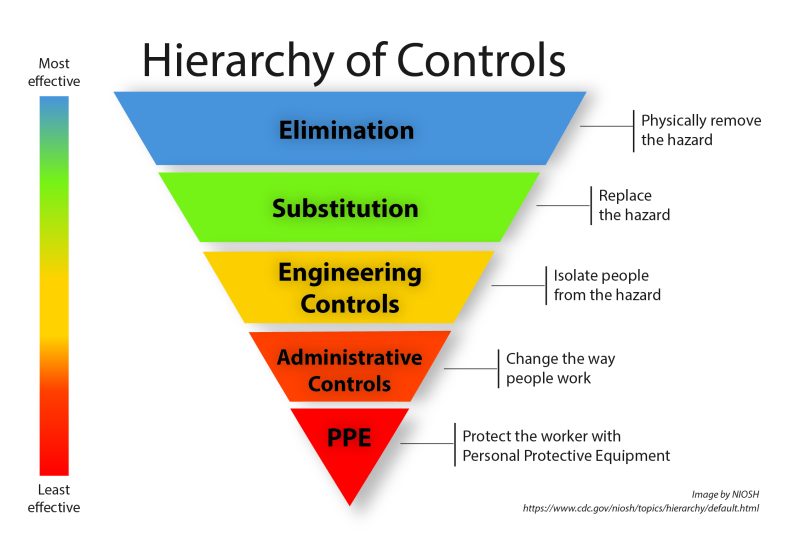
An example of how parents can utilise the hierarchy of control in regard to a two-wheeled motorbike:
- Elimination – removal of keys from the motorbike so children cannot operate it.
- Substitution – ensuring the motorbike is the appropriate size
- Engineering controls – adjustment of the throttle speed
- Administrative controls – ensuring children are trained, there are rules in place and are supervised
- Person Protective equipment – children always wear protective equipment including helmets and boots
The Victorian Farmers Federation have recently developed a child safety on farm handbook that assists parents in stepping through the hierarchy of control in regard to children working on the farm.
You can access it here: https://www.makingourfarmssafer.org.au/resources/children/child-safety-on-farm-handbook/
Age and development-specific considerations
The necessary safety precautions for children on farms evolve depending on the development and age of the child. What might be acceptable for one 10-year-old might be deemed unsafe for another. This is especially important to note when visiting children will be on the farm. For this reason, it is important to implement and communicate developmentally appropriate rules and precautions to keep all children safe on your farm. These can include:
- Safe play areas – create a physical barrier (at least 1.2m high) that prevents young children from entering dangerous environments. It is important to add interesting items to keep children occupied (e.g. sandpit or toys).
- Developmentally appropriate tasks – as children begin undertaking tasks on the farm, it is important they are both physically and mentally developmentally appropriate for each child (this would vary from child to child). For example, starting with feeding baby animals may be appropriate.
- Supervision – constant active supervision (child within sight, sound and reach) is recommended, particularly for young children. The type of supervision may change as children develop, however, it is important if children are on the farm worksite or undertaking farm tasks when an adult is present.
- Training – suitable training and explanation of tasks and highlighting of potential hazards is vital as children start to engage with the farm.
Children are always watching
Parents/adults play a crucial role in influencing their children’s behaviours. Children often believe what they see in the world around them is correct. Therefore, it is important that adults role-model the correct implementation of safety measures, wear appropriate safety equipment and behave in the way they would want their child to at all times on the farm. It is hard to teach and enforce safe behaviours if you are not practicing what you preach.
Having open conversations about safety on the farm with the whole family with your children from a young age is important. This could involve walking around together and pointing out/discussing potential hazards and discussing what can be done to make them as safe as possible.
To find out more about child safety on farms, visit our factsheet here.
Farmer Health eNews April 2023
Find out the latest from the National Centre for Farmer Health
- Breaking down barriers to mental health support
- Building Farm Spirit
- Lysn
- Are farmers really unbreakable?
- Protecting Children on Farms: Blog Post
- Managing Stress on the Farm
- April Events
Do you want to receive our eNews?
Nutrien Ag Solutions and NCFH partner to support Timboon P-12 School students in gearing up for a safe and successful future in agriculture.
Timboon P-12 School students are gearing up for a successful future in agriculture thanks to the support of their local Nutrien Ag Solutions branch.
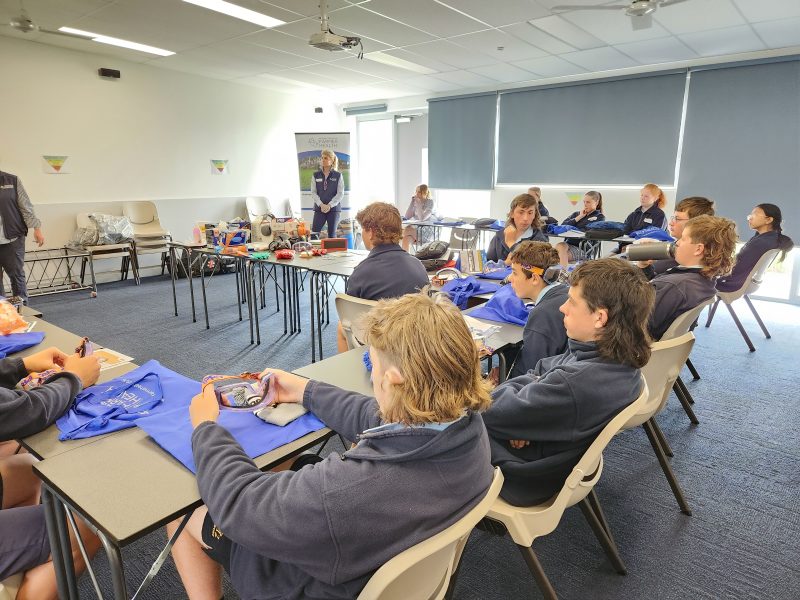
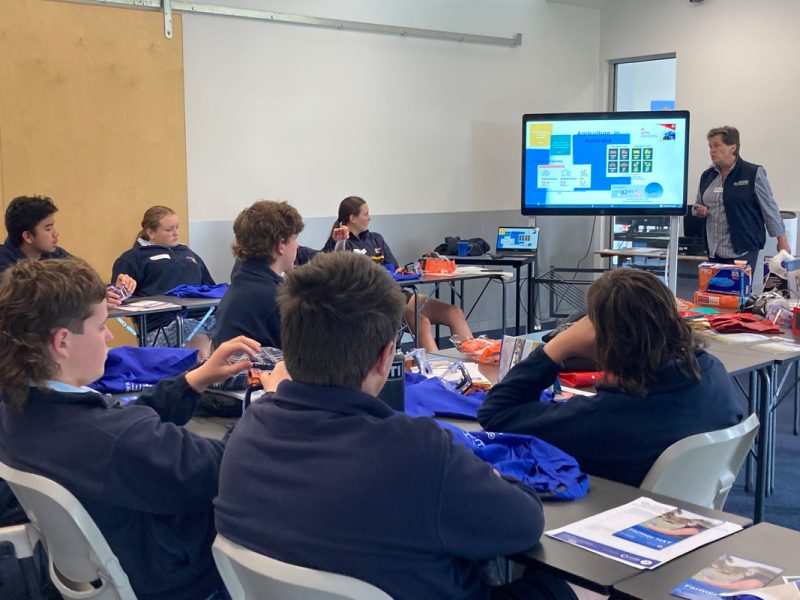
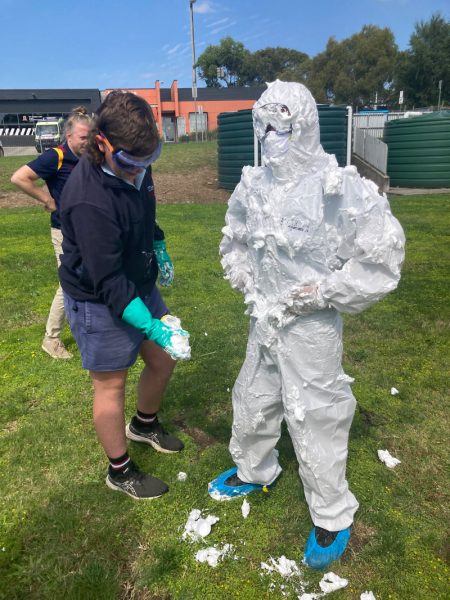
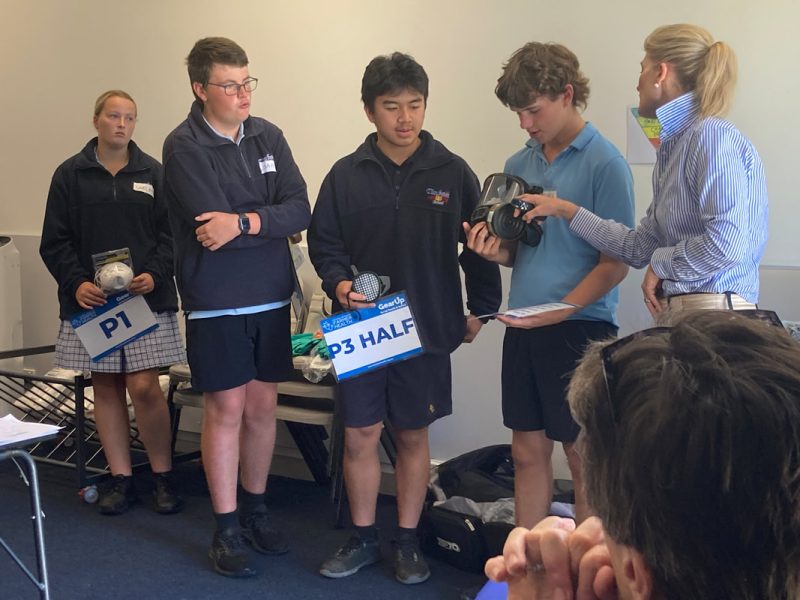
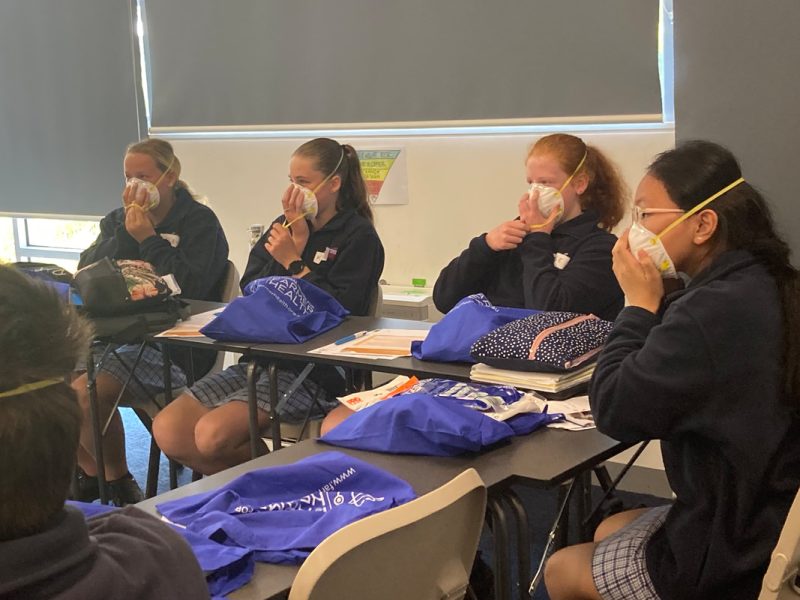
The National Centre for Farmer Health delivered a Gear Up for Ag Health & SafetyTM program to Year 9-10 AgHort students at Timboon P-12 School last week to build awareness and understanding of farm hazards, and encourage important conversations about health and wellbeing in the agriculture industry—inside and beyond the classroom.
From 2001-2019, 222 Australian children (under 15 years) died as a result of a farming-related incident, with 1000’s more experiencing non-fatal injuries. Embedding health and safety awareness is critical to maintaining the health and wellbeing of our next generation of farmers living and working in the agriculture industry.
The Gear Up for Ag Health & Safety program is designed to provide students with a comprehensive understanding of the risks and hazards associated with farm work, and equip them with knowledge and skills necessary to stay safe and healthy on the farm. The program covers a range of topics, from information about agricultural hazards such as noise exposure, working with machinery and livestock, and agrichemicals, to personal safety in high-risk areas. The program includes fun and interactive activities and practical strategies that promote health, wellbeing and safety and minimise the risk of injury and illness on farm.
“Farm safety is an important issue that affects everyone in the agriculture industry—including our young people who often live on farms and frequently get involved in farm work at an early age! Gear Up for AgTM provides students with an incredible opportunity to develop their knowledge and understanding of how they can keep themselves safe,” said Cecilia Fitzgerald, NCFH Business Development and Industry Engagement Manager. “We are grateful for the support of Nutrien Ag Solutions in making this program possible at Timboon P-12 School and helping to ensure the future success of young farmers in the Ag industry.”
The Gear Up for Ag program has now been delivered by the National Centre for Farmer Health to over 400 Victorian secondary school students, with a large portion of those students demonstrating a strong interest in pursuing careers in the agricultural industry.
Following the program, the Ag Hort teacher a Timboon P-12 School, Mr Michael Braham, said “As a teacher, it’s rewarding to see students engaging in hands-on learning that can directly impact their safety and wellbeing. It is fantastic that we have the opportunity to bring programs like this into the school. Students were excited to receive free personal protective equipment to take home, and importantly, received proper instruction on how and when to use it. I have already seen the benefits of the program with students being far more responsible around the chemicals we are using on their gardens.”
For more information about Gear Up for Ag Health & SafetyTM, please visit the National Centre for Farmer Health website www.farmerhealth.org.au. Let’s work together to ensure the health and safety of our next generation of farmers.
Contact
Annabelle Macgugan
NCFH Marketing & Communications Officer
Phone: (03) 5551 8533
Email: amacgugan@wdhs.net
Gear Up – TAP Blog
Protected: Webinar: Helping your clients out of the mud
Media Release: Call for flood recovery ‘selfies’
Were you affected by the floods? The National Centre for Farmer Health (NCFH) #BuildingFarmSpirit program is calling on Victorian farmers and farm families to share their stories of coping with the stress of flooding, flood recovery and how you dealt with a wet harvest. What builds your spirit?
Building Farm Spirit Project Manager, Sally Cunningham, said stressful periods like floods, prolonged wet conditions and associated production losses often result in farmers suffering from stress and fatigue.
“This can result in operating at less than their best, even months down the track,” Ms Cunningham said.
“A key to recovery from a natural disaster is to remain as healthy as you can and recognise that experiencing high workload, stress and uncertainty following extreme climatic events is entirely normal.
“Building Farm Spirit is the NCFH flood recovery project supporting the wellbeing of Victoria’s flood-impacted farmers through a social media movement.
“The supportive online community provides an opportunity to share stories, videos and photos. To network with other flood affected farmers, farm families and regional businesses, 24/7 without the need to leave home.
“You are not alone. Sharing experiences, tips on recovery and ideas for dealing with the stress and fatigue that comes from the added workload, helps others who may be dealing with similar issues,” Ms Cunningham said.
Your story of recovery after a natural disaster can be submitted onto the #BuildingFarmSpirit Facebook group as a short video, text and photos, even as a poem or song. You can be as creative as you like.
The shared story with the most ‘likes’ by March 31, will receive a workplace first aid kit valued at $180. The next two with the highest number of ‘likes’ will each receive a vehicle first aid kit. Please don’t show any unsafe activities. T&Cs are available on the website: https://farmerhealth.org.au/buildingfarmspirit
Resources for dealing with stress, grants to boost local community support, a list of contacts for emotional and social wellbeing support and more are available at www.farmerhealth.org.au/buildingfarmspirit
——– ENDS ——-
Sally Cunningham is available for interview: (03) 5551 8533 or email: sally.cunningham@wdhs.net
For a higher resolution copy of the photo, email lgrey@wdhs.net
For more information about the National Centre for Farmer Health Flood Response or to access a list of support resources, visit www.farmerhealth.org.au/buildingfarmspirit or contact Project Officer, Sally Cunningham
For more information about National Centre for Farmer Health visit www.farmerhealth.org.au
For media and communications enquiries contact the National Centre for Farmer Health Marketing Communications Coordinator, Annabelle Macgugan on (03) 5551 8582 or email: amacgugan@wdhs.net
Farmer Health eNews March 2023
Find out the latest from the National Centre for Farmer Health
- Working together to promote a healthy and thriving farming community
- Collaboration aims to improve farmer health and wellbeing through telehealth services
- New publication: ‘Steering Straight: Adapting suicide risk safety planning as a prevention-focused self-management resource for the Australian farming community’
- Wellness Wednesday
Do you want to receive our eNews?
Podcast: Some things stay the same, but shouldn’t
Research Assistant and PhD Candidate Jessie Adams spoke with Dr Richard Franklin about the importance of child safety on farms for the Farm Safe podcast.
Jessie Adams comes from a rural background and is a Researcher and PhD Student at Deakin University. Jessie is exploring ways to ensure the safety of children on Farms. She has recently undertaken a review of the Australian literature to understand the key hazards and risk factors for child injuries on farms.
Listen here: