

Noise prevention
Using loud machines and tools on farms – such as tractors, augers, firearms, chainsaws, radios and tools in the workshop – can cause permanent hearing loss if you’re not careful.
Prolonged exposure to noise levels above 85 decibels (dB) damages the tiny hair cells in the inner ear, leading to irreversible hearing loss. For example, chainsaws can reach up to 120 dB – and that’s so loud that without hearing protection, you could start damaging your ears in just 8 seconds!
Noise is considered dangerous when:
- It averages over 85 dB across an eight-hour period.
- It peaks at 140 dB or higher (e.g. firing a gun).
Repeated exposure to loud noises over days, weeks, or years compounds the damage, often making hearing loss a slow but permanent process that may go unnoticed until it becomes severe.
Signs that you may have hearing loss
- You find it hard to hear people talking in noisy places.
- You don’t always hear your phone ring.
- Others may say that the TV or radio is too loud, but it sounds fine to you.
- You’re constantly asking others to repeat what they have just said.
- You hear ringing in your ears after being near loud equipment (tinnitus).
- People complain that you talk too loudly.
How to protect your hearing
- Can you do the task in a way that reduces your exposure to farm noise?
- Choose quieter equipment when buying or replacing machinery and tools.
- Keep machinery well maintained so that it runs as quietly as possible.
- If possible, rearrange work areas to alter your proximity to loud machines or equipment.
- Insulate cabins to further reduce noise.
- Limit the time spent working close to loud machinery. Try rotating work tasks.
- Download a noise meter app on your phone to check how loud farm equipment, machinery and tools are.
- Wear Class 5 hearing ear plugs or ear muffs.
- Make sure you know the correct way to insert and use earplugs.
Getting your hearing checked
A hearing test can show how well you hear different sounds. It can help figure out if there’s any hearing loss and how serious it is. You can talk to your doctor, audiologist or hearing specialist to learn more.
For more info, visit the Better Health Channel to learn how hearing works and when to get tested.
Fast facts:
- Loud farm noise can cause permanent hearing loss.
- The best way to protect your ears is to wear proper hearing protection.
- Ear plugs or ear muffs should be Class 5 and fit securely and comfortably.
References used for this topic
More information:
Deafness Forum Australia
Hearing health resources hub
WorkSafe Queensland (Qld)
Manual tasks and noise
Farmsafe Australia
Shooting – aim to keep your hearing [PDF]
Australian Centre for Agricultural Health and Safety
Farm noise and hearing loss [PDF]
Safe Work Australia
Safety hazards: Noise
Research & reviews:
National Centre for Farmer Health
Some differences but all at risk: Improving farm safety for young people – An Australian experience
Australian Journal of Rural Health
Farmers’ work-day noise exposure
Disability and Rehabilitation, Early Online: 1-6 y
Higher social distress and lower psycho-social wellbeing: examining the coping capacity and health of people with hearing impairment
Parliament of Australia
The extent and causes of hearing impairment in Australia
Journal of Agromedicine
Changes in the hearing status and noise injury prevention practices of Australian farmers from 1994 to 2008
National Centre for Farmer Health for The Department of Health and Ageing
Shhh hearing in a farming environment
Manual handling
Farming is a very physical occupation and workers can injure themselves by lifting heavy loads such as chemicals, fertiliser, hay bales, buckets, equipment and animals. Most agricultural manual handling injuries involve the back and weight-bearing joints.
Injuries can happen so easily when you are lifting, pushing, pulling, carrying, lowering, holding heavy items or when you are restraining animals, handling stock, or moving equipment or hay.
Manual handling injuries occur through:
- Increased wear and tear or damage from intense or strenuous manual activity
- Gradual wear and tear from ongoing manual activity
- Heavy or awkward lifts (lifting heavy machinery or sheep onto a ute)
- Sudden, unexpected movement (stumbling, tripping or falling when carrying a heavy object).
How to minimise risk of injury
Strain injuries can keep farm workers away from work for weeks at a time, but the risk of injury can be minimised by good lifting techniques and safe working habits.
- Be mindful of your back and joints when handling stock and when lifting, pushing, pulling, carrying, lowering and holding heavy items like equipment and hay
- Use mechanical lifting aids, wheelbarrows, trolleys or get help to lift and carry heavy loads whenever possible. Try to repack big loads to a collection of smaller, lighter loads
- When lifting appropriate loads, it is important to maintain good posture and ensure correct lifting techniques are used to reduce the risk of injury
- Do not forget to warm up cold muscles and stretch before lifting
For more tips, see: Farm safety-manual handling
Find out more about this topic on Better Health Channel
Fast facts:
- Manual handling accidents and injuries are often caused by lifting heavy objects, including animals incorrectly.
- Always keep the load close to your body, bend your knees (instead of your back) and lift with your thigh muscles. Never lift with your back.
- Organise your work area to reduce the amount of bending, twisting and stretching required.
- Plan ahead. Consider the safest possible ways of lifting, carrying, holding, lowering, pushing, and pulling.
References used for this topic
More information:
Department of Commerce (WA)
Hazards on Farms
WorkSafe Victoria
Hazardous manual handling
Clinical care:
National Health and Medical Research Council
Evidence-based management of acute musculoskeletal pain: a guide for clinicians
Research & reviews:
Medical Journal of Australia
Management of chronic low back pain
Physiotherapy Canada Journal
Get ’Er Done: Experiences of Canadian Farmers Living with Chronic Low Back Disorders
Machinery
Farmers and agricultural workers are at risk of fatal or serious injury while operating or working with tractors, harvesters, sprayers, trucks, side-by-sides, 2-wheel and 4-wheel motorbikes, farm implements and attachments. Ensure all workers are properly inducted and trained in the correct operation of all farm machinery to prevent serious injury.
Machinery that has hydraulic equipment can have extremely high energy as it is used to shift and support large loads. Serious crush injuries can result from normal movement of the hydraulic equipment and when the hydraulic systems fail. Plant arms or equipment can cause injury through rapid movement or slow movement without the worker being aware of the danger.
The spectrum of injury can range from death, serious injury requiring hospitalisation and injury that stops work for a short time, makes work slower and reduces productivity on the farm. All have an impact on the farm business, staff, family and community.
Hazards and risks associated with using farm machinery on Australian farms include:
- Tractor rollover and run over
- Machinery power take offs (PTOs) unguarded
- Hydraulics causing crush injuries
- Ergonomics causing back strain
- Noise induced hearing loss
- Working at heights and stairs causing falls
- Poor operator skills
Recommendations to reduce fatal or serious injury include:
- Maintain farm machinery and related implements and attachments in line with industry standards and manufacturers’ requirements.
- Conduct pre-operational checks in line with the manufacturers’ instructions on all machinery.
- Fit your tractors and quad bikes with approved rollover protective structures (ROPS).
- Ensure all guards are in place, especially power take-off (PTO) guards, and check them regularly for signs of wear and tear.
- Ensure all machinery is fitted with non-slip, side-access steps that are in good condition.
- Do not allow anyone to ride on the steps, or on implements attached to the tractor, while the tractor is moving.
- Do not attempt to board or disembark a moving tractor or machine.
- Ensure workers are properly inducted, trained and supervised, especially inexperienced and young operators.
Find out more about this topic on Better Health Channel
Fast facts:
- Machinery is a major cause of death and traumatic injury on farms, with tractors, augers and quadbikes most often involved.
- Make sure all machinery complies with safety standards and always use guards and shields.
- Ensure all workers or family members are properly inducted and trained in the correct operation of all farm machinery to prevent accidents.
- Children should be kept well clear of machinery and should not be passengers or drive farm machinery.
References used for this topic
More information:
Farmsafe
Farm Safety Toolbox
Workplace Health and Safety Queensland
Machinery Guarding Safety Sheet
WorkSafe Victoria
Power Take Guarding
Research & reviews:
Monash University Accident Research Centre
Monash University Department of Forensic Medicine [PDF 101kb]
Rural Industries Research and Development Corporation
Machine Injuries on Australian Farms
Farms are high risk workplaces
Farms are among the most dangerous workplaces in Australia. Many factors contribute to this, including the ageing farm workforce, disadvantaged access to medical services and farm workers being more likely to work alone.
In 2023, agriculture had a work-related fatality rate of 9.2 deaths per 100,000 workers (27 deaths). The five-year average remains higher at 36 deaths per year. Farming continues to be the highest risk occupation. Many farm injury hospital presentations go under-reported or un-reported, making it challenging to accurately capture the true extent of farm-related incidents.
Since 2001, 1,815 people have been killed on a farm in Australia due to non-intentional injury1. People aged over 50 years accounted for 53% of incidents, while children under 15 years made up 14%. Males were over-represented, comprising 88% of fatalities.
According to media monitoring, there were 72 farm fatalities, and 133 non-fatal injuries recorded in Australia in 20241. The most common agents of fatality were tractors, quad bikes and side by sides. Similarly, the most common agents of injury were quad bikes, horses, cattle, side by sides, motorbikes and tractors.
Living on farms creates a unique relationship between home and workplace. Multiple generations may also live together on the farm. While this can have benefits, it can also present risks to health, wellbeing and safety. Children and older farmers are at high-risk of farm fatalities and injury. Farmers can become accustomed to hazards and accept risks as part of everyday life.
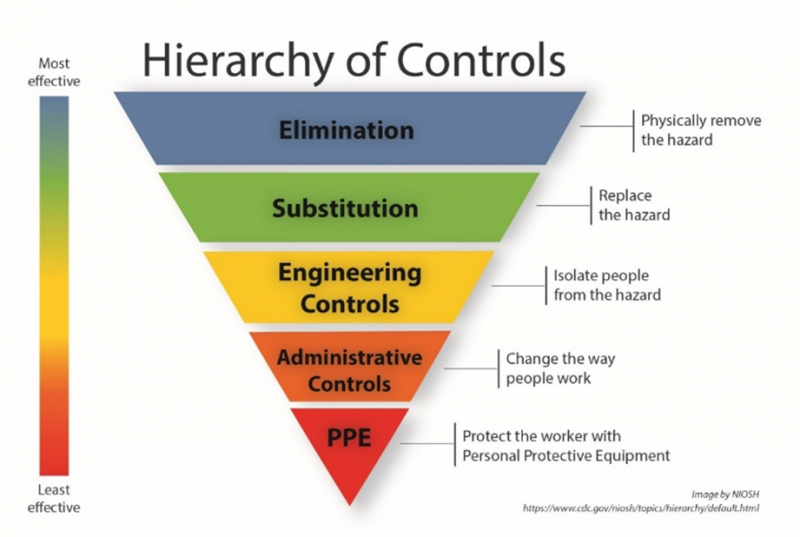
Managing risk: Hierarchy of Controls
Many farm risks can be managed by following the Hierarchy of Control. For example:
- Elimination – removing an old tractor (without appropriate safety features) from the farm.
- Substitution – using smaller sized containers or packaging to reduce heavy loads.
- Engineering controls – redesigning livestock yards to minimise physical interaction with animals.
- Administrative controls – limiting the number of hours worked and include regular breaks to minimise fatigue.
- Personal Protective Equipment (PPE) – using correctly fitted earplugs when exposed to high noise environments.
Tips for making your farm safer
- Schedule a farm risk assessment with your local farm safety advisor.
- Create safe play areas for your children.
- Maintain all machinery, equipment and infrastructure with routine service and repairs.
- Simplify farm systems to reduce complexity and confusion.
- Develop a farm safety culture – make safety a normal part of conversations in your farming business.
- Provide everyone with their own PPE and allocate a place for clean storage when not in use.
- Recognise that ‘better beats perfect’ when it comes to safety.
Farmsafe can offer valuable advice and resources. Download the workplace guide to begin the process of creating a safer working farm environment.
References used for this topic
1AgHealth Australia. Non-intentional farm-related incidents in Australia. AgHealth Australia 2024.
Safe Work Australia
Key Work Health and Safety Statistics Australia 2024
Farmsafe Australia
Safer Farms Report 2024
National Institute for Occupational Safety and Health (NIOSH)
Hierarchy of Controls
More information:
AgHealth Australia
Research reports
Better Health Channel
Farm safety – risks and hazards
WorkSafe Victoria
15 minute farm safety check
Working alone on farms
Farming: Safety basics
Children on farms
Farmsafe Australia
Child safety teaching kits
Victorian Farmers Federation
Making our Farms Safer
Confined spaces
Confined spaces like silos, tanks, manure pits and other enclosed structures present a hazard to farmers, farm workers and children.
When in a silo, a person can be drawn under moving grain within seconds, like ‘quick-sand’. To prevent incidents and reduce the risk of injury, all ladders should be above child height and fitted with a device to prevent child access. Modern silos are now fitted with safety grids to restrict access.
Other confined spaces such as water tanks and manure pits can also be dangerous. It’s essential to follow proper safety procedures when you work in any confined space.
Water tanks, silos, wells, vats, manure pits, tunnels and other confined spaces can suffocate a person with either fumes or low oxygen levels. Farm workers, children and other people entering these spaces are at risk. People making a rescue attempt can also be in danger. Proper safety procedures are vital, including having a rescue plan and appropriate safety equipment.
Find out more about this topic on Better Health Channel
Fast facts:
Confined spaces
- Confined spaces like silos, sewers, manure pits and wells often have low oxygen levels or a build-up of vapours.
- Silos can be particularly dangerous, as people can be suffocated by falling grain or fertiliser.
- Draw up an emergency rescue plan and have safety equipment (like breathing apparatus) available to conduct a safe rescue if someone becomes trapped.
- Always make sure someone knows where you are.
References used for this topic
More information:
SafeWork Australia
Model Code of Practice: Confined Spaces
Job Safe South Australia
Confined spaces
WorkSafe Victoria
Confined spaces on farms
Research & reviews:
National Ag Safety Database (US)
Grain entrapment
Floods – farm preparation and clean up
Floods can be devastating for farmers. They can also present a health risk for people and animals. Preparing your farm for flood may help to reduce some of the damage.
Make sure you have a flood plan:
- Have 1-2 weeks of non-perishable foods in stock and ensure access to clean drinking water.
- Make sure your insurance covers flood damage.
- Store important documents, photos etc. in an emergency kit that is waterproof.
- Anchor fuel tanks and relocate waste, chemicals and poisons to high areas.
- Relocate pumps to high ground.
- Store electrical tools in highest possible places.
- Know the safest routes out if you need to leave.
- Plan for flash flood and/or slow moving flood events (depending on your location)—these are likely to require different responses.
Farm animals:
- Investigate building refuge mounds with feed and water storage for livestock in flood prone areas.
- Use the flood mound during the year so animals are familiar with it.
- Relocate bulls, stallions and rams when flood alerts are issued, as they cannot be held in confined spaces with other stock.
- Prepare early to move animals with young at foot to higher ground.
Pasture and crops:
- Try to minimise planting crops in flood prone areas.
- Investigate which crops can be sown successfully after a flood.
- Floods spread weeds, so monitor and control weed growth.
After a flood, seek support, both personal and financial, to help you cope. Contact Centrelink and your local relevant government department (e.g. Agriculture Victoria; Rural Assistance Authority NSW; Department of Agriculture, Fisheries and Forestry QLD).
Floods are a potential danger for people, animals and property. Flash flooding carries the greatest risk of injury or death. Slow onset flooding can result in major livestock losses and crop damage, significant damage to roads and rail links, and isolation of rural communities. Never walk, swim or drive through floodwaters. You can prepare for floods by devising a household emergency plan. Keep an emergency kit handy and never take unnecessary risks during a flood.
Find out more about this topic on Better Health Channel.
Fast facts:
Floods – farm preparation and clean up
- Prepare your farm for flood, locate buildings on the highest ground and create artificial refuge mounds for animals.
- Have a flood plan and prepare your farm beforehand.
- Listen to local radio and monitor state emergency apps (e.g.Vic Emergency App) for updates and warnings.
- In times of flood, contact your State Department of Agriculture or Primary Industries—relief support may be available.
References used for this topic
More information:
World Health Organisation
Floods and health: Fact sheets for health professionals
Bureau of Meteorology
General Flood Information
Agriculture Victoria
Flood Resources Directory
Agriculture Victoria
Emergency Management – Floods
Department of Primary Industries (NSW)
Livestock recovery after floods [PDF 246kb]
VicEmergency
Incident and warnings map of Victoria
ABC Emergency
Plan for an emergency: Flood
WA Department of Fire and Emergency Services
Emergency Kits
National Emergency Management Agency
Helping Communities in Times of Emergency
Research & reviews:
NSW Environment and Heritage
Flood Risk Management Manual
Australian Disaster Resilience Knowledge Hub
Flood Emergency Planning for Disaster Resilience Handbook
Clinical Infectious Diseases
Health risks of flood disasters
Chemicals – spray drift
Sprayed chemicals are extensively used in agriculture and horticulture for the control of pests and weeds. Under certain conditions, this spray can drift over neighbouring properties, waterways and water tanks – this is referred to as spray drift.
Spray drift can affect human, animal and environmental health, including household and farm water supplies (e.g. dams and tank water).
The health impacts of exposure can depend on how and where a chemical is applied, the amount of drift, weather conditions and the toxicity of the chemical. If you have been exposed to chemical sprays through spray drift, and are concerned, there are several agencies you can contact for help.
It is important to consider a nozzle or sprayer setting that produces the largest possible droplet size (coarsest spray quality) without compromising the efficacy of the chemical. Larger droplets are less likely to drift.
Find out more about this topic on Better Health Channel.
Fast facts:
- Spray drift can affect the environment, your health and the health of your family and neighbours.
- Spray only if the weather is suitable (a steady 3-15km wind is ideal).
- If you use tank water and spray lands on your roof, disconnect the collection pipe until it has rained or until the roof has been cleaned.
References used for this topic
More information:
Grains Research and Development Organisation (GRDC)
Spray drift
Spray drift management tool permit
Queensland Government
Minimising the impacts of spray drift
Victorian Poisons Information Centre
Prevention of poisoning
NSW EPA
Avoiding pesticide spray drift
Agriculture Victoria
Managing spray drift
Australian Pesticides and Veterinary Authority
Spray drift
Chemicals – safe handling
Agrichemicals such as insecticides, herbicides, fungicides, veterinary chemicals and fuels are used commonly on farms. Different chemicals can be dangerous to humans in varying degrees and need to be handled and stored with care.
Always store chemicals in a safe place, out of reach if children and don’t store or mix chemicals in an unlabelled container.
Because farms are often homes as well as workplaces, potential contact with chemicals by family members is increased. There is also the possibility that chemical matter/residue is taken back into the home, for example on clothing, protective clothing (eg. overalls) or footwear.
Chemicals can be absorbed through contact with the skin or eyes, inhalation (breathing in), or ingestion (swallowing).
Always wash your hands carefully after handling chemicals and remove soiled clothing before you enter your home. If possible, wash clothing in a separate washing machine. Remember not to eat or drink where chemicals are used or stored..
Unfortunately, sometimes the effects of exposure to chemicals are difficult to pick up until chronic (long-term) illness has occurred.
Farm safety – handling agrichemicals
There are many chemicals used on the farm and some of them can be dangerous. Common agricultural chemicals include fuels, pesticides, herbicides, fungicides and veterinary chemicals. Exposure to chemicals can lead to health effects including headache, skin irritation, poisoning, nausea, respiratory illness, burns, cancers and birth defects. Always follow the manufacturers’ instructions for storage, transport, use and disposal of chemicals. Keep all chemicals locked away and out of reach of children and wear appropriate personal protective equipment (PPE) such as gloves and eye protection.
Find out more about this topic on Better Health Channel
Fast facts:
- Treat all chemicals with extreme caution and follow instructions carefully.
- Wear protective clothing, cover exposed skin, and wear gloves, goggles and a face mask if required.
- Check that your protective equipment (masks, gloves, googles) fit properly
- Store chemicals safely, out of children’s reach and away from seeds and fertilisers.
- Do training and learning about safe handling of pesticides.
- Report any adverse events to the Australian Pesticides and Veterinary Medicines Authority (APVMA)
References used for this topic
More information:
Australian Pesticides and Veterinary Medicines Authority
Access to safe and effective agricultural and veterinary chemicals
WorkSafe Victoria
Managing chemicals in the workplace (PDF)
Checklist for Spraying Pesticides
Education
Clinical care:
Environmental Protection Agency (US)
Recognition and management of pesticide poisonings
Research & reviews:
Australian Pesticides and Veterinary Medicines Authority
Chemical safety – first aid and safety directions handbook
Bushfires and water tanks
Water tanks are common on farms; however, if there has been a bushfire in your area or if your property has been affected by a bushfire, there is a need to take care before drinking water from your tank.
Water can be contaminated by ash or the chemicals in a fire suppressant if it has been dumped, drifted or sprayed on your roof.
Water may be contaminated if it:
- Tastes or smells unusual
- Is cloudy
- Has an unusual colour
- Contains debris or ash.
You may need to drain and clean your tank and have it refilled with fresh water – there are water carting companies who supply this service. Divert rainwater from the first rainfall after the fires and only reconnect pipes to the tank after the roof has been flushed clean. Working inside a tank is very dangerous. Use a professional tank cleaner. Read more on confined spaces.
Consider disconnecting your tank from your roof beforehand if you know there is a fire risk.
Private water sources in bushfire-affected areas could become contaminated from bushfire ash, fire retardant, debris or dead animals. If the water looks, smells or tastes unusual do not use it for drinking or food preparation and do not give it to animals.
Find out more about this topic on Better Health Channel
Fast facts:
- Bushfire smoke, debris and fires suppressants can contaminate your tank water.
- If the water from your tank looks, smells or tastes unusual, assume it’s contaminated.
- Don’t use your tank water for drinking, washing or preparing food or making ice until it’s been cleaned and refilled with clean water.
- You can use the contaminated water to flush toilets, or for cleaning.
References used for this topic
More information:
Department of Health (WA)
After a bushfire – hazards on your property
Queensland Government
Bushfires and roof-harvested rainwater
South Australia Health
Bushfires and rainwater quality
Bushfire safety
Bushfires are a natural and unavoidable occurrence in most areas of Australia and can pose considerable danger to lives and property in farming districts. Most farmers are familiar with these dangers, and many are involved as volunteers in emergency service provision such as firefighting and fire preparedness/education roles in their rural communities.
For those farmers who are less familiar with managing, mitigating and responding to fire risks, the information below provides a snapshot of current information.
Be prepared for fire
Fire management planning on farms involves protecting both assets and people. Farmers and landowners in bushfire risk areas have a particular responsibility to prepare thoroughly for bushfire.
Having a written plan is the best way to do this. All family and farm staff should be involved in the development of your fire preparedness plan and be familiar with its contents through regular review and discussion prior to each fire season. It should be easy to find and include property maps and an action plan (or bushfire survival plan) for high risk days.
Resources and checklists to help prepare your plan are available through state government emergency service and agriculture department websites.
Know the seasonal restrictions and fire danger ratings
The Fire Danger Period is declared for each municipality during periods of increased fire risk.
Total Fire Bans are declared on days when fires are likely to spread rapidly and be difficult to control. Many farm activities should be avoided because the risk of starting fires is extremely high and the impact of fire on these days is likely to be greater. Find out what farm activities are restricted during the declared Fire Danger Period, and on days of Total Fire Ban.
Fire Danger Ratings are shown in the same way across all of Australia. They indicate how dangerous a fire could be if one started. This helps you to decide what actions to take to protect yourself and your family.
There are four levels of fire danger:
- Moderate – Plan and prepare.
- High – Be ready to act.
- Extreme – Take action now to protect your life and property.
- Catastrophic – For your survival, leave bushfire risk areas.
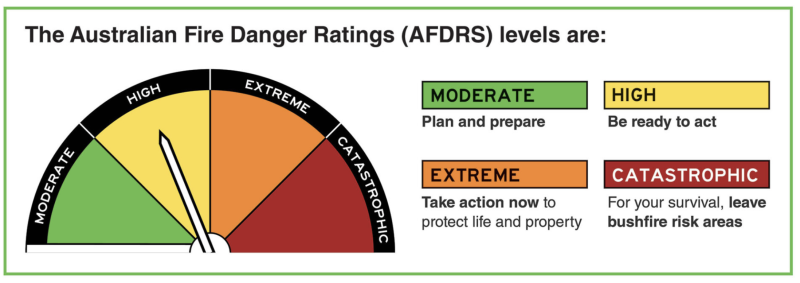
Make sure you understand the fire danger and warnings and stay informed.
On a catastrophic fire danger day in a bushfire risk area, you should stay safe by going to a safer location early in the morning or the night before. Homes cannot withstand fires in these conditions. Later in the day you may not be able to leave, and help may not be available.
On an extreme fire danger day in a bushfire risk area, fires will spread quickly and be extremely dangerous. You should take action to protect life and property. If a fire starts, take immediate action. Unless you and your property are prepared to the highest level, go to a safer location well before the fire impacts. Avoid travel through bushfire risk areas.
On a high fire danger day in a bushfire risk area, fires can be dangerous, so you should be informed and ready to act due to the heightened risk. Decide what you will do if a fire starts.
On a moderate fire danger day, most fires can be controlled. You should plan and prepare and stay up to date. Be ready to act if there is a fire.
If there is no fire rating, this does not mean that fires could not happen, but that they would be unlikely to behave in ways that threatens the safety of the community.
Stay informed to make good decisions
Listen to emergency broadcasters, like local ABC radio, and monitor your state/territory emergency website and/or associated apps on your smartphone.
The Australian Warning System has three levels of warning that will be given if there is a fire in your area. Each warning level has a set of action statements to give the community clear advice about what to do.

- Advice (yellow) – There is a hazard in your area. There is no immediate danger. Stay informed, the situation could change.
- Watch and Act (orange) – There is a threat to lives and properties. Conditions are changing. Take action to protect yourself and your family.
- Emergency warning (red) – This is the highest warning level. You are in danger. Take action immediately. Any delay will put your life at risk.
Wear appropriate clothes if you are likely to be exposed to fire
Cover all exposed skin and wear:
- Natural fibres and materials.
- Long-sleeved, collared, cotton or wool shirts, long cotton or wool trousers, jeans or overalls.
- Sturdy leather shoes or boots, cotton or wool socks.
- A wide-brimmed cotton hat.
- Thick leather or cotton gloves.
- Safety goggles or safety glasses.
Send children to safety early if you plan to stay
If you plan to stay, it’s better to send your children to stay with family or friends in an area away from bushfire risk. Reassure them that you will stay in touch. Children, while they may appear to cope with stress, often have traumatic reactions, like nightmares and behaviour problems for a long time after the crisis.
Listen to emergency broadcasters, like local ABC radio, but be aware that on high fire danger days you may not receive a warning about an encroaching bushfire.
Contact local fire authorities
Always refer to your state fire authority for further information about bushfire safety:
- New South Wales – nsw.gov.au
- Northern Territory – nt.gov.au
- Queensland – qld.gov.au
- South Australia – cfs.sa.gov.au
- Tasmania – tas.gov.au
- Victoria – vic.gov.au
- Western Australia – wa.gov.au
For information about safe return to your farm property after fire impact and farmer wellbeing during the following weeks and months please refer to NCFH fact sheets on these topics.
Fast facts:
- Decide on your bushfire plan before the start of the fire season and complete a Bushfire Survival Planning Template.
- Make sure everyone on the farm, including farm workers and contractors, understands the Bushfire Survival plan.
- Understand what the warning codes mean and what actions your state/territory fire authority recommends for you to do for each code.
- Listen to emergency broadcasters for updates, but be aware that on high fire danger days you may not receive a warning about an encroaching bushfire.
- Ensure you have downloaded the emergency management app for your state/territory on your smartphone.
References used to prepare this fact sheet
More information:
Australian Fire Danger Rating System (AFDRS)
Visit website
Better Health Channel
Bushfire preparation
Country Fire Authority (VIC)
Fire Safety on the Farm
CFA Publications
About Fire Danger Ratings
Defending your property
Preparing your property
Bushfire aftermath – hazards
Bushfires are a powerful and potentially devastating occurrence. If you evacuated before the fire, check with your local emergency services that it is safe to return home before doing so.
Clean-up and recovery after a bushfire can be heart-wrenching, traumatic and also dangerous. Dealing with dead and surviving livestock, trying to retrieve belongings from fire-damaged buildings, dealing with hazardous materials, and repairing burnt fences, are all physically and emotionally difficult work. It is important to be cautious and take time to protect your health, wellbeing, and safety.
The Department of Energy, Environment and Climate Action (DEECA), local veterinarians and your local council can coordinate and provide recovery assistance and advice to primary producers impacted by a natural disaster event.
Key considerations
Livestock welfare: Assistance can be provided to assess and evaluate your stock damage and help with the disposal of animals that need to be destroyed.
Hazardous materials that may be present after a bushfire include:
- Ash, especially from burnt treated timber (fenceposts and yards).
- Dust, especially if it contains asbestos.
- Farm, garden and household chemicals.
- Spoiled milk after power cuts.
- Metal and plastic residues from burnt appliances or tools.
- Live electricity cables.
- Damaged gas and fuel storages and distribution equipment.
Wear protective clothing to check your property after a bushfire. This should include:
- Heavy duty work gloves and sturdy shoes.
- Long sleeve shirt and trousers or disposable overalls.
- P2/N95 face mask.
- Hat for sun protection.
Clean or dispose of personal protective equipment (PPE) when leaving the property. Wash hands after carefully removing PPE.
Drinking water storages may be contaminated by ash, debris or fire-retardant chemicals. Do not drink water that tastes, looks or smells unusual. Do not give it to livestock or use in evaporative coolers. Disconnect rainwater tanks from roof gutter and downpipes prior to first rain (if possible) to avoid further contamination. Clean or drain sludge from tanks, but do not enter the tank due to the danger of working in a confined space – use professional tank cleaning services. For more information on making tanks and drinking water safe refer to our fact sheet: Water – make it safe to drink.
For more information on bushfire support and information visit the DEECA Bushfire Recovery webpage or for more safety tips on bushfire aftermath visit Better Health Channel.
For important information on returning home after a bushfire, visit your relevant local, regional or state emergency websites.
Personal social and emotional wellbeing
In the immediate aftermath of a bushfire, it is normal for people to experience intense stress reactions. Most people recover without professional intervention within several months and maintain a healthy level of functioning over time.
Typical responses to trauma experienced during and following disasters like bushfire include:
- Emotional responses such as shock, fear, anger, helplessness, irritability, depression, sadness, shame, guilt, lower life satisfaction.
- Biological responses such as fatigue, exhaustion, headaches, general aches and pains.
- Psychological responses such as tension, inability to make decisions, emotional distress, states of high arousal, reliving the events in flashbacks or nightmares, irritability.
- Behavioural responses such as avoidance of reminders or triggers, increased time spent at work, use of alcohol and drugs.
- Social responses such as intolerance of others, social withdrawal, breakdown of relationships, social networks and sense of community.
For more suggestions check out the information sheet on Recovering from Bushfires which outlines some useful skills that will help you recover. Strategies include restoring helpful thinking patterns and problem-solving capacity, maintaining social connection, taking time for pleasurable activities and learning to manage emotional distress. All of these skills will assist you to navigate your family, community and farm business through a tough period following the bushfire.
Some people who are impacted by bushfires may experience mental health disorders in the months or even years after the initial event. The impact of multiple disasters in close succession can be cumulative in its effect on an individual.
Common mental health disorders following a natural disaster such as bushfire may include:
- Depression – sad or depressed mood, loss of interest in normal activities, poor motivation and lack of energy, disturbed sleep, poor appetite and in more severe cases, suicidal thoughts.
- Anxiety – fear that something bad will happen, and worry about safety, health and money; physical symptoms can include being tense, on edge, a racing heart, and social withdrawal.
- Substance use disorders – excessive use of alcohol or other drugs, which interferes with the person’s social relationships and ability to carry out normal roles.
- Post-traumatic stress disorder – memories haunt the person (high arousal, being on edge, disturbed sleep, irritability) and efforts to avoid triggers, and numbing of emotional responsiveness.
Individuals experiencing any of these mental health conditions in the months and years following the natural disaster will benefit from effective treatments which are readily accessible through mental health professionals. Farmers are especially encouraged to seek help if they find themselves struggling in any of these ways.
If you feel you or someone else needs help, go to our Support Hub to access support contacts.
Fast facts:
- Cleaning up after a bushfire can be traumatic, difficult and dangerous.
- Stay clear of fallen power lines, they could be live.
- Be aware of potential hazards like farm chemicals or asbestos.
- Seek professional help to assess livestock.
- Consider seeking support for yourself or others.
References used for this topic
More information:
Better Health Channel
Bushfire aftermath – safety tips
Department of Energy, Environment and Climate Action (VIC)
Emergency and Bushfire Recovery Program
Vic Emergency
Recovering from a bushfire
Better Health Channel
Post-traumatic stress disorder (PTSD)
Australian Disaster Resilience Knowledge Hub
Community Recovery Handbook
Australian Psychological Society
Recovery from bushfires
Scabby mouth (Orf)
Scabby mouth is a disease caused by a virus that is common in sheep and goats and some other ruminants. This disease is referred to as contagious ecthyma, or orf in humans. Scabby mouth is very contagious among sheep and is most commonly detected by a scab appearing on the mouth, muzzle, teats, legs or feet (see photo).
Farmers and farm workers can catch scabby mouth when they have an abrasion that comes into contact with infected animals. They can also be infected accidentally when handling the Scabby mouth vaccine. Human-to-human transmission is extremely rare.
Once infected, people usually have lifetime immunity. No medical treatment is required for this virus. Normal wound management – keep the wound clean and covered – will see the orf heal in 4-6 weeks.
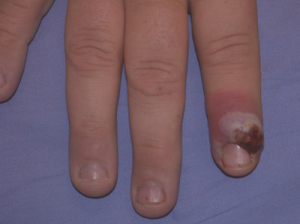
Symptoms in humans
- Red papules or lesions, usually on hands or arms (under the armpit for shearers from holding feet under their arms)
- Low fever (sometimes)
Lesions usually heal without treatment, but sometimes they can become infected. This is a particular concern for people with compromised immune systems.
People who have dermatitis, which is common among farmers, may get large lesions that are slow to heal.
Treatment
- For healthy people, keeping the wound clean and covered is usually enough.
- Antibiotics are not necessary unless a secondary bacterial infection occurs.
Prevention
- Avoid handling sheep with scabby mouth
- Wear latex gloves if you must handle infected animals
- Cover your scratches and cuts when you vaccinate sheep or goats
- Consider wearing rubber gloves when you vaccinate animals for scabby mouth
- Wash the area immediately if you accidentally come in contact with the vaccine
- Wash all exposed skin with soap and water – do not use a scrubbing brush as it can cause a break in the skin and introduce the virus
Fast facts:
- Scabby mouth, also called orf, is a disease that farmers can catch from infected sheep.
- Scabby mouth causes pustules and lesions on the areas where skin contact has occurred with infected sheep.
- Take care when vaccinating animals, and wear gloves.
References used for this topic
More information:
Agriculture Victoria
Scabby mouth sheep
Department of Primary Industries (NSW)
Sheep Health – Scabby Mouth [PDF]
The Center for Food Security and Public Health
Contagious Ecthyma (2015)
Research & reviews:
Centres for Disease Control and Prevention
Human Infection with Orf Virus and Description of Its Whole Genome
Epidemiology and Infection
Erythema multiforme after orf virus infection: a report of two cases and literature review, 2015