

2018.02.08: Three Victorian schools and ag colleges drive safety message home – The Weekly Times
by ALEXANDRA LASKIE
AN EMOTIVE “Transport Accident Commission-style” farm safety education program will be trialled at three Victorian schools and ag colleges this month to reduce workplace injuries and deaths in agriculture.
The National Centre for Farmer Health has enlisted the US-based Ag Health and Safety Alliance to deliver a three-hour farm-safety course at three schools in Western Victoria: Longerenong Agricultural College, Rural Industries Skill Training and Emmanuel College.
The program will focus on personal protective equipment — items such as gloves, earmuffs, helmets, face masks and safety vests — and how the right gear can save lives and limbs.
NCFH’s business development manager Alex Robinson said the Hamilton organisation realised not enough was being done in Australia to educate the next generation of farmers about the importance of safety equipment.
He said the aim of the program was to shift the onus on to students to take responsibility for their own workplace health and safety.
“The point is to teach the kids to take ownership of their personal protective equipment needs so they develop good habits that set them up for the rest of their careers,” Mr Robinson said.
View full article: 2018.02.08: Three Victorian schools and ag colleges drive safety message home – The Weekly Times
2018.02.08: Mental health is just as important as physical safety on the farm – The Weekly Times
by ALEXANDRA LASKIE
EQUAL importance should be placed on a person’s mental health as on physical health and safety, a peak farmer health body says.
As the focus shifts to workplace safety on the farm after Victoria recorded the most number of farmer and agriculture worker deaths last year (14), National Centre for Farmer Health director Susan Brumby urged farmers to be aware that mental health, wellbeing and safety were linked.
“We often split them off, but they’re all intertwined,” Professor Brumby said. “Being in pain, stressed, suffering from hearing loss or musculoskeletal pain all affect your health, wellbeing and safety. Similarly, equipment that doesn’t work well affects your stress levels, may sprain your back, or injury you severely.”
Professor Brumby was involved in the Victorian Farmers Federation-led 2015 mental health campaign Look Over The Farm Gate.
The initiative was a response to the drought in the state’s northwest and was extended the following year when the Victorian dairy crisis struck.
As part of the campaign, farmers were sent postcards with two tea bags attached encouraging them to “have a cuppa with a neighbour … it could make a difference” and fridge magnets that doubled as photo frames with contact details for crisis services.
Professor Brumby said Look Over The Farm Gate worked towards this idea that mental wellbeing was intrinsically connected to a person’s physical health.
During 2015 and 2016 the NCFH delivered workshops at 21 locations across Victoria — from Wycheproof, Boort, Donald and St Arnaud to Numurkah, Moama, Warragul and Heywood — that educated farming families and rural communities about managing stress, recognising stress, looking after yourself and connecting people.
The 296 people who attended were given a NCFH-produced booklet calledManaging Stress on the Farm, which had an initial run of 600 copies.
Some 17,500 copies have since been distributed.
Read full article: 2018.02.08: Mental health is just as important as physical safety on the farm – The Weekly Times
Farmer Health eNews February 2018
Find out all the latest from the National Centre for Farmer Health
- There’s still time to enrol in HMF701
- Visit us at 2018 field days for your free Health & Lifestyle Assessment
- Research projects and wellbeing programs focused on rural Australian women
- Wellness Wednesday Topics
Do you want to receive our eNews?
Presenting injuries (farm and other) at a regional hospital in Victoria, Australia – linking prevention, promotion and place
Over the last decade agriculture, forestry and fishing workers had the highest rate of workplace fatalities compared to other occupations in Australia. This is coupled with long distance to both health services and for ambulance assistance. To date, little work has been done on injury prevention at a regional place based level. This study examined the types and causes of farm injuries compared with other injuries presenting to a regional hospital based in an agricultural community in Western Victoria, Australia, with the aim of improving both prevention and care post injury.
Farmer Health eNews January 2018
Find out all the latest from the National Centre for Farmer Health
- Survive the Heat
- Book your 2018 AgriSafe™ Clinic
- Are you enrolled in HMF701?
- Wellness Wednesday Topics
Do you want to receive our eNews?
Diet and Nutrition – Fuelling Farmers’ Lunch Boxes
Farming men, women and workers often work long hours and need a lunchbox packed with healthy food to keep them fuelled and energised for the farming task at hand. At certain times of the year lunch is often eaten ‘on the go’.
Coming up with a nutritional lunchbox and having food items that are easy, appealing to eat and also store well in a lunch box can be a challenge. Being familiar with The Australian Guide to Healthy Eating and recommended daily servings can assist with incorporating the five core food groups into your lunchbox.
The bulk of foods in a lunchbox should come from:
- vegetables & legumes/beans
- grain foods (most wholegrain or high cereal fibre varieties)
Followed by:
- lean meat and poultry, fish, eggs, tofu, nuts and seeds and legumes/beans
- milk, yoghurt, cheese and/or their alternatives (mostly reduced fat)
- fruit
With a small touch of:
A farmer lunchbox which provides a range of foods from a variety of food groups is a key ingredient to fuelling a successful day’s work. A healthy lunchbox will:
- promote health and wellbeing
- reduce the risk of diet-related conditions, such as high cholesterol, high blood pressure and obesity; and
- reduce the risk of chronic diseases such as type 2 diabetes, cardiovascular disease and some types of cancers.
For more information on food variety and how to eat healthily visit Better Health Channel
Healthy Eating Tips for the Farmer Lunch Box
- choose healthy fats instead of saturated and trans fats
- limit salt and added sugar
- limit high kilojoules/calorie food and drink
- eat well – have a healthy breakfast, don’t skip meals & snack on healthy snacks
- switch to eating mainly low GI carbohydrates (oats, barley or bran-based cereals, grainy breads, a variety of fruit and vegetables, a variety of carbohydrate-containing foods) as they provide a more sustained source of energy
- prepare and store food safely
Drink plenty of water
Hydration is important and water is a vital nutrient. Farming men and women should always have a water bottle packed and drink plenty of it throughout the day. It may be an idea to have a number of drink bottles filled with water in a convenient location (eg. shearing shed fridge)—then you can grab them as needed throughout the day. There are many benefits of drinking water and keeping hydrated.
- increases energy & relieves fatigue
- promotes weight loss
- flushes out toxins
- improves skin complexion
- maintains regularity
- boosts immune system
- natural headache remedy
- prevents cramps & sprains
For more information on the importance of drinking water visit Better Health Channel
Health Star Ratings
A Guide to Healthier Farmer Lunchboxes
The Health Star Rating is a front-of-pack labelling system that rates the overall nutritional profile of packaged foods and assigns a rating from ½ a start to 5 stars. It is a quick, easy and standard way to compare similar packaged foods. It is important to note; this tool should be applied using a combination of label reading and common sense and not as a standalone source of dietary advice in making healthier choices.
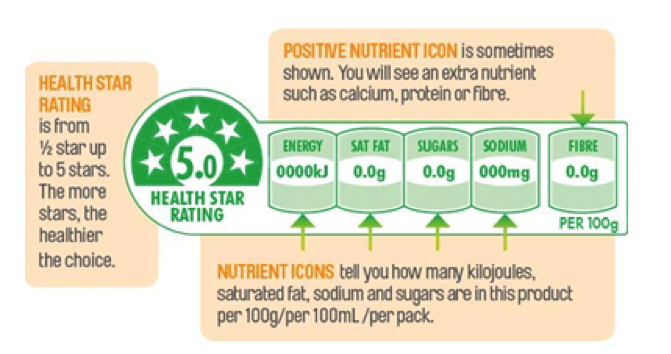

The more stars, the healthier the choice! Read more
Looking for inspiration
Better Health Channel
Lunch box tips
Healthy cooking tips
Fast facts:
- Healthy eating is essential for health and wellbeing.
- At times during the farming year, farmers and workers may require a packed lunchbox due to long hours of work.
- Increase your knowledge on the 5 core food groups and recommended servings to assist in placing healthier choices in lunchboxes.
- Use the Health Star Rating system to assist with buying healthy packaged foods for the lunchboxes.
- Drink plenty of water to avoid dehydration.
- Care, prepare and store food safely.
References used for this topic
More information:
Australian Government
Eat for Health – The Australian Guide to Healthy Eating
Nutrition Australia
Healthy Eating Pyramid
Better Health Channel
Healthy eating
Clinical care:
National Health and Medical Research Council
Dietary Guidelines 2013
Nutrition Australia
Nutrition fact sheets
Research & reviews:
World Health Organization (WHO)
Diet, Nutrition and the Prevention of Chronic Disease
Australia Institute of Health and Welfare
Diet and Nutrition
Goal Setting
The volume of tasks required to maintain a successful farming business can be significant. Maintaining your own health and wellbeing—equally, if not more important—can also be challenging. During tough times this can seem overwhelming. Setting goals can make things more achievable. Form a clear picture of what could improve your life. Set SMART goals to help achieve this:
Specific: Make a concrete goal focusing on behaviour and results (for example: For the next 4 weeks, I will spend one hour each morning working through the farm paperwork).
Measurable: Make a goal so that you easily assess your progress (for example: I will walk for 30 minutes every Monday, Wednesday and Friday morning).
Agreed: Ask others to help you achieve your goal (for example: I will ask for assistance from my accountant/the Rural Financial Counselling Service to better manage the farm finances).
Realistic: Make goals that are challenging but achievable (for example: I will walk 1km every day but take Sunday off to have a game of golf).
Time specific: Set a deadline for achieving your goal and keep track of progress in a visible way (for example: Over the next month, I will walk 4 days a week and I will make a mark on the calendar for each day I achieve this).
Sometimes ‘letting go’ is even more important than ‘taking action’. Let go of unhealthy behaviours and unnecessary activities. Learning to say ‘no’ can be an important goal.
Break down large goals into smaller, manageable steps. Record each of these steps and how you will achieve them using the SMART approach. Don’t be afraid to adapt your goals if circumstances change or you come across new information.
Acknowledge your progress when achieving even small goals or small steps to achieving a larger goal. This may be as simple as ticking something off a list that you have on your fridge. A visual representation of your achievements can be good motivation to keep going.
Find out more about setting goals for physical activity at Better Health Channel
References used for this topic page
More information:
MindTools
Locke’s Goal-Setting Theory: Setting Meaningful, Challenging Goals
Better Health Channel
Physical activity – setting yourself goals
Research & reviews:
American Psychologist
Building a practical useful theory of goal setting and task motivation: A 35-year odyssey
Locke, E.A. and Latham, G.P. (Eds.) (2013). New developments in goal setting and task performance. New York: Routledge.
Health Psychology
Agronomy for Sustainable Development
Processes of adaption in farm decision-making models. A review
Fast facts:
Goal setting
- Being able to manage tasks is important for achieving business and wellbeing goals
- Set SMART goals to help you achieve what is important to you
Last updated: 14th December 2016
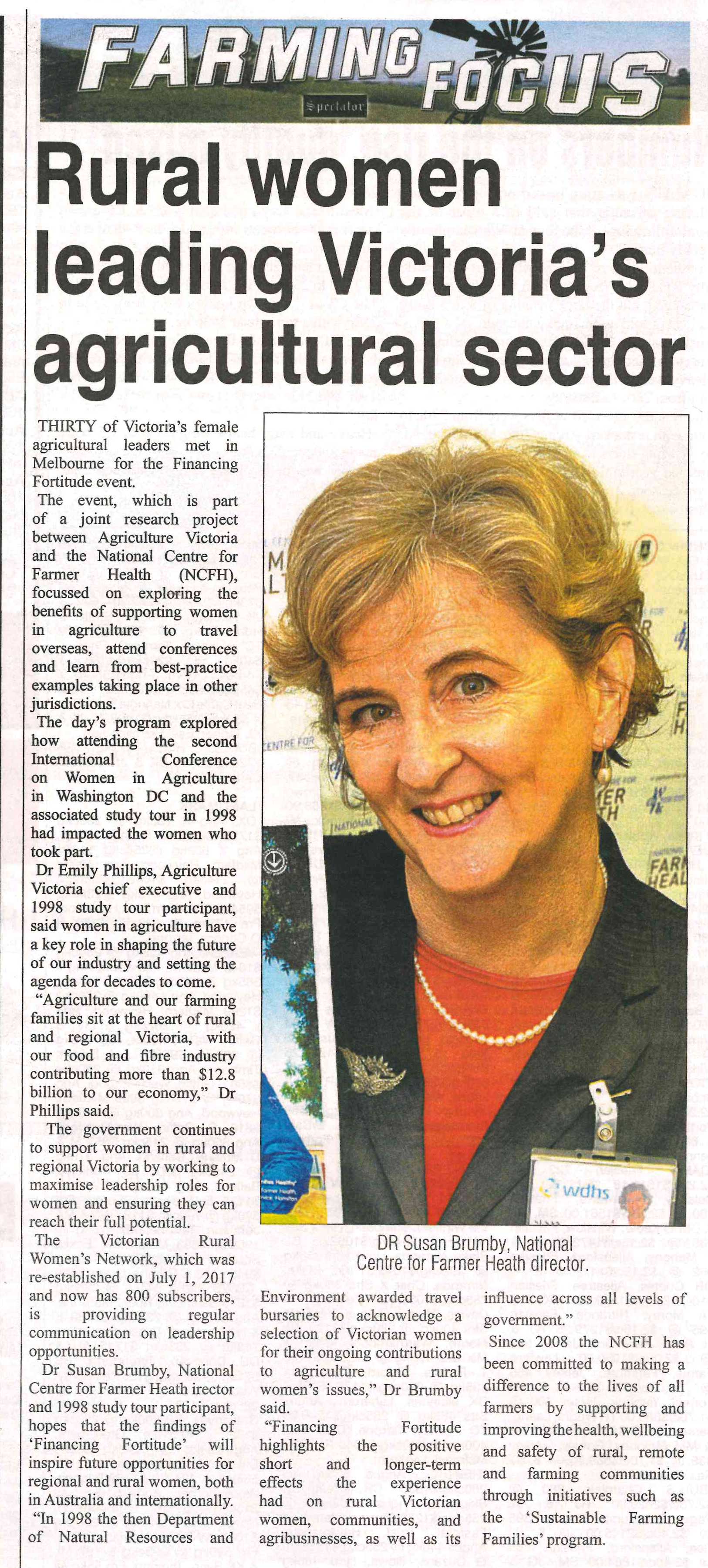
2017-12-9 Rural women leading Victoria’s agricultural sector – Hamilton Spectator
2017-12-7: Course aims to improve health outcomes – Countryman Perth
By Jo Fulwood
Agriculture is widely acknowledged as being one of Australia’s most dangerous industries, but more funding is now available to improve the skills of professionals working in rural areas.
A total of $15,000 in scholarships are now available for a five day intensive agricultural health and medicine program, to be held early next year in Hamilton, Victoria.
The academically recognised postgraduate course, offered through Deakin University’s School of Medicine and the National Centre for Farmer Health, will equip health providers, rural professionals and farming communities with the knowledge and skills they need to help reduce the industry’s high morbidity and mortality rates.
Albany couple Jack and Lisa Wieske, who both work as health professionals in rural WA while living on a working cattle property, completed the course on a scholarship.
Both say the skills they have learned have changed their ability to help farmers improve health outcomes.
Mr Wieske, who is a clinical nurse, now provides health assessments for farmers to give them a snapshot of their overall health and wellbeing.
“To perform these assessments we need to be qualified as a registered nurse, but it is also a requirement for us to have completed this course,” he said. “The course gave me a different view of health, focusing on primary care or preventative health care, so we were no longer dealing with the problems when they were at such a level we were unable to reverse matters.
“We both have enjoyed being part of this movement to improve the lot of our rural sector.”
For Mrs Wieske, the course allowed her to understand the specific health issues relating to those working in agriculture.
“I was working in haemodialysis nursing and was becoming aware of higher incidences of farmers and rural people ending up on dialysis due to chronic disease,” she said.
“I wanted to become more proactive in the prevention of chronic diseases and to also promote farm safety, and this course gave me the knowledge and skills to do this.” Mrs Wieske said she believed she was making a significant difference to the health and wellbeing of farmers in the Albany region.
“Whether I’m encouraging a farmer to look after his or her health through health assessments, or chatting about the everyday stresses of farming, I feel
like I’m making a difference to the people in our area,” she said.
National Centre for Farmer Health’s Susan Brumby said agricultural workers had a high rate of injuries, including fatalities, and also suffered chronic
disease at higher rates than those in the cities.
“A healthy workforce is vital for a productive agricultural industry, but we have learned farming families and their communities face poorer health outcomes than their urban counterparts,” she said.
Scholarships are being offered in the three categories of Open/Multidisciplinary, Aboriginal/Torres Strait Islander, and Veterinary, Psychology or Optometry professionals.
The five-day program will run from February 26 to March 2 next year in Hamilton, Victoria.
The partial scholarships are open to anyone with a graduate degree, and cover tuition fees Applications close December 10.
Course details are available at deakin.edu.au, while information on the scholarships can be obtained from Jacquie Cotton by calling (03) 5551 8585 or online at www.farmerhealth.org.au.
2017-12-5: Pioneering rural women leaders look back on pivotal US study trip, twenty years on – ABC Rural
By Jess Davis
Just shy of twenty years ago, a large group of women working in rural industries embarked on an overseas study trip that would change the trajectory of many of their lives and point them towards the peak of their professions.
The second International Women in Agriculture Conference was held in Washington DC in 1998, attended by 120 Australian women and a select 30 from rural Victoria.
The Victorians were awarded bursaries from the State Government for the three-week trip that included an agricultural study tour.
Most had never been overseas before, and many of them now say it was a pivotal moment in their careers.
At 21 years of age, Caroline Coggin was the youngest delegate to attend the Washington DC conference.
“I actually feel that perhaps it has changed me more than I realised and perhaps I don’t give enough credit to travelling to Washington and being on that tour,” Ms Coggin said.
Farmer Health eNews December 2017
Find out all the latest from the National Centre for Farmer Health
- From Inside the Farm Gate: Rural Women’s Stories of Thriving and Surviving
- ONLY 10 DAYS LEFT: ROUND 2 HMF701 – Over $15,000 worth of scholarships for HMF701
- Give a safe gift this Christmas – visit our Safety Shop
- Wellness Wednesday Topics
2017-12-2: Gentlemen of Geelong 2017 lunch: Sheedy joins top blokes for good cause – Geelong Advertiser
THE boys were back in town yesterday for a good cause — a good time.
Moustaches and RM Williams were on full display for the annual Gentlemen of Geelong lunch, which drew a capacity 220-strong crowd to the Bellarine Peninsula.
Men from across Victoria met at the Flying Brick Cider House for the event that aims to encourage them to talk about things historically off limits, such as depression and suicide.
After raising more than $50,000 last year, the event was set to collect a record figure around $60,000.
Flying Brick owner David Sharp said monies would be donated to a range of charities, including Headspace Geelong, Lifeline Geelong and the National Centre for Farmer Health.
“The lunch has been running for 14 years. About 10 years ago, we decided to give the lunch a lot more meaning,” he said yesterday.
“Men’s mental health is an issue close to a few of us who are on the organising committee.”
AFL legend Kevin Sheedy and local radio personality Ian Cover were among the special guests.
Donations can be made at www.au.movember.com — then type in Gentlemen of Geelong.
View article: 2017-12-2: Gentlemen of Geelong 2017 lunch: Sheedy joins top blokes for good cause – Geelong Advertiser