Global comparison of the economic cost of coronary heart disease: A systematic review and meta-analysis
Coronary heart disease (CHD) is the leading cause of global morbidity and mortality, yet no comprehensive evaluation of its global economic costs exists. A systematic review was conducted with meta-analysis to examine the costs of CHD treatment by region and CHD subtypes, examining whether there are cost differences by sex, and examining costing methodologies.
This review illustrated the expense associated with CHD, which is varied by region and CHD subtypes. The observed cost difference by sex warrants further exploration of sex-specific factors influencing cost disparities. Exploring advanced costing methods such as time-driven activity-based costing can optimise resource allocation and identify opportunities to reduce unnecessary costs and cost disparities.
We want to hear from you!
Researchers from Deakin, Curtin and Latrobe Universities and the National Centre for Farmer Health are keen to hear community views on gendered experiences in Coronary Heart Disease (CHD) healthcare pathways.
We would like to better understand people’s lived experiences of CHD and their related healthcare, whether you live in a rural or metro area. If you are at least 30 years of age or over and have been discharged from hospital for a CHD-related event (for example a heart attack) within the last few months, we invite you to share your story in an online focus group discussion and help improve care.
If you would like to know more, contact project team member Dr James Lucas (he/him): james.lucas@deakin.edu.au
This project is funded by a NHMRC Ideas Grant (2011209). It has received ethical approval from Deakin University’s Human Research Ethics Committee (Project ID: 2022-309).
Shifting Gears farm safety education program refreshed and ready to go back to school
The National Centre for Farmer Health has updated its Shifting Gears resources, providing teachers with a comprehensive suite of practical resources to emphasise the importance of farm health and safety in schools.
Shifting Gears is a teacher-led program aimed at fostering a culture of farm safety among young people especially those living on farms, studying agriculture and horticulture, or considering careers in these fields.
The program supports teachers to talk about farm safety by building their confidence in lesson planning, delivery and classroom discussions. This update has been made possible through $100,000 in funding from the Victorian Government’s Farming Safe and Well Program.
“By making farm safety information freely available to all Victorian teachers and schools we are investing in the safety of our children and young people now and into the future,” said Victorian Minister for Agriculture Ros Spence.
Farms present serious death and injury risks to young people as well as adults. Children under the age of 15 represent approximately 14% of all farm-related fatalities in Australia, and this rate has remained consistent for the past 20 years. Common farm hazards include dams, machinery and vehicles, as well as working with animals and agrichemicals.
The funding has allowed the Centre to support teachers in their delivery of Shifting Gears by way of a pre-recorded webinar and supplementary activity to complement existing materials.
Shifting Gears provides a practical way for teachers and schools to empower their students and make a lasting impact on farm safety education. The updated resources provide tailored, relatable and age-appropriate discussions and activities that relate to unique audio-visual materials and content designed to resonate with the Australian farming context.
The Centre’s Senior Lecturer/Researcher Dr Jacquie Cotton said Shifting Gears stands out by bridging the gap between agricultural studies and national skills programs, tailoring content to suit young people.
“Farms are a unique blend of homes and workplaces, and Shifting Gears takes a strong first step in changing young people’s attitudes towards farm safety by starting discussions in the classroom. We use role models to demonstrate what farm safety looks like and why it’s important, catering to a diverse range of learning types,” Dr Cotton said.
“Shifting Gears broadens young people’s understanding of agricultural injury within rural Australia. It helps to increase their awareness of farm hazards, and embrace a culture where health, wellbeing and safety is a priority for the next generation of farmers and ag industry members.”
Victorian teachers will have free access to the resources up to June 2026.
What’s new for Shifting Gears in 2025
- Downloadable PDF for flexible use, covering agricultural health statistics, agricultural exposure to hazards and agents of injury, the flow-on effect of poor farmer health, the hierarchy of controls, prevention strategies and more
- Documentary-style videos linking farm safety to human health with creative animations illustrating safety theories
- 13 classroom activities and discussions that are broadly aligned with the agricultural curriculum to engage and educate students.
The Shifting Gears resources are available to teachers for free. For more information on the program and to access the resources, visit farmerhealth.org.au/shifting-gears-2.
This program has been funded by through the Victorian Government’s Farming Safe and Well Program.
* END OF RELEASE*
For more information, please contact:
Dr Jacquie Cotton – Senior Lecturer/Researcher, National Centre for Farmer Health
P: 03 5551 8533 | M: 0409 287 497 | E: jacquie.cotton@wdhs.net
Considerations when looking for professional mental health support
Are you thinking about seeking professional mental health support for yourself or someone close to you? Here are some key things to think about to help you choose someone that’s right for you.
Do they have experience working with rural or farming communities and do they understand the agricultural industry?
It’s important to find someone who understands the unique stressors that come with farming, such as the financial pressures, isolation, or the extreme environmental factors farmers can face. A mental health professional who understands the agricultural industry can relate more easily, making the connection between you and them often more meaningful.
What qualifications and accreditations do they hold?
Verifying that the professional is qualified and with a registered body ensures that they are held to the highest standards of practice, ethics and professional conduct.
Three key registered organisations to look for include:
- AHPRA – Australian Health Practitioners Regulations Agency: The registered body for psychologists
- AASW – Australian Association of Social Workers: The registered body for Accredited Mental Health Social Workers (AMHSW)
- ACA – Australian Counselling Association: The registered body for counsellors and psychotherapists.
What type of therapy or approach do they use?
There are many therapy approaches available and it can be challenging to know what works best for you. However, farmers often prefer practical, goal-oriented options like Cognitive Behavioural Therapy (CBT) or Solution-Focused Therapy. It’s also important to ensure the professional is trauma-informed (uses a strengths-based approach following principles of safety, trustworthiness, choice, collaboration, empowerment and respect for diversity). Don’t be afraid to ask about their approach to therapy.
Do they offer flexible session options?
Given the unpredictable and demanding nature of farming, flexible appointment times (including evenings or weekends) and remote options like telehealth (online) or phone sessions might be important to consider.
Are they someone I feel comfortable talking to?
Feeling comfortable and being able to build trust with a mental health professional is crucial for effective therapy. Finding a mental health professional who offers a 15-minute phone consult is often a good way for you to see if you feel you can connect with the professional.
How do they maintain confidentiality?
A good mental health professional will explain how they ensure confidentiality, especially in smaller communities. Asking them how they maintain confidentiality can give you the confidence to know that what you talk about will stay between only you and your mental health professional.
What are their fees, and do they accept rebates?
Ask about session fees, if they accept Medicare rebates, private health insurance, or if they offer bulk billing. Knowing the cost upfront can reduce financial stress.
How long do they typically work with clients?
Some farmers may prefer short-term, solution-focused therapy, while others may benefit from long-term support. It’s helpful to understand the professional’s typical engagement style and flexibility.
Are there any available testimonials or reviews?
Hearing from others who have used the professional’s services can provide insight into their effectiveness, particularly those from within the farming or rural community. Talking to a trusted GP or local community health provider can also help identify well-regarded mental health professionals in your area. GPs can diagnose and treat some mental health conditions as well as provide advice about, and referral to, other mental health professionals.
What are the types of mental health professionals who can help me?
- Counsellors provide a safe and confidential space for people to explore their mental health and wellbeing. Counsellors can help you with a wide range of mental health, alcohol and other drug related concerns. Medicare rebates may be available.
- Psychologists provide therapy (but do not prescribe medication) and treatments to help you manage stress, anxiety, depression, trauma, grief and other mental health alcohol and other drug issues. Medicare rebates may be available.
- Accredited Mental Health Social Workers handle the assessment and treatment of psychological disorders. They adopt a holistic, practical approach by helping clients address psychological factors while identifying and tackling external stressors and issues affecting wellbeing (such as social connections, family dynamics, and broader social systems). Medicare rebates may be available.
- Psychiatrists are medical doctors with specialised training in mental health. They can diagnose and treat mental illness, using talking therapies and/or medication. Medicare rebates may be available.
Finally, remember, there is no ‘one size fits all’ solution to finding a mental health professional that suits your needs. It’s often necessary to try a couple of people before you find a good match for you, but don’t give up if it’s not a great fit the first time. Persevere!
Fast facts:
- There is no ‘one size fits all’ approach to finding the right mental health professional for you.
- There are many types of health professionals working in mental health care – each with different skills, qualifications and approaches to treatment and support.
- Booking a brief introductory consultation with a mental health professional can give you an opportunity to ask questions and get a sense of how well they fit with your needs.
Prepared in collaboration with Sarah Crosthwaite (Accredited Social Worker with the Australian Association of Social Workers (AASW))
Further reading and references used for this topic page
More information:
Mental Health Australia
Trauma informed practice
Healthdirect
Psychotherapy – types and benefits
Mental health professionals
Understanding the costs of mental health services
National Library of Medicine | informed health.org
Depression: Learn more – How is depression treated?
ifarmwell
Tips for having a conversation with your GP about your mental health
Farmer Health eNews February 2025
Find out the latest from the National Centre for Farmer Health
- Introducing the new Farmer Health Support Hub!
- Tackling the Tough Topics: Step-by-step guide now available
- Welcome to our new ag health clinician, Lisa Wieske!
- Back on Track: Last chance to register
Do you want to receive our eNews?
A systematic review of healthcare experiences of women and men living with coronary heart disease
Background
Heart disease is a leading cause of death and disability across the world. Women with heart disease have worse short- and long-term outcomes when compared to men, especially for those with lower education levels, living rurally and belonging to an ethnic minority. Women are also more likely to die during their hospital admission.
The findings from this review pointed to four themes:
- The assumption that coronary heart disease (CHD) is a man’s disease, and that women were uncertain about their own symptoms mistaking them as fatigue, or old age.
- Women often delayed seeking help, not wanting to bother others, and cited staff shortages and long waiting times especially in rural areas.
- Health care interactions: women described not being listened to by health professionals and dismissed being labelled a nuisance or hypochondriac.
- Women as wives were commonly the reason men sought help for CHD, however this was not reported as reciprocated.
Key points
- CHD is a women’s disease and efforts need to be made through health services and general community health education to dispel gendered perceptions, such that CHD is a ‘male disease’
- Build awareness on the unsafe role of socialised gender norms on women’s health seeking behaviour and assist women to recognise early signs and symptoms, that can differ to men’s and seek help in a timely manner.
- Develop gender competences in the medical curricula and challenge health professionals, organisations and health systems to be accountable for the bias male experiences.
Find out more
For more information contact first author Helen Brown (Deakin University) at h.brown@deakin.edu.au or Susan Brumby (National Centre for Farmer Health) at susan.brumby@wdhs.net
You can also visit https://www.nature.com/articles/s44294-024-00043-x
Image courtesy of Agriculture Victoria.
NCFH expert features on podcast discussing farm safety for children
Farms are places where families work, live and connect – offering children an exciting environment to explore and experience. But farms are also workplaces, exposing children to a wide range of hazards not typically found in urban settings.
Did you know that children under the age of 15 represent approximately 14% of all farm-related fatalities in Australia? Unfortunately, this rate has remained consistent over a long period of time – at least 20 years!
During 2024, NCFH Associate Research Fellow, Jessie Adams, was invited by The Royal Children’s Hospital to join in a conversation with experts to discuss farm safety for children. Jessie is pictured below with Danyel Cucinotta from the Victorian Farmers Federation and Associate Professor Warwick Teague and Dr Steve Lacey from The Royal Children’s Hospital during the recording.
Electrical hazards on Australian farms: A rapid review of electrical perceptions in agriculture
Abstract
Introduction
Electrical hazards on farms are one of the occupational risks that contributes to farm injury and fatality. While electricity accounts for a low number of farm injuries each year, it is disproportionately fatal.
This study aims to raise the awareness of electrical safety on farms by providing an overview of the literature that explores the evidence of farmers’ perception of electrical risk. The review sought evidence of farmers’ efforts to promote electrical safety awareness and their uptake of electrocution prevention strategies.
Method
A rapid review was performed following the Cochrane Rapid Reviews Method Group and PRISMA guidelines, searching grey and peer-reviewed databases with criteria that included both farming and electrical risk. This resulted in 35 key articles of interest and five themes.
Results
The prevalent causes and contributing factors of electrical incidents and near misses on farms is not easily explained. Farmers overlook its presence as one of the hazards on farm, but at the same time the element of danger or threat of electrocution deters farmers from taking unnecessary risks.
The data to profile farmers at risk of electrical injury is inadequate, however the scope of risk is described through five themes: epidemiology, risk perception, exposure, intervention and prevention.
Conclusion
Due to the seriousness of electrical injury, intervention and prevention strategies on-farm need to specifically address electrical hazards – rather than incorporate electricity as a risk into all hazards found on farms. The review recommends future work that engages with Australian farmers and farm workers to better understand their experience of electricity exposures, the risks they are willing to take around overhead powerlines, and their insights into how to make working on farms safer.
A Year of Impact and Action
As 2024 races to a close, we thought we would stop and reflect on a year of meaningful action to support the health, wellbeing, and safety of farming communities across Australia.
The 2023/2024 financial year was another busy and eventful year. We were humbled by the passionate public outcry when funding for the NCFH was initially omitted from the 2024-25 budget. Hearing the stories from farmers whose lives had been positively impacted (and sometimes saved!) due to our programs was incredible. Here are just a few of the things we have achieved in this 12 month period.
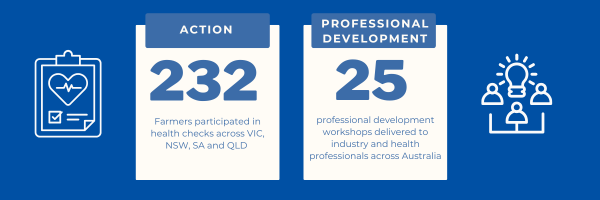
Our NCFH team delivered 232 farmer-focused health checks at field days and agricultural events across four states—empowering farmers to take charge of their health, wellbeing and safety. We know these 20-minute assessments often have a profound effect on farmers who take part:
Female farmer [69] from Yea was followed up four weeks after her health assessment at the Seymour Alternative Farming Expo. She has since visited her GP regarding blood glucose levels and also visited a skin clinic where spots were removed. She said, “It was the best field day for health representation I have ever been to.”
Our commitment to collaboration continues to be at the heart of our work, with 11 new research, commercial, and health service partnerships established to strengthen our impact and expand our reach, including:
- A new AgriSafe service operating at Timboon District Health Service,
- Partnerships with CSL Seqirus and Primex supported our team to attend field days in Victoria, NSW and Queensland to provide Health & Lifestyle Assessments, and
- Research partnerships with La Trobe University, University of South Australia and Edith Cowan University to support innovative programs of research supporting farmer mental health.
Through 25 professional development workshops we connected with a national audience and equipped industry and health professionals—including trainee doctors and nurses, mental health professionals, rural educators and trusted advisors to farmers–with tools to better serve agriculture dependent communities and drive improved health and safety outcomes.
We should have more farmer specific training or education as an ongoing part of our MH skills set”
Mental Health Nurse (Victoria)
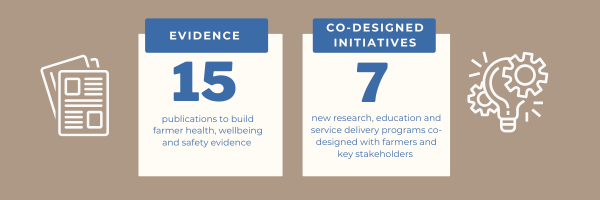
15 new publications continue to build much needed evidence to guide policy, programs and best practice. These ranged from peer-review journal articles about farm safety culture, farm safety decision making and climate-related health impact data to research reports on agriculture-dependent community resilience and links between regenerative agriculture and farmer wellbeing.
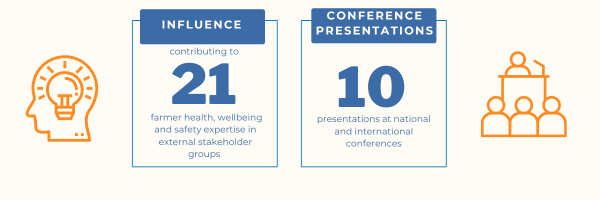
Our team has proudly contributed expertise to 21 stakeholder groups with regional, national and international influence. These range from European Union farm safety and wellbeing projects, contributing to Steering Groups run by the National Farmers Federation (farmer mental health) and the Rural Safety and Health Alliance (Ag Safety Data Network), drought resilience planning workshops and contributing to Ministerial roundtables to improve farm safety and farmer mental health. We also presented at 10 national and international conferences, including invited keynote presentations in Indonesia and Ireland, and contribution to industry-focused forums through Fair Farms, the National Farmers Federation, WorkSafe Victoria and Safe Work NSW.
We have continued to keep farmers firmly at the focus of our work – hearing their voices in the co-design of 7 new research, education, and service delivery programs Particular highlights include two new farmer mental health initiatives: the piloting of the digital Mind Maintenance Toolkit, and an innovative new peer-led mental health support program for farming communities
Our programs this year have reached agricultural communities across Victoria, South Australia, New South Wales, Tasmania and Queensland, and our resources have been provided to farmers from every state and territory of Australia – building on our commitment to make a difference to farmer’s lives across the nation.
Our team are practicing what we preach and taking a short break over the holiday season to (physical and mentally) rest and rejuvenate. We extend our heartfelt thanks to all of our incredible supporters and partners for helping us achieve these milestones.
Together, we’ll continue to drive action in 2025 for healthier, safer farming communities.

New Premises For National Centre For Farmer Health
The National Centre for Farmer Health (NCFH) is moving into a brand-new premises to continue its nation leading efforts to improve the health and wellbeing of farmers and their communities.
Parliamentary Secretary for Agriculture Michaela Settle today representing Minister for Agriculture Ros Spence to officially opened the new premises which marks a significant milestone in the growth of the Centre since its establishment in 2009.
Located in Hamilton, the new site sits within the local agriculture community and reinforces its role as a vital resource for the health, wellbeing and safety of farmers, farm workers and their families….
New trial now recruiting to help farming communities get Back on Track with their mental health
Recruitment is now open for farming community members in three key dairy farming regions across Victoria to take part in a free trial of a peer-guided, model of mental health support.
The feasibility trial is part of the Back on Track program – led by the National Centre for Farmer Health (NCFH) with funding from the Gardiner Foundation – which is aimed at farming community members who are experiencing low mood or depressive feelings. The evidence-based program was co-developed with the farming community over the past five years to ensure it caters to the needs of rural people.
The trial is now recruiting community members in Wellington, Towong and Corangamite Shires. It will explore the feasibility of a new support model that involves trained and mentored coaches providing accessible and culturally appropriate mental health services to farmers, farm workers and other people in agriculture-dependent communities, ensuring they receive the support they need during challenging times.
“When people in farming communities face multiple stressful events – whether that be extreme weather events, market or financial pressures, succession challenges or other business or personal pressures – mental wellbeing is often under threat,” NCFH Director Alison Kennedy said.
“We know that mental health support is not always accessible in farming communities and, when support is available, the providers don’t always have a good understanding of the challenges farmers face. This can put farmers off from accessing these important services.”
The 10-session Back on Track program involves weekly one-hour sessions between a coach and participant, which can be held in-person or online. The coaches have been trained in ‘behavioural activation’ – a practical mental health approach focusing on how positive behaviours and habits can positively affect mood. Coaches are living and working in farming communities themselves and understand the nature of farming, including the problems and stresses that come with working on the land.
“When people experience low mood, they generally stop doing the things that bring them enjoyment and satisfaction – the very things we need to be doing to feel good. Behavioural activation turns this around by helping people identify what activities bring them a sense of enjoyment or satisfaction, and scheduling this into their day,” Alison said.
“We’re now inviting farming community members who are experiencing low mood or depression to participate in this innovative, practical approach to help improve their mental health. This phase of the trial is only running for the next few months, so we urge interested people to get in touch to find out more.”
For more information about the Back on Track trial or to get involved, visit farmerhealth.org.au/back-on-track.
Back on Track is supported by an experienced team of researchers and clinicians from Deakin University, Western District Health Service, La Trobe University, the University of South Australia and Edith Cowen University.
* END OF RELEASE*
For more information, please contact:
Dr Alison Kennedy – Director, National Centre for Farmer Health
P: 03 5551 8533 | M: 0407 549 970 | E: alison.kennedy@wdhs.net
2024 Farmer Health Symposium: Key Moments and Insights
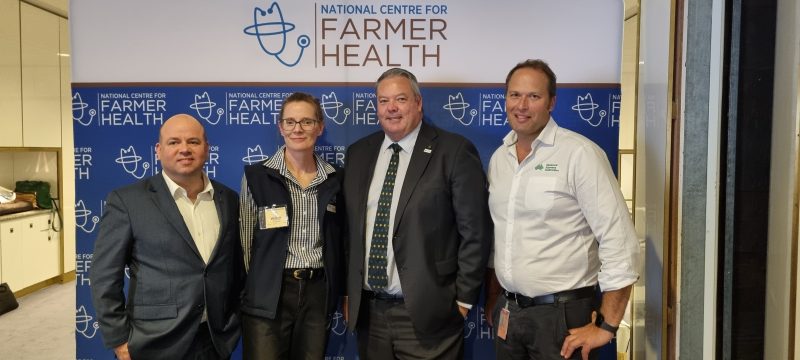
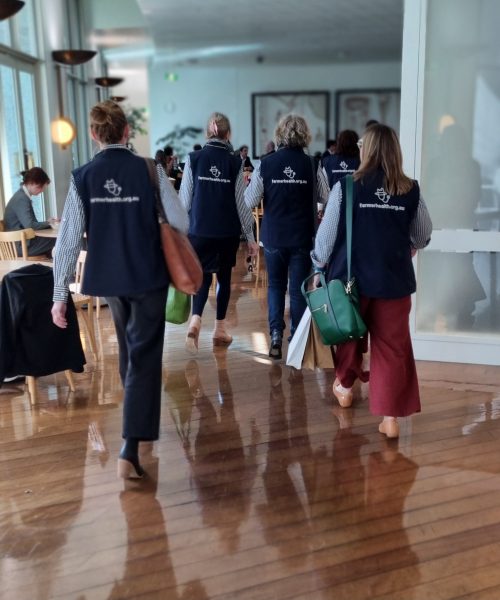
This month, we’re taking a moment to reflect on something special—our 2024 Farmer Health Symposium and Parliament House event in Canberra in August. As our first time bringing Farmer Health to the nation’s capital, it was an experience that will stick with us for a while.
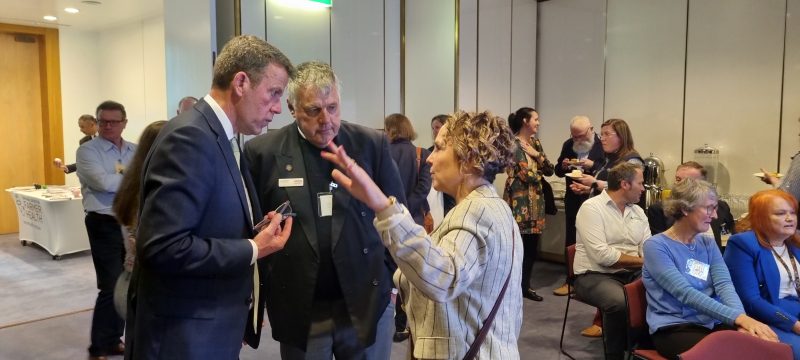
A highlight of Farmer Health @ Parliament House (Day 1) was being able to present to several key politicians—including the Hon Julie Collins – Minister for Agriculture; the Hon Emma McBride – Assistant Minister for Mental Health and Suicide Prevention; the Hon Senator Hollie Hughes – Shadow Assistant Minister for Mental Health and Suicide Prevention—and a number of MPs from around the country with farmers a key group within their constituencies. With support from NFF President David Jochinke, we were able to highlight the value of supporting farmer health, wellbeing and safety, and showcase a range of our farmer-focused programs. We even had some brave souls take up the offer to experience our Health & Lifestyle Assessments firsthand!
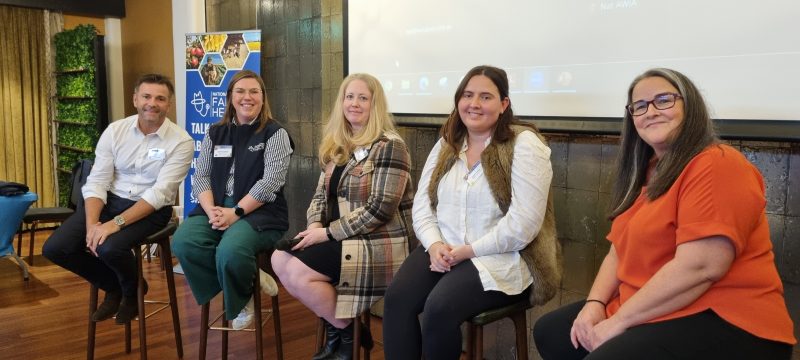
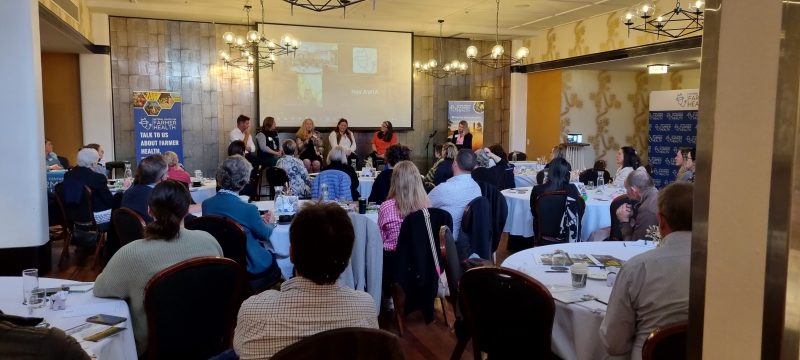
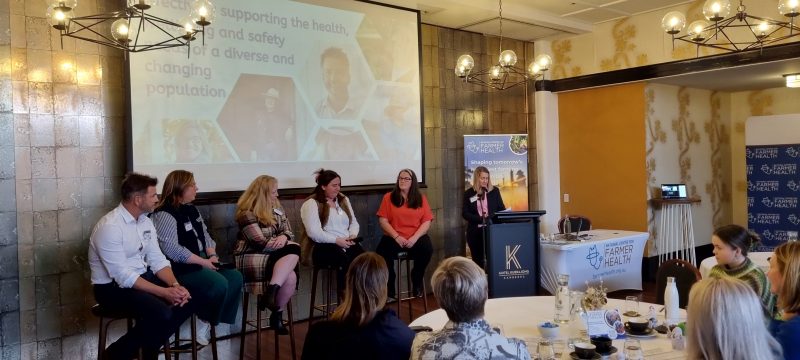
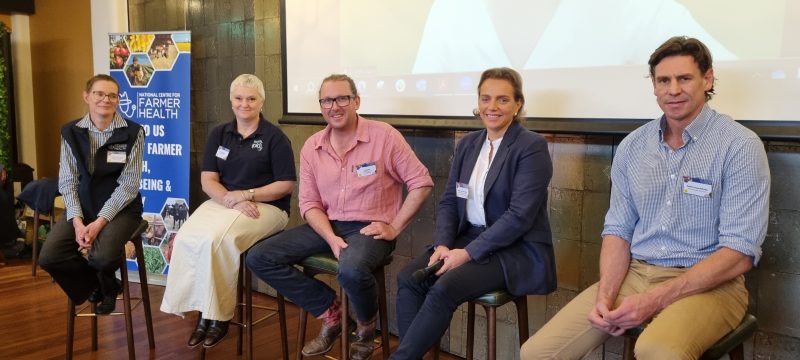
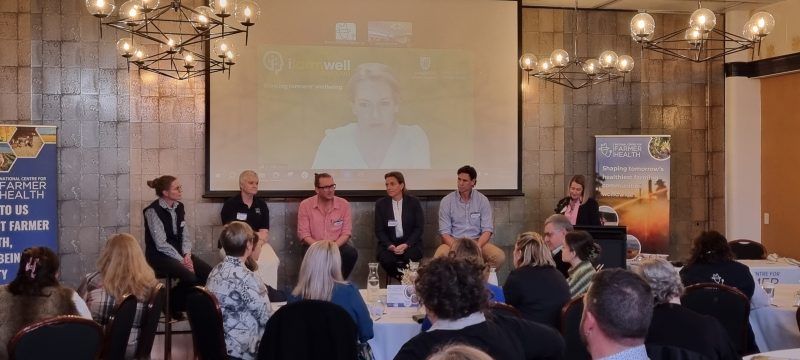
At the Farmer Health Symposium (Day 2), the key takeaway was clear: collaboration among stakeholders is vital to driving positive change in the health, wellbeing, and safety of Australian farmers, their families, and agricultural communities. Our speakers and panel members were fantastic, sparking lively discussions and laying the groundwork for new collaborations. With powerful insights from keynote speaker Professor Faye McMillan and international guest Dr. David Meredith, and with panels tackling issues like farmer involvement in health initiatives, support for diverse agricultural workers, and the specific safety needs of farming women, it was a day full of inspiration.
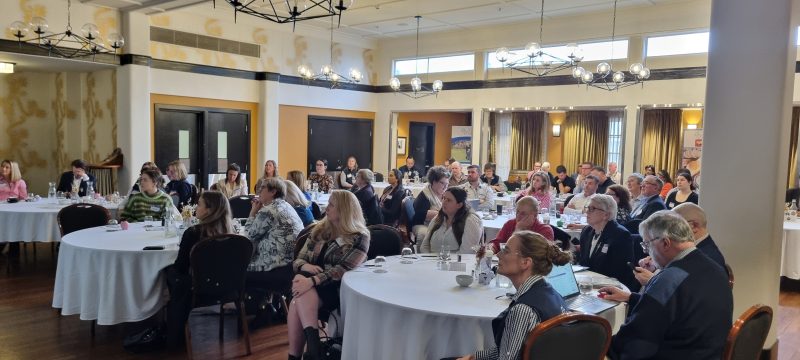
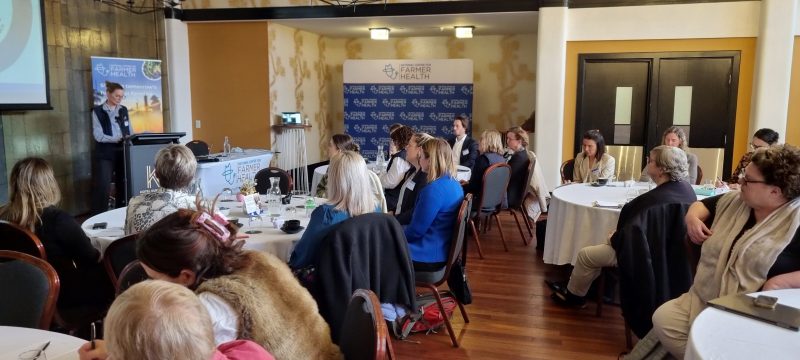
With over 60 attendees, the enthusiasm in the room confirmed the need to keep these vital conversations going. This event has set the stage for our future farmer health, wellbeing and safety programs and projects.
We’re incredibly grateful to our sponsors— Deakin University’s Rural Health Network, Western District Health Service, Dairy Australia, the Gentlemen of Geelong, and Udder Delights—for their support in bringing our event to life. A huge thank you also goes to our panel members and guest speakers, who generously gave their time and shared their expertise in support of our cause in shaping tomorrow’s healthiest farming communities.
Lastly, a shoutout to our dedicated National Centre for Farmer Health team, whose hard work behind the scenes and on research, education and service delivery is crucial to our Centre’s success in continuing the path to create healthier, happier and safer farmers.
Outcomes from this event will help us design our roadmap for collaboration on farmer health, wellbeing, and safety in Australia. There’s plenty of work ahead, but for now, we’ll take a moment to celebrate what we’ve achieved and get cracking on what’s to come!
– Dr Alison Kennedy, Director.